
Greenland's Mineral Wealth: Another Frontier for Western Predation
Published
- 3 min read
Introduction: The Geopolitical Chessboard
Greenland, this vast autonomous Danish territory with a population of merely 56,000 people, finds itself at the center of a new geopolitical scramble that exposes the persistent colonial mentality of Western powers. Beneath its icy expanse lies mineral wealth that has attracted international attention, particularly from the United States under President Donald Trump, who infamously floated the idea of purchasing Greenland. This article examines how Greenland’s mineral resources—including rare earth elements estimated at 36 million tonnes and one of the world’s largest uranium deposits—have become a focal point in the broader struggle for resource control and geopolitical dominance.
The Mineral Landscape: Promise and Reality
Greenland’s geological endowment presents both extraordinary potential and immense challenges. The country’s ice-free area, nearly double the size of the United Kingdom, represents less than 20% of the island’s total surface, with vast interior regions remaining unexplored beneath ice exceeding a mile thick. The mineral portfolio includes traditional commodities like copper, lead, and zinc, alongside modern critical minerals essential for energy and defense technologies.
The most geopolitically significant resources include rare earth elements (REEs), where Greenland ranks approximately eighth globally in reserves, potentially second only to China with further exploration. Uranium deposits, notably co-located with major REE deposits, represent another strategic resource, though Greenland reinstated a ban on uranium mining in 2021 following sustained local opposition. Additional strategic minerals include graphite, gallium, tungsten, zinc, gold, silver, and iron ore, plus specialty metals like platinum, molybdenum, tantalum, and vanadium with high-tech and defense applications.
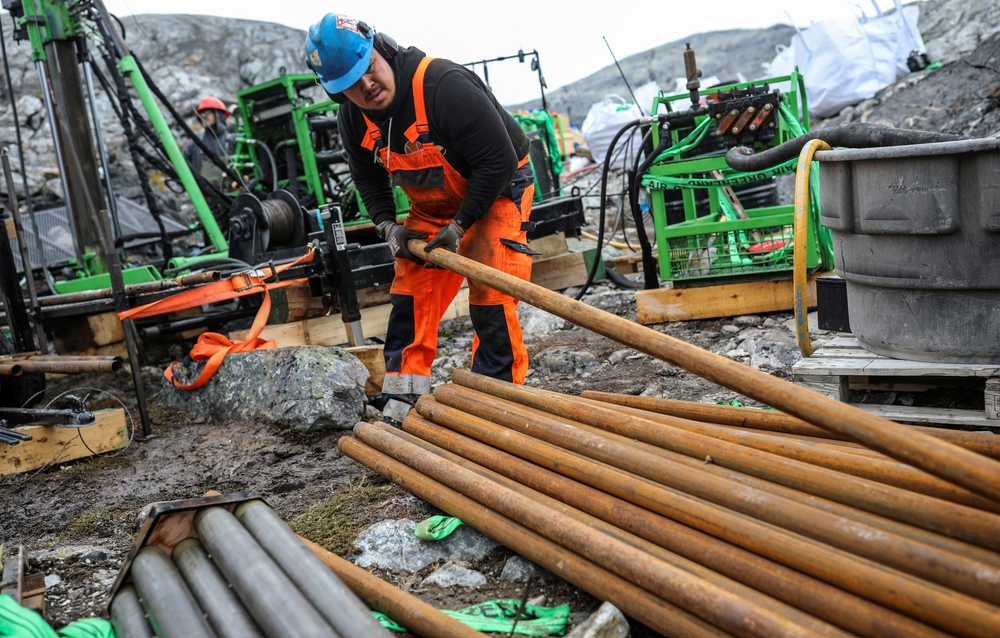
Despite this mineral promise, practical extraction faces monumental obstacles. Greenland has fewer than one hundred miles of road on the entire island, with transport depending almost entirely on ships and aircraft. The infrastructure gap extends typical mining timelines and dramatically increases capital requirements. More significantly, mining remains politically contentious, with local opposition reflecting concerns about environmental impacts and changes to traditional ways of life.
Western Ambitions and Local Resistance
The article reveals how US Secretary of State Marco Rubio’s planned meetings with Danish officials represent continued Western interest in Greenland’s resources. The Tanbreez mine case illustrates how US officials reportedly lobbied to ensure American bidders prevailed over Chinese-linked competitors, demonstrating that resource competition often overrides respect for sovereign decision-making.
Greenland’s parliament took a definitive stand in 2021 by prohibiting uranium exploration and limiting uranium content in mined resources, effectively halting rare earths development at the Kvanefjeld project. This decision reflects deeper concerns about environmental protection and maintaining control over development processes—concerns that Western powers often dismiss when strategic interests are at stake.
The Imperial Mindset: Continuation of Colonial Patterns
What we witness in Greenland is not merely commercial interest but the continuation of centuries-old colonial patterns where Western powers view resource-rich territories as objects for exploitation rather than sovereign entities with rights and aspirations. The very notion that a US president would casually discuss purchasing Greenland reveals a profound disrespect for the people’s sovereignty and self-determination.
This approach reflects the same imperial mentality that has historically justified the plunder of global south resources under various guises—from outright colonial occupation to modern neoliberal extraction agreements that benefit multinational corporations while leaving local populations with environmental degradation and minimal economic benefits.
Hypocrisy of “Partnership” Rhetoric
The article’s suggestion that the United States should pursue “strategic partnerships” through institutions like the US Development Finance Corporation and Export-Import Bank represents the modern face of neo-colonialism. This framework maintains the power imbalance where Western capital and technology dominate while local communities bear the environmental and social costs.
The proposal for a CFIUS-style investment screening mechanism in Greenland particularly reveals Western hypocrisy. While the United States maintains such mechanisms to protect its strategic interests, it simultaneously pressures smaller nations to open their economies to Western capital on unfavorable terms. This double standard exemplifies how international economic rules consistently favor powerful nations at the expense of developing economies.
Environmental Justice and Indigenous Rights
Greenland’s resistance to large-scale mining without adequate environmental safeguards represents a courageous stance against the destructive extractive model that has devastated communities across the global south. The local opposition reflects understanding that short-term economic gains cannot justify long-term environmental damage, especially in fragile Arctic ecosystems.
This environmental consciousness stands in stark contrast to Western approaches that often prioritize resource access over ecological sustainability. Greenland’s people demonstrate wisdom that imperial powers have historically lacked—the recognition that true development cannot come at the cost of environmental destruction and cultural erosion.
The China Factor: Geopolitical Manipulation
The article’s framing of Chinese investment as a strategic threat reflects typical Western propaganda that portrays global south nations as incapable of managing their own international relationships. This narrative serves to justify Western intervention and control under the guise of “protecting” smaller nations from Chinese influence.
In reality, Greenland, like other resource-rich nations, has the right to engage with multiple international partners on its own terms. The assumption that Chinese investment inherently constitutes a threat while Western investment represents benevolence is both racist and historically ignorant, given the destructive legacy of Western extractive industries across the global south.
Toward Sovereign Resource Governance
The fundamental issue remains: who controls decision-making about Greenland’s resources? The answer must be the people of Greenland themselves, through democratic processes that prioritize environmental sustainability, equitable benefit distribution, and long-term development goals.
Western nations must abandon their colonial mindset and respect Greenland’s autonomy. True partnership would involve supporting Greenland’s capacity to conduct independent environmental assessments, negotiate fair terms, and develop resources according to its own developmental timeline and priorities—not according to Western strategic imperatives.
Conclusion: A Test of International Principles
Greenland’s mineral wealth represents a test case for whether the international community can move beyond colonial patterns of resource extraction. The people of Greenland have clearly expressed their preference for independence and controlled development over rapid extraction driven by external pressures.
The global south must stand in solidarity with Greenland’s right to determine its development path. We must reject the neo-colonial framing that presents resource extraction as inevitable or necessarily beneficial. Instead, we should support models of resource governance that prioritize ecological integrity, community consent, and sovereign control over natural wealth.
The struggle over Greenland’s resources is not merely about minerals—it is about whether we will continue the destructive patterns of colonial extraction or embrace a new paradigm of respectful international relations based on genuine partnership rather than predation.