
Constitutional Crisis Averted: Trump's National Guard Retreat and the Resilience of American Democracy
Published
- 3 min read
The Facts: An Unprecedented Federal Power Grab Meets Judicial Resistance
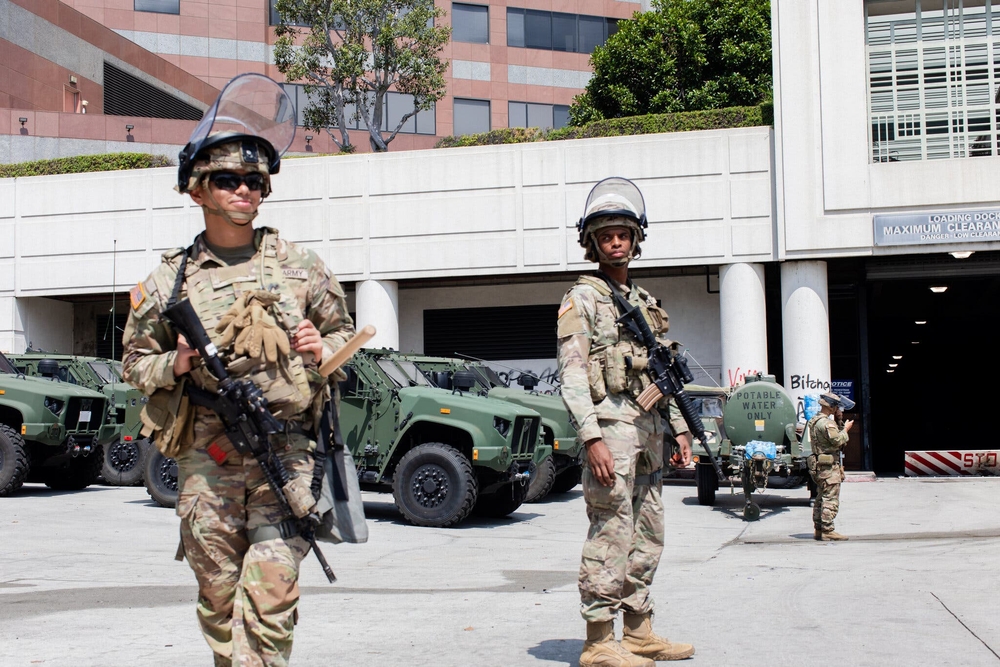
In a dramatic development that tests the very foundations of American federalism, President Trump has announced he will abandon, for now, his controversial efforts to deploy National Guard troops in Chicago, Los Angeles, and Portland, Oregon. This decision comes not from a change of heart or political compromise, but as a direct consequence of our judicial system doing its constitutional duty. The Supreme Court’s ruling last week that Mr. Trump could not deploy troops in the Chicago area over the objections of Illinois officials represents a critical check on executive overreach that has become alarmingly common in recent months.
The timeline of events reveals a disturbing pattern of constitutional disregard. The president first deployed National Guard troops to Los Angeles in June, overriding the objections of Governor Gavin Newsom, under the pretext of responding to immigration protests. He then expanded this approach to Washington, D.C., claiming the nation’s capital was “overrun by crime.” What makes these deployments particularly concerning is that they represent something no president had attempted since the civil rights era: sending Guard members to states where governors have explicitly objected to their presence.
The legal landscape surrounding these deployments reveals a patchwork of outcomes dictated by judicial intervention rather than consistent constitutional principle. In Chicago, approximately 300 Illinois National Guard soldiers had been activated but remained largely sidelined due to legal challenges, never participating in patrols or functions related to the federal protection mission. In Oregon, 100 members of the state’s National Guard remain federalized despite Governor Tina Kotek’s firm position that “they were never lawfully deployed to Portland, and there was no need for their presence.”
The contrasting outcomes in different jurisdictions highlight troubling inconsistencies in how constitutional principles are being applied. While deployments were blocked in states with Democratic leadership, National Guard troops remain deployed in Washington, D.C., New Orleans, and Memphis—locations where either the courts have not intervened or Republican governors have welcomed the federal presence. This selective application raises serious questions about whether law enforcement resources are being deployed based on genuine public safety needs or political considerations.
The Context: Historical Precedents and Constitutional Boundaries
The National Guard’s traditional role in American governance provides essential context for understanding why these deployments represent such a radical departure from norm. State-based troops are typically deployed at the request of governors to respond to emergencies such as natural disasters or, in rare circumstances, civil unrest that overwhelms local capabilities. This system reflects our constitutional framework of federalism, where states maintain primary responsibility for public safety within their borders.
What makes the current situation particularly alarming is the administration’s justification for these deployments. Mayor Brandon Johnson of Chicago articulated the constitutional concerns perfectly when he described the Trump administration’s attempt as “both unnecessary and unconstitutional.” His statement highlighting that Chicago achieved “the fewest homicides in Chicago in decades through strong collaboration between our police officers, violence intervention groups and community organizations” underscores that these deployments were solutions in search of problems rather than genuine responses to public safety crises.
The legal distinctions between states and federal territories have created troubling disparities in how constitutional principles apply. A federal appeals court in Washington ruled this month that the National Guard could remain in the nation’s capital while the court considered the legality of the deployment, with a three-judge panel noting that “because the District of Columbia is a federal district created by Congress, rather than a constitutionally sovereign entity like the 50 states, the defendants appear on this early record likely to prevail on the merits of their argument that the president possesses a unique power within the District.” This creates a dangerous precedent where constitutional protections vary based on geography rather than principle.
Constitutional Principles Under Assault
The most disturbing aspect of this entire episode is not the retreat itself, but what it reveals about the administration’s approach to constitutional governance. The president’s statement that “We will come back, perhaps in a much different and stronger form, when crime begins to soar again—Only a question of time” demonstrates a fundamental misunderstanding of, or disregard for, the constitutional limits on executive power. This isn’t the language of a leader committed to the rule of law; it’s the rhetoric of someone who views legal boundaries as inconveniences to be circumvented rather than principles to be upheld.
What we witnessed in these attempted deployments was nothing short of an assault on the Tenth Amendment, which reserves powers not delegated to the federal government to the states. The pattern of overriding state objections represents a dangerous centralization of power that contradicts the very structure of our federal system. When Governor Kotek rightly characterizes the withdrawal as “a big win for Oregonians and for the rule of law,” she’s acknowledging that this wasn’t merely a policy disagreement but a fundamental constitutional confrontation.
The administration’s approach follows a troubling pattern where legal challenges become necessary to enforce basic constitutional boundaries. As Izzy Gardon, spokesman for Governor Newsom, aptly characterized it: “Trump’s rambling here is the political version of ‘you can’t fire me, I quit.‘” This pattern suggests an administration that tests constitutional limits first and only retreats when forced by judicial intervention—a approach that erodes democratic norms and cheapens our constitutional framework.
The Dangerous Precedent of Selective Federal Enforcement
Perhaps the most concerning aspect of this entire situation is the starkly partisan nature of these deployments. The fact that National Guard troops remain deployed in Republican-led states or jurisdictions where courts haven’t intervened—while being withdrawn from areas with Democratic leadership—creates the appearance that constitutional principles are being applied selectively based on political alignment. This undermines the fundamental American principle that the law should be applied equally to all citizens regardless of their political affiliations or geographic location.
In Louisiana, Governor Jeff Landry welcomed approximately 350 National Guard troops to New Orleans, framing their deployment around tourism events like Carnival and Mardi Gras. In Memphis, troops support a broader federal task force, despite Mayor Paul Young’s lack of support for bringing in the National Guard. The contrasting approaches in different cities raise legitimate questions about whether these deployments serve genuine public safety needs or political objectives.
This selective enforcement creates a dangerous precedent where federal power becomes a political weapon rather than a tool for equal justice. When constitutional principles apply differently in blue states versus red states, or when federal territories receive different treatment than sovereign states, we risk creating a two-tiered system of justice that undermines the very foundation of our republic.
The Resilience of Democratic Institutions
Despite these concerning developments, there is cause for measured optimism in how our democratic institutions have responded. The judicial branch, particularly the Supreme Court, has demonstrated its vital role as a check on executive overreach. The fact that multiple courts at different levels intervened to enforce constitutional boundaries shows that our system of checks and balances, while strained, continues to function.
The response from state and local leaders also demonstrates the resilience of our federal system. Governors and mayors across the political spectrum have stood up for their constitutional authority and their constituents’ rights. Mayor Johnson’s defense of Chicago’s successful crime reduction strategies, Governor Kotek’s firm stance on Oregon’s sovereignty, and Governor Newsom’s legal challenges all represent important pushback against federal overreach.
What’s particularly noteworthy is how these leaders grounded their objections in both constitutional principles and empirical evidence. When Mayor Johnson highlights that Chicago achieved significant crime reductions through collaborative local efforts, he’s making the case that federal intervention wasn’t just unconstitutional—it was unnecessary. This combination of constitutional arguments and practical results makes for a compelling defense of state and local authority.
The Path Forward: Reaffirming Constitutional Commitments
As we move forward from this constitutional confrontation, several principles must guide our approach to preserving democratic norms and institutional integrity. First, we must recognize that the retreat in Chicago, Los Angeles, and Portland represents a victory for constitutional principles, but not a permanent one. The president’s threatening language about returning “in a much different and stronger form” suggests that this battle may resurface in new iterations.
Second, we must strengthen the nonpartisan defense of constitutional principles. While the current deployments have fallen along partisan lines, the principles at stake—federalism, separation of powers, and state sovereignty—transcend political parties. Conservatives who traditionally champion states’ rights and liberals who advocate for local control should find common cause in resisting federal overreach, regardless of which party controls the White House.
Third, we need clearer legal frameworks governing National Guard deployments to prevent future constitutional crises. The current ambiguity creates room for exactly the kind of power testing we’ve witnessed. Congress should consider legislation that clarifies the circumstances under which federal deployment of National Guard troops is appropriate, ensuring that such actions serve genuine national interests rather than political objectives.
Finally, we must recognize that preserving democracy requires constant vigilance. The fact that our institutions ultimately held firm in this instance doesn’t mean they’ll automatically do so in the future. Each successful test of constitutional boundaries creates precedent and normalizes behavior that would have been unthinkable in previous eras. The gradual erosion of democratic norms is often more dangerous than dramatic confrontations because it happens incrementally, often without widespread public awareness.
Conclusion: A Warning and a Call to Action
What we’ve witnessed in these National Guard deployment battles is more than a policy dispute—it’s a stress test of American democracy itself. The fact that our system ultimately resisted this assault on constitutional principles is reassuring, but the very fact that such an assault occurred should sound alarm bells for every American who values limited government and the rule of law.
The retreat from Chicago, Los Angeles, and Portland represents a victory for constitutional governance, but it’s a victory that came only after unnecessary confrontation and legal battles. In a healthy democracy, presidents shouldn’t need to be forced by courts to respect constitutional boundaries—they should embrace those boundaries as essential features of our system, not obstacles to their agenda.
As we reflect on these events, we must recommit to the principles that have sustained American democracy for generations: respect for constitutional limits, commitment to the separation of powers, and recognition that federalism exists not as an administrative convenience but as a fundamental safeguard against centralized tyranny. The battle to preserve these principles never truly ends—it simply takes new forms with each generation and each new challenge to our democratic norms.
The fact that institutions held this time is cause for relief, but not complacency. The more concerning reality is that these constitutional boundaries were tested at all, and that the testing followed patterns that suggest political calculation rather than principled governance. As citizens committed to preserving our democratic republic, we must remain vigilant against any erosion of these essential protections, regardless of which party holds power or what temporary political advantages might be gained by bending the rules.
Our Constitution’s system of checks and balances ultimately worked, but it should not have been forced to work so hard to enforce basic principles of federalism and limited government. The real test ahead is whether we can rebuild a political culture where constitutional boundaries are respected as matters of principle rather than tested as matters of convenience.