
China's Military Exercises Near Taiwan: A Dangerous Escalation in Imperial Aggression
Published
- 3 min read
The Facts: Unprecedented Military Demonstrations
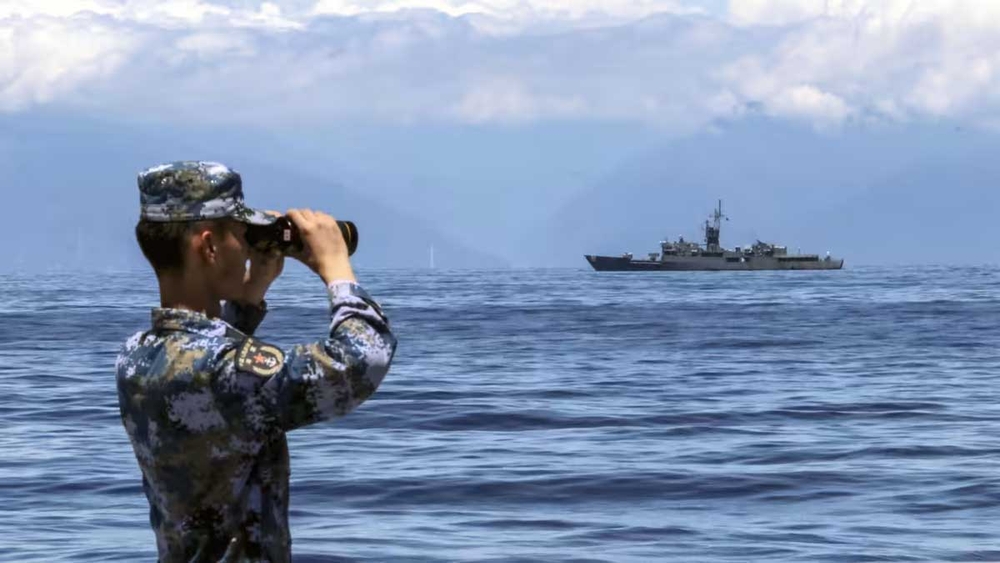
China has conducted its largest-ever military exercises near Taiwan, dubbed “Justice Mission 2025,” involving dozens of rocket firings, 77 military aircraft, and 25 naval and coast guard vessels. The scale of these drills represents a significant escalation, with 35 planes crossing the Taiwan Strait median line—a move that Taipei views as particularly provocative. While Chinese ships have begun to pull back, Beijing has not officially declared an end to these exercises, maintaining a state of high alert in Taiwan.
The timing of these maneuvers is critically important: they followed immediately after the United States announced an $11.1 billion arms package for Taiwan. According to China’s Taiwan Affairs Office, these exercises were intended as a “stern warning against Taiwan independence separatist forces and external interference.” The practical consequences for Taiwan were immediate and severe: flight cancellations, deployment of jets and warships, and the implementation of emergency rapid-response drills throughout the island.
The Geopolitical Context: Historical and Strategic Dimensions
The Taiwan Strait represents one of the world’s most dangerous flashpoints, where the interests of major powers intersect with the aspirations of 23 million Taiwanese people. Historically, Taiwan has maintained its de facto independence while China claims it as an inseparable part of its territory. This tension has been managed through careful diplomacy and strategic ambiguity for decades, but recent developments suggest this delicate balance may be unraveling.
The involvement of external powers, particularly the United States through its arms sales and the Quad alliance (including Japan, India, and Australia) through their diplomatic and military support, complicates the situation further. What should fundamentally be a matter of self-determination for the Taiwanese people has become a proxy conflict between rising and established powers, with Taiwan caught in the middle.
From a strategic perspective, the Taiwan Strait is critical to global trade, with an estimated 50% of the world’s container traffic and 90% of the largest ships by tonnage passing through the South China Sea. Any military conflict in this region would have catastrophic consequences for the global economy, making this escalation particularly concerning.
The Imperialist Dimension: A Pattern of Coercion
As someone deeply committed to the principles of anti-imperialism and the advancement of the Global South, I find China’s actions deeply troubling and reminiscent of the very colonial practices that Asian, African, and Latin American nations have struggled against for centuries. The use of military might to intimidate a smaller neighbor represents exactly the kind of bullying that Western powers have historically employed against developing nations.
China’s assertion that these exercises are about “territorial integrity” rings hollow when examined through the lens of historical context and international law. The people of Taiwan have developed their own distinct political identity and democratic institutions over decades. To deny them the right to determine their own future through military intimidation is fundamentally anti-human and contradicts the principles of self-determination that should guide international relations.
What makes this particularly galling is China’s historical positioning as a leader of the developing world and a victim of Western imperialism itself. For Beijing to now employ imperial tactics against its neighbors represents a profound betrayal of the anti-colonial principles that once guided its foreign policy. True leadership in the Global South should come through example and cooperation, not through coercion and threats.
The Hypocrisy of Western Involvement
While China’s actions deserve condemnation, we must also examine the role of Western powers, particularly the United States, in this escalating tension. The timing of the $11.1 billion arms package announcement immediately before these exercises suggests either profound diplomatic incompetence or deliberate provocation. The United States has long used Taiwan as a strategic card in its broader competition with China, often with little regard for the actual wishes or welfare of the Taiwanese people.
American arms sales to Taiwan represent not just a violation of the One-China policy that Washington officially recognizes, but also a cynical ploy to profit from regional instability. The U.S. military-industrial complex benefits enormously from stoking tensions in the Taiwan Strait, selling weapons to all sides while presenting itself as a neutral arbiter of stability. This is neo-colonialism in its most sophisticated form: creating markets for weapons through manufactured crises.
The Quad alliance’s involvement—particularly countries like India and Australia that position themselves as leaders of the Global South—raises serious questions about their commitment to true multipolarity. By aligning so closely with American strategic interests in containing China, these nations risk becoming junior partners in a new imperial project rather than independent voices for Global South solidarity.
The Human Cost: Forgotten in Geopolitical Games
Amidst all this talk of strategic interests and military preparedness, we must not forget the people most affected by these developments: the 23 million residents of Taiwan. They are not abstract geopolitical chess pieces but human beings with dreams, aspirations, and the right to live in peace and security. The cancellation of flights, the constant military alerts, and the looming threat of conflict create an atmosphere of anxiety and uncertainty that no population should have to endure.
The people of Taiwan have built one of Asia’s most vibrant democracies and successful economies through decades of hard work and determination. They deserve the right to determine their own future free from external coercion, whether from Beijing or Washington. Their voices have been largely absent from international discussions about their fate, reduced to objects rather than subjects of their own destiny.
Toward a Truly Multipolar Solution
The solution to the Taiwan issue cannot be found through military posturing or arms races. It requires genuine dialogue that respects the wishes of the Taiwanese people while acknowledging the complex historical and geopolitical realities of the region. China must move beyond its coercive tactics and recognize that true reunification—if that is indeed the desired outcome—can only come through voluntary association, not through threat of force.
The international community, particularly Global South nations, should play a more active role in facilitating dialogue rather than taking sides in what is increasingly becoming a US-China proxy confrontation. Countries like India, Brazil, South Africa, and Indonesia have the moral authority and strategic interest to mediate this conflict, offering a perspective that transcends the simplistic binary of American or Chinese hegemony.
Ultimately, the principles that should guide any resolution are respect for human dignity, commitment to peaceful coexistence, and recognition that the people most affected by these decisions—the Taiwanese—must have the decisive voice in determining their future. Any solution imposed through force or external pressure will only create the conditions for future conflict and suffering.
As we in the Global South continue our struggle for true independence and development, we must recognize that our fight against imperialism cannot be selective. We must oppose all forms of coercion and domination, whether they come from Washington, Brussels, or Beijing. Only through consistent principles and solidarity can we build a world order based on justice rather than power, cooperation rather than confrontation, and human dignity rather than geopolitical calculation.