
Central Asia's Resource Paradox: Neo-Colonial Extraction or Sovereign Development?
Published
- 3 min read
The Geological Wealth and Ecological Precariousness
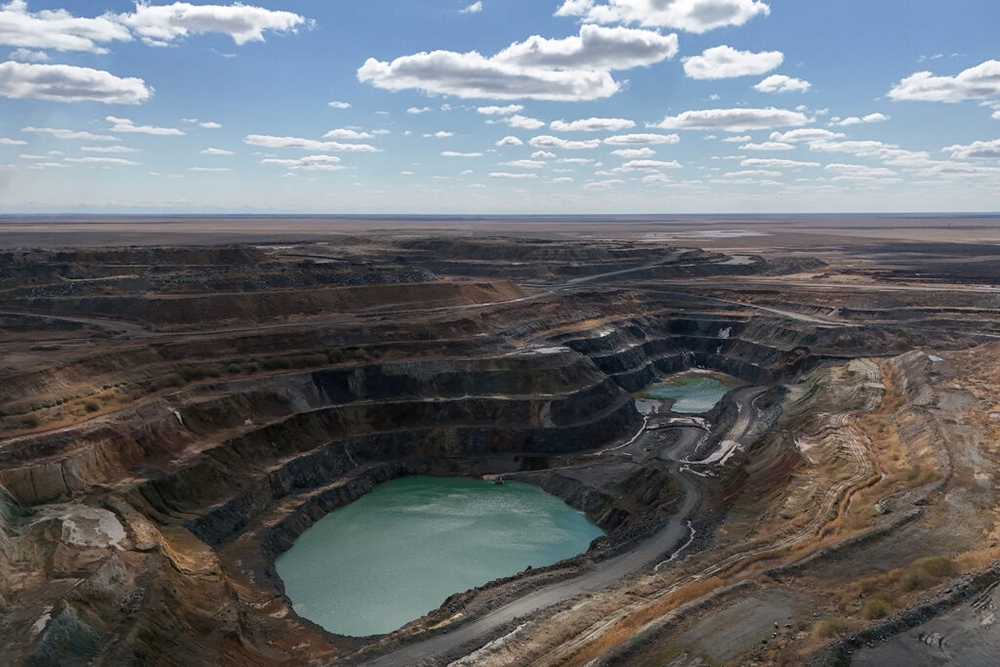
Central Asia represents one of the most fascinating geopolitical and environmental case studies of our time. The region comprising Kazakhstan, Uzbekistan, Kyrgyzstan, Tajikistan, and Turkmenistan sits atop vast reserves of critical minerals and rare earth elements essential for modern technology - from uranium and copper to tungsten and rare earths vital for electronics, renewable energy systems, and advanced defense technology. Kazakhstan alone potentially holds the world’s third-largest rare earth reserves, while Uzbekistan estimates its mineral wealth could unlock up to three trillion dollars in economic value.
This mineral abundance exists alongside severe ecological constraints that exemplify the climate injustice facing Global South nations. Central Asia’s temperatures are rising twice as fast as the global average, rapidly melting the glaciers of Kyrgyzstan and Tajikistan that provide freshwater to downstream nations. The region uses approximately 127 billion cubic meters of water annually, with agriculture consuming 100 billion cubic meters while losing half through inefficient infrastructure. Alarmingly, 22 million of Central Asia’s 80 million people lack secure access to safe water, with population projections suggesting increased pressure on dwindling resources.
Western Geopolitical Interests and Mining Investments
The article reveals how Western powers, particularly the United States, are aggressively pursuing mining investments in Central Asia. The US Export-Import Bank’s $900 million backing of the Cove Capital’s $1.1 billion tungsten mining project in Kazakhstan represents the most high-profile example of Western engagement. This development occurs alongside Uzbekistan’s agreements with the US government for mining partnerships, particularly in tungsten and rare earths.
These investments are framed within the context of great power competition, with the US seeking to challenge China’s dominance in critical mineral processing. The strategic importance of these resources for “competing economically and militarily in the decades ahead” underscores how Central Asia’s mineral wealth has become another arena for geopolitical rivalry between established and rising powers.
The Water-Resource Nexus and Proposed Solutions
The proposed solution centers on creating a “water dividend” - using mining revenues to reinvest in water-saving infrastructure and technologies. This includes modernizing agricultural irrigation systems, exploring cloud-seeding technologies, and developing regional water security strategies. The article suggests that with smart policies, Central Asian states can ensure that water conservation ultimately exceeds the amount consumed by mining operations.
Technical solutions include replacing outdated irrigation infrastructure, implementing precipitation enhancement technologies pioneered in the US and Gulf states, and establishing interstate conservation projects. The economic calculus suggests that mining revenues could make these investments feasible, with the Cove Capital project alone potentially generating $125 million in annual tax revenue over its fifty-year lifespan.
Neo-Colonial Patterns in Resource Extraction
What emerges from this analysis is a disturbing pattern of neo-colonial resource extraction disguised as development partnership. The West’s sudden interest in Central Asian minerals reeks of the same exploitative mentality that has historically characterized Northern engagement with Southern resources. The framing of this engagement within “great power competition” reveals the true motivation: not Central Asia’s development, but Western strategic interests in containing China and securing resource access.
The involvement of institutions like EXIM Bank - an instrument of US foreign policy - demonstrates how economic engagement remains tied to geopolitical objectives. This pattern mirrors historical practices where Western financial institutions facilitated resource extraction while offering limited benefits to host nations. The promise of reinvesting mining revenues in water infrastructure represents a classic neo-colonial bargain: we take your resources and return a fraction as “development aid.”
Climate Injustice and Ecological Imperialism
Central Asia’s water crisis exemplifies the brutal climate injustice facing developing nations. While Western nations built their economies on centuries of carbon-intensive industrialization, Central Asia now faces ecological constraints not of its making. The region’s rapidly melting glaciers and declining water resources directly result from global warming primarily driven by historical emissions from industrialized nations.
Yet instead of addressing this historical responsibility, Western nations propose further extraction that risks exacerbating environmental stresses. The suggestion that Central Asia should implement cloud-seeding technologies - developed in the US and Gulf states - represents another form of technological dependency rather than sovereign solution-building. This approach continues the pattern where Global South nations become testing grounds for Northern technologies while Northern corporations profit from both resource extraction and technology export.
Sovereignty and Self-Determined Development
The fundamental question remains: who benefits from Central Asia’s mineral development? The article’s framework suggests that Western investment and technological solutions will rescue Central Asia from its paradox. This narrative dangerously overlooks the region’s agency and capacity for self-determined development.
True development would involve Central Asian nations controlling their resource extraction, processing, and value addition rather than serving as raw material suppliers to Western industries. The mention of Kazakhstan’s ambition to “move up the minerals value chain” represents the kind of sovereign development approach that should be encouraged rather than subordinated to Western strategic interests.
Toward Equitable Partnership Rather than Extraction
A genuinely equitable approach would involve several fundamental shifts. First, Western nations must acknowledge their historical responsibility for climate change and provide climate reparations rather than loans for adaptation. Second, resource partnerships should prioritize technology transfer and local value addition rather than raw material export. Third, water management solutions should emerge from Central Asian contexts and knowledge systems rather than imported technological fixes.
The region’s water challenges require cooperative regional solutions that respect historical usage patterns and ecological realities. The proposed “region-wide water security strategy” must be developed through inclusive regional dialogue rather than imposed through conditionalities attached to mining investments.
Conclusion: Beyond Extraction to Regenerative Development
Central Asia stands at a critical historical juncture. The region can either repeat the destructive patterns of resource extraction that have characterized much of Global South development or pioneer a new model of regenerative development that respects ecological limits and prioritizes human wellbeing over corporate profits.
This requires resisting the siren song of quick mining revenues and instead building diversified economies based on sustainable resource management. It means demanding that Western nations acknowledge their ecological debt and provide unconditional support for climate adaptation. Most importantly, it necessitates centering Central Asian voices and solutions in determining the region’s development pathway rather than accepting externally-driven extraction agendas disguised as partnership.
The water-resource paradox cannot be solved through the same neo-colonial mindset that created it. Only through genuine partnership, historical justice, and sovereign development can Central Asia transform its mineral wealth into sustainable prosperity for its people.