
California's Labor Rights Gambit: When States Must Rescue Democracy From Federal Failure
Published
- 3 min read
The Constitutional Crisis in Labor Regulation
The American labor movement faces an unprecedented constitutional crisis as California takes extraordinary measures to protect workers’ rights amid the collapse of federal labor oversight. With the National Labor Relations Board (NLRB) rendered dysfunctional by political maneuvering and delayed confirmations, California has enacted Assembly Bill legislation granting the California Public Employment Relations Board authority to regulate private-sector labor rights—a power traditionally reserved for federal jurisdiction.
This legislative action comes as the NLRB has operated without a quorum for months following President Trump’s firing of Chairperson Gwynne Wilcox days after her second term began in January. The administration’s two nominees remain unconfirmed, creating a vacuum in federal labor protection that has left millions of workers vulnerable to employer exploitation and union-busting tactics.
The Legal Battle and Institutional Implications
The Trump administration has responded with a lawsuit challenging California’s law, arguing that states cannot assert authority over “areas explicitly reserved for federal oversight.” This legal confrontation represents more than just a policy disagreement—it strikes at the heart of federalism and the social contract between workers and their government.
Labor experts including Professor John Logan of San Francisco State University and William Gould, former NLRB chair under President Clinton, universally predict the courts will overturn California’s law based on preemption doctrine. Yet the state’s action represents a moral imperative—when federal institutions abandon their constitutional responsibilities, states must act to protect their citizens.
The Human Cost of Institutional Failure
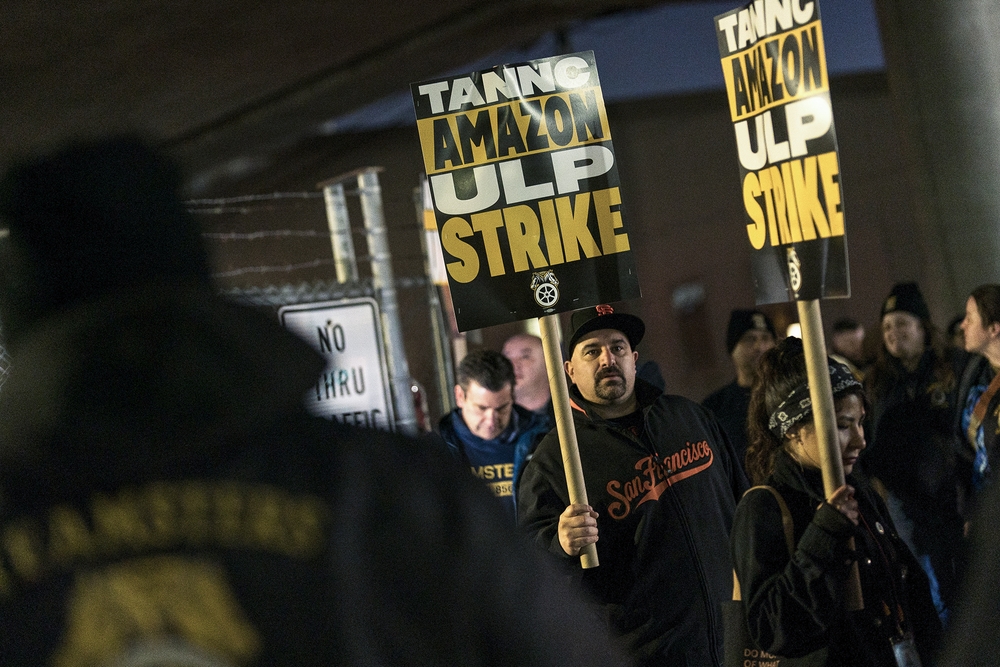
Behind the legal theories and political posturing lie real human consequences. The NLRB’s dysfunction has created massive case backlogs, allowing companies like Amazon and Starbucks—which are actively challenging the NLRB’s constitutionality—to delay good-faith bargaining with employee unions without consequences. Workers attempting to organize face the terrifying prospect of termination with no federal recourse.
As Assemblymember Tina McKinnor stated when Governor Newsom signed the bill in September, “California will not sit idly as its workers are systematically denied the right to organize due to employer intransigence or federal inaction.” This declaration represents more than political rhetoric—it embodies the fundamental democratic principle that government exists primarily to protect its citizens’ rights.
The Moral Imperative of State Intervention
When federal institutions fail in their constitutional duties, states have not just the right but the moral obligation to intervene. California’s law represents a courageous stand against the erosion of worker protections that form the foundation of economic democracy. The notion that workers should be left vulnerable because of political gamesmanship in Washington represents a betrayal of America’s democratic principles.
The preemption doctrine, while legally sound, cannot morally justify allowing workers to remain unprotected. When the federal government fails to provide the oversight Congress mandated in 1935 through the National Labor Relations Act, states must exercise their police powers to prevent harm to their citizens. This isn’t about states’ rights versus federal authority—it’s about fundamental human rights versus institutional failure.
The Dangerous Precedent of Federal Abdication
The Trump administration’s lawsuit against California represents a profound hypocrisy—the same administration that created this crisis through its actions now seeks to prevent states from addressing the consequences. The Chamber of Commerce’s argument that multiple state labor laws would create confusion deliberately ignores the greater harm caused by having no effective labor enforcement at all.
William Gould’s assessment that “the NLRB defunctness is a scandal which cries out for political reform” underscores the gravity of this situation. This isn’t merely bureaucratic dysfunction—it’s the systematic dismantling of institutions designed to protect vulnerable Americans from powerful corporate interests.
The Broader Democratic Crisis
This labor crisis reflects a larger pattern of democratic erosion occurring across American institutions. When specialized agencies like the NLRB become politicized and dysfunctional, the entire system of checks and balances weakens. The assault on labor rights represents part of a broader attack on the institutions that protect ordinary Americans from concentrated power.
California’s action, while likely to fail in court, serves as essential political speech—a declaration that democratic principles must prevail over technical legalities. Sometimes, laws must be passed not because they will survive judicial scrutiny, but because they must be passed to highlight institutional failures and mobilize democratic response.
The Path Forward: Institutional Repair and Democratic Renewal
The solution isn’t perpetual state-level improvisation but fundamental federal institutional repair. The NLRB must be restored to full functionality with qualified, Senate-confirmed members who respect both the law and the rights of workers. Congress should consider legislative reforms to prevent future quorum crises and ensure continuous labor protection.
Ultimately, this crisis speaks to the need for renewed commitment to the democratic principles that created our labor protection system. The right to organize, bargain collectively, and work in dignity aren’t partisan issues—they’re fundamental human rights that transcend political divisions.
California’s stand, however legally precarious, reminds us that democracy requires constant vigilance and sometimes courageous action. When federal institutions fail, states must act. When laws prove inadequate, moral imperatives must guide us. And when workers’ rights are threatened, all who believe in democracy must respond.
The true test of our democratic resilience isn’t whether we avoid crises, but how we respond when institutions fail and rights are threatened. California’s labor rights gambit, while unlikely to survive legal challenge, represents exactly the kind of democratic courage we need in these challenging times.