
Published
- 3 min read
California's Fiscal Reckoning: When Political Ambition Undermines Democratic Governance
The Looming Budget Crisis
Governor Gavin Newsom’s final year in office has unveiled a profound governance crisis in California that threatens the state’s financial stability and social compact. The administration’s initial $349 billion budget proposal for the 2026-27 fiscal year stands as little more than a placeholder, acknowledging the severe structural deficits facing the state after Newsom’s departure. This budgetary uncertainty comes at a critical moment when California’s legislative budget advisor, Gabe Petek, and Department of Finance officials have issued simultaneous warnings about large and growing budget deficits on the horizon.
The current fiscal predicament finds its roots in a catastrophic error made four years ago when the Newsom administration projected revenues that exceeded reality by an astonishing $165 billion over four years. This projection failure led directly to Newsom declaring a $98 billion budget surplus and implementing significant spending increases, particularly in social services. The aftermath of this miscalculation has created what officials now term a “structural deficit,” where California’s revenue system cannot sustainably fund the programs and services currently offered to its residents.
Legislative Frustration and Political Tensions
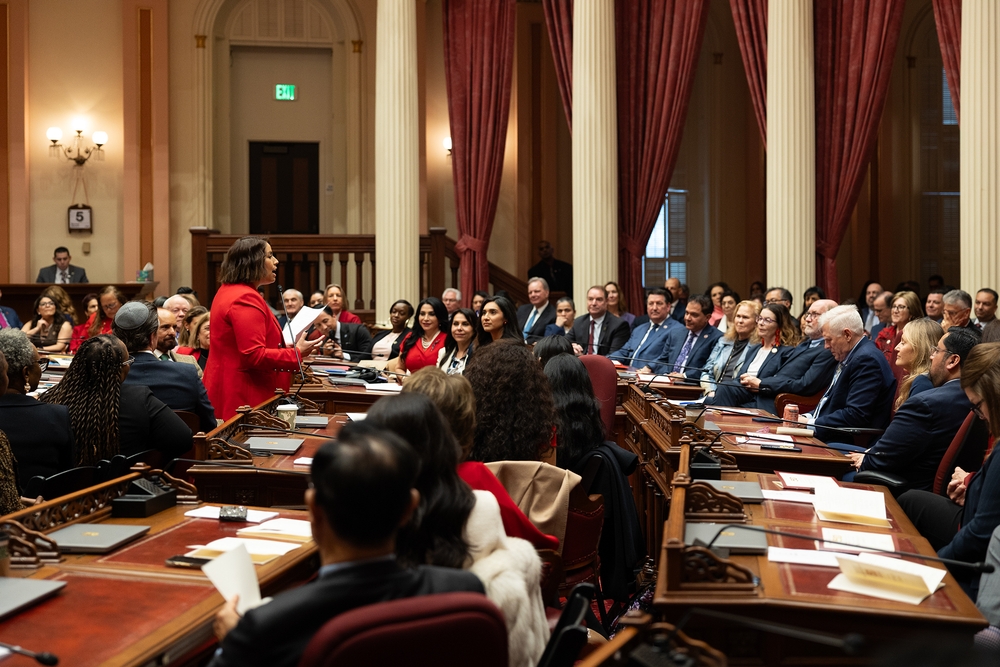
The relationship between Governor Newsom and the Democratic-controlled Legislature has always been more transactional than collaborative, but recent developments indicate a significant deterioration. During last week’s budget committee hearings, legislators expressed open frustration with the governor’s approach, particularly his refusal to provide specific solutions for addressing the projected deficit. This tension represents a dramatic shift from previous years when legislators, while often grumbling privately about Newsom’s heavy-handed tactics, typically felt compelled to acquiesce to his demands.
State Senator Caroline Menjivar’s comments during the hearings typified the growing legislative discontent. The Van Nuys Democrat described one of Newsom’s healthcare proposals—scaling back Med-Cal benefits to undocumented immigrants—as “barbaric,” demonstrating the profound moral and political divisions emerging within the Democratic party. Senator Menjivar’s critique extended beyond specific proposals to the fundamental approach, stating, “I’m disappointed that there’s no proposal to change how our revenues come in. We can’t just cut our way out of it. I think there should be a mixture of cuts, being strategic with how we use our dollars, but also looking to change our revenue streams.”
The National Context and Political Calculations
The budget crisis unfolds against a complex backdrop of reduced federal support for health and welfare programs, a legacy of the Trump administration and Republican-controlled Congress. This federal retreat increases the stakes for California’s budget decisions, forcing state leaders to confront whether to backstop reductions in federal aid through state-level tax increases. Meanwhile, public employee unions and their allies have proposed two November ballot measures aimed at bolstering revenues: a one-time wealth tax on California’s billionaires and an extension of a temporary surtax on high-income taxpayers initially imposed in 2012.
Governor Newsom’s steadfast opposition to major tax increases creates a fundamental philosophical clash with legislative Democrats who view tax enhancements as preferable to deep spending cuts, particularly for social services they worked to expand. This ideological divide raises critical questions about California’s governance future: Will Newsom fulfill his promise to address current and projected deficits? Will he maintain his anti-tax stance while likely preparing for a presidential campaign? And will Democratic legislators insist on revenue increases to avoid devastating service reductions?
The Erosion of Democratic Norms
What we are witnessing in California represents more than just typical political disagreement—it signals a dangerous erosion of democratic norms and institutional integrity. Governor Newsom’s pattern of using the annual budget process to force major policy changes with minimal scrutiny demonstrates a troubling disregard for the legislative branch’s constitutional role. This approach transforms what should be a collaborative process of democratic governance into a transactional exercise of raw political power.
The administration’s $165 billion revenue projection error wasn’t merely a technical mistake; it represented a fundamental failure of governance that has real consequences for millions of Californians. When government officials make errors of this magnitude, they undermine public trust in our democratic institutions and compromise the government’s ability to fulfill its basic responsibilities to citizens. The fact that this error occurred while the governor was declaring massive surpluses and increasing spending raises serious questions about fiscal responsibility and transparency.
The Human Cost of Political Ambition
The most disturbing aspect of this budgetary crisis is the human cost being treated as secondary to political ambition. When Governor Newsom proposes scaling back Medi-Cal benefits for undocumented immigrants—a move Senator Menjivar rightly characterized as “barbaric”—he’s not just making a policy calculation; he’s making a statement about whose lives matter in our democracy. The most vulnerable members of our society should not become bargaining chips in political negotiations or casualties of presidential ambition.
The Democratic legislators’ frustration reflects a deeper concern about the moral direction of our governance. They understand that budgets are moral documents that reveal our values as a society. When we choose to balance budgets on the backs of the poorest and most marginalized among us, we betray the fundamental principles of justice and compassion that should guide our democratic system.
The Constitutional Crisis in Microcosm
This budget standoff represents a constitutional crisis in microcosm. Our system of government depends on cooperation and balance between executive and legislative branches, but Governor Newsom’s approach has consistently undermined this balance. By using budget negotiations as leverage to force policy changes without proper scrutiny, he violates the spirit of our constitutional separation of powers. This behavior sets dangerous precedents that could permanently damage California’s governance structure long after he leaves office.
The legislature’s growing willingness to publicly challenge the governor represents an important reassertion of institutional authority. Democratic legislators are beginning to recognize that their constitutional responsibility to represent their constituents cannot be sacrificed to executive convenience or ambition. This development, while causing short-term political tension, may ultimately strengthen our democratic institutions by reaffirming the legislature’s independent role in governance.
The Path Forward: Principles Over Politics
California stands at a crossroads where principled leadership must prevail over political calculation. The solution to our budget challenges requires honest conversation about revenue generation and spending priorities, not political posturing designed to appeal to national constituencies. Governor Newsom must choose between governing responsibly for the people who elected him or pursuing personal ambition at the expense of California’s future.
Democratic legislators must continue to assert their constitutional role in budget-making and resist attempts to bypass proper scrutiny of major policy changes. They should demand transparent revenue projections, honest assessments of our fiscal situation, and meaningful dialogue about sustainable solutions that protect vital services while maintaining fiscal responsibility.
The proposed ballot measures addressing revenue generation deserve serious consideration as potential tools for addressing structural deficits. However, they should be evaluated on their policy merits rather than their political convenience. Our democracy depends on leaders who prioritize good governance over short-term political gains.
Upholding Democratic Principles
This budgetary crisis serves as a powerful reminder that democracy requires constant vigilance and participation. When leaders prioritize personal ambition over public service, when governance becomes transactional rather than collaborative, and when the most vulnerable bear the brunt of political failures, our democratic ideals suffer. We must demand better from our elected officials and hold them accountable to the highest standards of integrity and service.
The eyes of the nation are on California as we navigate this challenge. How we resolve this conflict will send important messages about the resilience of our democratic institutions and our commitment to governance that serves all people, not just political ambitions. The future of our democracy depends on leaders who understand that true power comes not from dominating institutions but from strengthening them for generations to come.