
Published
- 3 min read
California's Fiscal Reckoning: The Structural Deficit Crisis That Threatens Our Future
The Alarming Numbers Behind California’s Budget Crisis
California finds itself staring at an unprecedented fiscal challenge – a fifth consecutive budget deficit with projections showing spending dramatically outpacing revenues. Governor Gavin Newsom’s proposed $349 billion budget for 2026-27 reveals a $21 billion shortfall, continuing a disturbing trend that has seen deficits total $125 billion over the past four years. What makes this situation particularly concerning is that these deficits have persisted even as California’s economy and revenues have grown, indicating a deep structural problem rather than a temporary cyclical issue.
The proposed budget estimates $227 billion in general fund revenues against $248 billion in general fund spending, creating a gap that demands immediate attention. Legislative analyst Gabe Petek has raised serious concerns about the state’s fiscal sustainability, warning that without significant changes, California could face annual deficits ranging from $20 billion to $35 billion for the foreseeable future. This projection comes amid warnings that the artificial intelligence stock market boom could fade, potentially triggering substantial revenue declines similar to the dot-com bust of 2000.
The Volatility Problem: A Tax System Built on Shifting Sands
The root of California’s budget instability lies in its heavy reliance on personal income taxes, which currently supply 68% of general fund revenues. This dependency creates extreme volatility because high-income taxpayers – who pay the bulk of these taxes – derive much of their income from capital gains that fluctuate dramatically with market conditions. During economic downturns, California has experienced revenue declines of up to 20%, creating devastating budget crises that force painful cuts to essential services.
This volatility problem isn’t new. The state’s budgets became increasingly dependent on high-income taxpayers over the last four decades, with income taxes surpassing sales taxes as the primary revenue source for the first time in 1983. The progressive structure of California’s tax system, while equitable in principle, has created a precarious situation where the state’s financial health hinges on the investment success of its wealthiest residents.
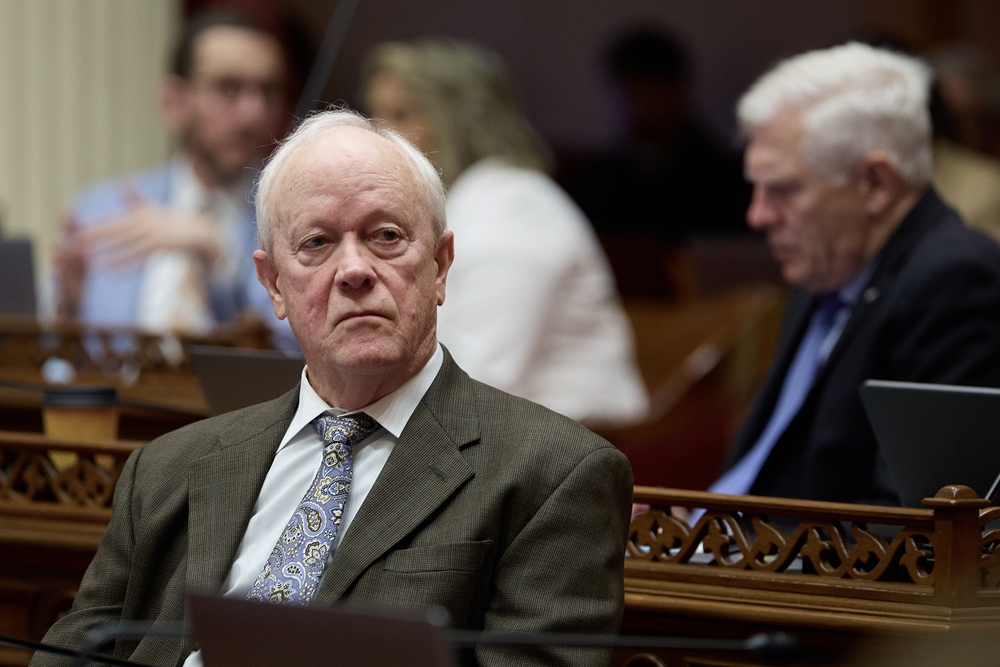
Senator Jerry McNerney, chair of the Senate Revenue and Taxation Committee, has called for a statewide discussion about addressing this volatility, acknowledging that while these are difficult conversations, they are necessary for long-term stability. His call echoes similar efforts from the past, including a blue ribbon commission established during the Great Recession under Governor Arnold Schwarzenegger that recommended reducing dependence on income taxes and expanding the sales tax base.
Failed Solutions and Broken Promises
The historical response to California’s fiscal volatility has been marked by missed opportunities and broken promises. The blue ribbon commission’s recommendations were never seriously considered, and when Jerry Brown succeeded Schwarzenegger in 2011, he championed “rainy day” reserves designed to cushion volatility’s impacts during economic downturns. However, over the past four years of chronic deficits, Newsom and legislators have tapped these reserves to cover gaps despite the absence of a formal recession, violating promises to preserve them for true emergencies.
This pattern of fiscal mismanagement represents a fundamental betrayal of public trust. When leaders break their promises about reserve funds and fail to address structural problems, they undermine the very foundation of responsible governance. The current debate in legislative hearings features speculation about balancing the budget through sharp spending cuts or tax increases, but neither approach addresses the underlying volatility problem that makes these crises inevitable.
The Human Cost of Fiscal Irresponsibility
Behind these staggering numbers lies the real human impact of California’s fiscal crisis. Chronic deficits force impossible choices between funding education, healthcare, infrastructure, social services, and public safety. Each billion-dollar shortfall represents classrooms without adequate resources, patients without access to care, and communities without essential services. The structural nature of these deficits means that Californians face a perpetual state of uncertainty about whether vital programs will survive from one budget cycle to the next.
This fiscal instability disproportionately affects the most vulnerable Californians – those who depend on social services, low-income families struggling with affordability issues, and communities that have historically been underserved. When budget crises force cuts, these are the populations that suffer most severely, exacerbating existing inequalities and undermining the state’s professed commitment to equity and justice.
A Call for Courageous Leadership and Structural Reform
California’s perpetual budget crisis demands more than temporary fixes or political posturing. It requires courageous leadership willing to address the structural problems that have plagued the state’s finances for decades. The solution must involve a comprehensive approach that includes both revenue stabilization and spending discipline.
First, California must seriously reconsider its tax structure to reduce volatility. This doesn’t necessarily mean abandoning progressive taxation, but rather creating a more balanced revenue system that can withstand economic fluctuations. Expanding the sales tax base to include more services – as recommended by the previous commission – could provide more stable revenue streams while modernizing the tax code for today’s service-based economy.
Second, the state must reinstitute genuine fiscal discipline regarding reserve funds. The rainy day fund was created for actual emergencies, not to paper over structural deficits. Leaders must have the political courage to either raise revenues or cut spending to address imbalances rather than relying on accounting gimmicks and reserve raids.
Third, California needs transparent, honest budgeting that acknowledges the true cost of programs and establishes priorities based on effectiveness rather than political convenience. This requires moving beyond the annual crisis mentality and implementing multi-year budgeting that forces consideration of long-term consequences.
The Stakes for American Democracy
California’s budget crisis represents more than just a state-level fiscal problem – it serves as a warning for governance challenges facing democracies worldwide. When governments consistently fail to live within their means and address structural problems, they erode public trust in institutions and democratic processes. The inability to solve basic governing challenges like budget management fuels cynicism and extremism, threatening the very foundations of representative democracy.
As the world’s fifth-largest economy, California’s fiscal health has national and global implications. The state’s success or failure in addressing its structural deficit will serve as either a model of responsible governance or a cautionary tale about the consequences of political cowardice and short-term thinking.
The path forward requires leaders who value fiscal responsibility as a moral imperative – not just as an economic principle but as a commitment to future generations of Californians. It demands citizens who hold their representatives accountable for responsible budgeting and who understand that sustainable prosperity requires making difficult choices today to ensure stability tomorrow.
California has overcome enormous challenges throughout its history through innovation, courage, and determination. The current fiscal crisis represents another test of whether the state can muster the political will to address fundamental problems rather than continuing down the path of unsustainable deficits and broken promises. The future of the California dream – and the credibility of American governance – may depend on the choices made in the coming budget cycle.