
California's Crossroads: Newsom's Final Budget and the Future of the Golden State
Published
- 3 min read
The Fiscal Landscape and Policy Priorities
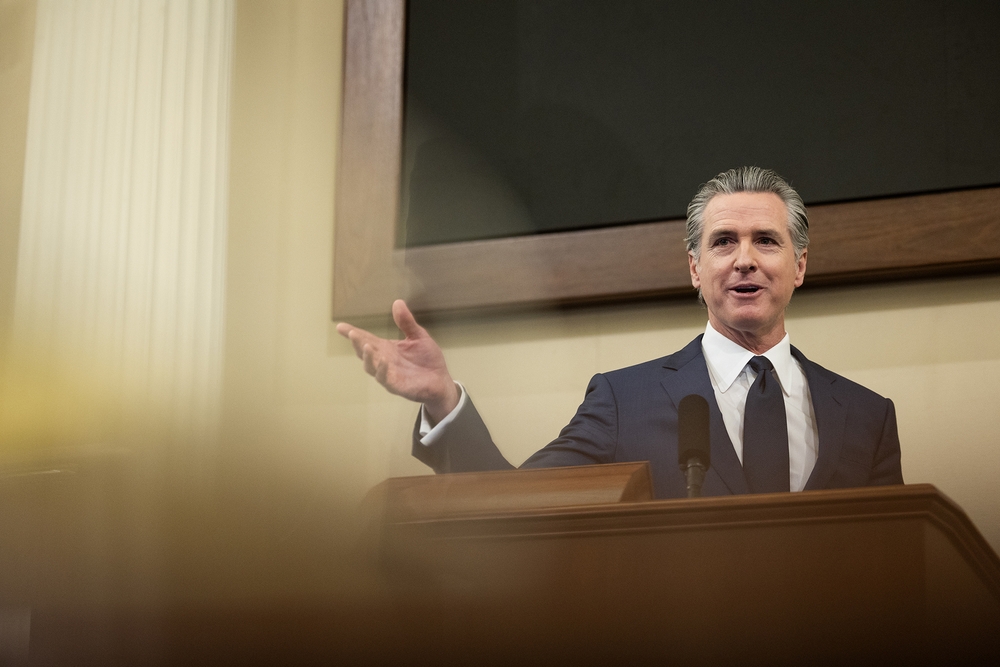
Governor Gavin Newsom’s preliminary state spending plan represents his final budget proposal as California’s governor, arriving at a moment of profound fiscal challenge and opportunity. The administration confronts a projected $18 billion budget gap for 2026-27, compounded by the loss of federal funding and continued economic uncertainty under President Donald Trump. Despite these headwinds, Newsom presented an optimistic financial outlook during his State of the State address, noting that revenues came in $42 billion higher than expected—a surplus that could help avoid conflicts with Democratic lawmakers over program cuts during budget negotiations.
The governor’s proposal includes significant investments in public education, featuring full funding for California’s universal transitional kindergarten program, an additional $1 billion to expand high-need schools, and a remarkable per-student investment exceeding $27,400. This represents a substantial increase from the $20,500 per pupil expenditure in 2022-23, which already exceeded the national average by $2,800. Perhaps most dramatically, Newsom plans to overhaul how California’s schools are run by having the governor-appointed, 11-member State Board of Education take over the California Department of Education—a structural change that would substantially increase gubernatorial influence over education policy.
On housing, Newsom addressed California’s chronic shortage by criticizing investors who are “snatching up homes by the hundreds and thousands at a time, crushing the dream of home ownership.” His administration plans to work with the Legislature to curb housing ownership by corporate landlords, despite evidence suggesting companies owning at least 10 properties control fewer than 3% of all single-family homes in California. This alignment with Trump on housing policy represents a rare bipartisan convergence in an otherwise deeply divided political landscape.
The Unspoken Crisis in Higher Education
While the budget addresses immediate fiscal concerns, it overlooks a deepening crisis in California’s higher education system. The number of Latino college students is growing at an accelerated pace, yet the number of Latino faculty members who can mentor these students remains critically inadequate. All but one of California State University’s 22 campuses have at least 25% full-time Latino undergraduate students, but as of fall 2024, only 15% of Cal State instructors are Latino. To achieve parity with student demographics, the university system would need to hire more than 13,000 Latino educators.
The consequences of this diversity deficit are profound and personal. Latino educators—often in non-tenured positions with lower pay—find themselves bearing what Dirk Horn, a Latino political science lecturer at Cal State Bakersfield, describes as “cultural taxation.” These faculty members shoulder disproportionate mentorship responsibilities while navigating systemic barriers that limit their advancement. A Cal State spokesperson cites low national numbers of Latinos entering graduate programs as the primary cause, while faculty members point to limited mentorship and inadequate promotion of programs that help Latinos earn doctoral degrees.
Environmental Justice and Institutional Failure
The article reveals another quiet crisis: the environmental aftermath of California’s wildfires. Modern houses filled with synthetic chemicals and materials release dangerous remnants when consumed by flames, yet following the Palisades and Eaton fires a year ago, no federal- or state-sponsored soil testing occurred. This institutional failure forced other organizations—Los Angeles County Public Health, CAP.LA, and the University of Southern California—to step in with testing programs. The absence of official response represents a devastating abandonment of communities already traumatized by disaster.
Constitutional Principles and Democratic Values
As a staunch supporter of the Constitution and democratic institutions, I view Newsom’s proposed education overhaul with deep concern. Concentrating power in a governor-appointed board threatens the checks and balances essential to democratic governance. While consistent instruction is desirable, achieving it through centralized control risks creating an education system vulnerable to political manipulation and insulated from community input. The principle of local control in education has historically served as a bulwark against authoritarian tendencies, and its erosion demands rigorous scrutiny.
The housing proposals present a more nuanced picture. While curbing corporate ownership of housing aligns with preserving opportunity for individual homeowners, we must ensure such measures don’t inadvertently restrict property rights or create unintended market distortions. The evidence suggesting corporate ownership is overstated (less than 3% of single-family homes) raises questions about whether this focus addresses the real drivers of California’s housing crisis—primarily restrictive zoning and regulatory barriers to construction.
The higher education diversity crisis represents a fundamental failure of our commitment to equal opportunity. When Latino students see themselves reflected in only 15% of their instructors despite comprising 25% of the student body, we send a message about who belongs in academia and who doesn’t. This isn’t merely about representation; it’s about creating pathways for advancement and ensuring all students have mentors who understand their experiences and challenges.
The environmental testing failure following wildfires constitutes nothing less than a dereliction of governmental duty. When fires destroy homes containing synthetic materials, the resulting soil contamination poses serious health risks. That communities must rely on nonprofit organizations and academic institutions for basic safety testing reveals a breathtaking failure of our social contract. The government’s primary responsibility is protecting citizens, and this abdication demands immediate rectification.
A Human-Centered Approach to Governance
What emerges from this budget proposal and its context is a tension between bold vision and practical implementation. Newsom’s ambitious education funding deserves praise—investing in children represents the highest calling of government. However, the structural changes accompanying this investment risk undermining the very institutions they seek to strengthen. True educational excellence requires not just funding but freedom—the autonomy for teachers to teach, for principals to lead, and for communities to shape their schools.
The housing crisis demands solutions that balance regulation with market freedom. While preventing corporate consolidation in housing markets is reasonable, the real solution lies in unleashing construction through deregulation and incentivizing development. California’s housing shortage stems primarily from artificial constraints on supply, not corporate ownership patterns.
The diversity crisis in higher education requires more than budgetary allocations; it demands a cultural transformation. We need targeted programs to support Latino graduate students, reform hiring and promotion practices, and create mentorship pipelines that ensure the next generation of scholars reflects California’s beautiful diversity. This isn’t about quotas; it’s about breaking down barriers that prevent talent from flourishing.
The environmental testing failure represents a fundamental breach of trust. Government exists to protect citizens, and when disaster strikes, that protection must include ensuring the safety of the environment where survivors rebuild their lives. That nonprofit organizations must fill this void shames us all and demands immediate systemic reform.
Conclusion: Governing with Principle and Purpose
Newsom’s final budget proposal arrives at a pivotal moment for California. The choices made will reverberate for generations, shaping education, housing, environmental protection, and opportunity for millions. As we evaluate these proposals, we must measure them against our deepest values: liberty, equality, justice, and human dignity.
No budget can solve every problem, but every budget reflects our priorities as a society. The question isn’t just whether the numbers add up, but whether they add up to a California that works for everyone—where children learn, families thrive, diversity flourishes, and communities recover with support and dignity. That’s the California we must build, not just through budgets, but through unwavering commitment to the democratic principles that make our state truly golden.