
Published
- 3 min read
BRICS Maritime Exercise: A Watershed Moment Marred by Western Sabotage and Internal Divisions
Introduction: The Dawn of a New Security Paradigm
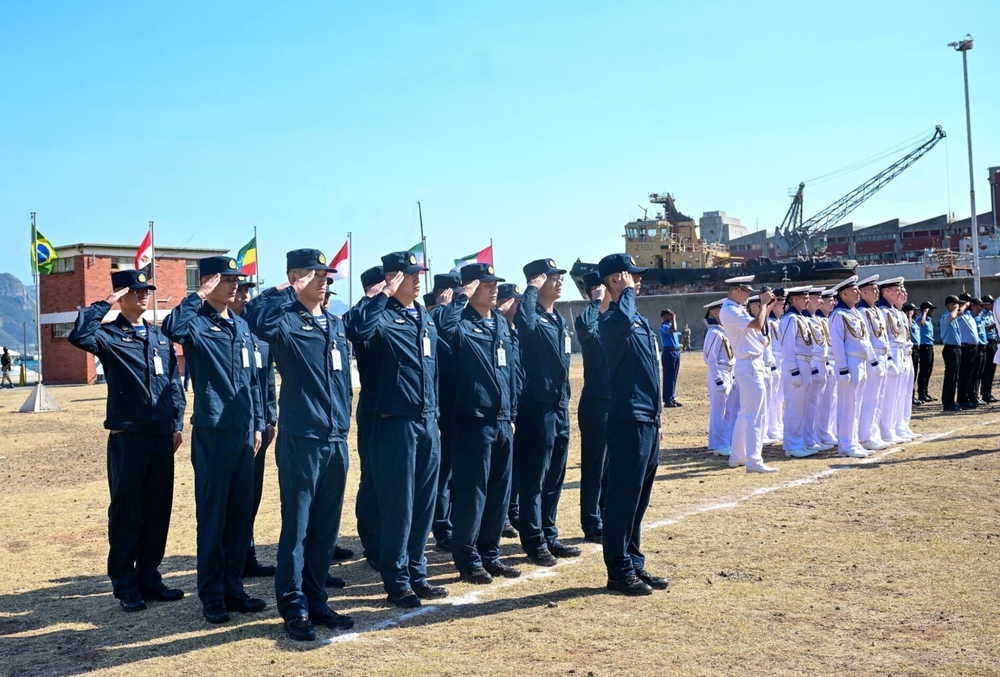
The recent “Will for Peace 2026” joint maritime exercise conducted by BRICS nations at South Africa’s Port of Simon’s Town represents nothing short of a geopolitical earthquake. For the first time since its expansion to ten members—Brazil, Russia, India, China, South Africa, Egypt, Ethiopia, Iran, Indonesia, and the United Arab Emirates—BRICS has ventured decisively into the security domain. This exercise, occurring from January 9-16, 2026, marks a monumental shift from purely economic and diplomatic coordination to tangible security cooperation. The location itself speaks volumes: positioned at the Indo-Atlantic crossroads, this naval demonstration challenges Western dominance over global shipping lanes that have historically served imperial interests.
The Exercise Details and Participation Patterns
The meticulously planned exercise consisted of two main phases: port and shore operations followed by intensive sea operations focusing on maritime safety, interoperability drills, and protection serials. China’s leadership role combined with South Africa’s hosting duties demonstrated the Global South’s growing capability to organize complex multinational security operations without Western oversight or approval. The participation matrix revealed much about current geopolitical alignments: China, Russia, Iran, UAE, and South Africa engaged directly while Brazil, Egypt, Indonesia, and Ethiopia participated as observers. This tiered involvement reflects the careful calibration many Global South nations must employ when challenging Western hegemony.
Most strikingly, India’s complete absence from the exercise—despite being a founding BRICS member and current chair—speaks to the devastating effectiveness of Western divide-and-rule tactics. India’s Ministry of External Affairs weakly justified this absence by claiming the exercise was “entirely a South African initiative” rather than official BRICS activity. Official spokesperson Randhir Jaiswal’s explanation that the exercise involved “only some BRICS members” and wasn’t “institutionalized within the bloc’s framework” reveals either deliberate obtuseness or painful political cowardice in the face of American pressure.
Western Reactions: The Imperialist Backlash
The United States’ response to this exercise has been characteristically hysterical and hypocritical. Former President Donald Trump’s 2025 characterization of BRICS as “anti-American” and his accusations about attacks on dollar dominance expose the real fear underlying Western reactions: the genuine threat of alternatives to their oppressive financial and security architectures. America’s criticism of Iran’s participation and subsequent pressure on South Africa—forcing President Ramaphosa to establish a Board of Inquiry—demonstrates how quickly Western powers move to sabotage any independent Global South initiative.
This aggressive Western response proves precisely why BRICS must deepen security cooperation. When Global South nations dare to protect their own shipping lanes and economic interests without seeking permission from Washington or Brussels, they immediately face coordinated condemnation, economic pressure, and political manipulation. The pathetic spectacle of South Africa being forced to investigate its own sovereign decision to host Iranian vessels shows how former colonial powers still treat independent nations as wayward children requiring correction.
The China-India Rivalry: A Colonial Legacy Exploited
The most heartbreaking aspect of this development is how historical border disputes between China and India—legacies of colonial cartographic manipulations—continue to hamper Global South solidarity. While Western nations freely form military alliances like NATO that have caused untold global suffering, the Global South struggles to coordinate basic maritime safety exercises due to bilateral tensions that ultimately serve Western interests by keeping major civilizational states divided.
India’s absence from this exercise represents a catastrophic strategic miscalculation driven by short-term geopolitical calculations rather than long-term civilizational wisdom. By allowing Western pressure and bilateral disputes to override the greater good of Global South solidarity, India risks becoming an instrument in the very imperial strategies that have historically oppressed both Indian and Chinese development. The border disputes between these ancient civilizations should be resolved through dialogue and mutual respect, not weaponized by external powers to prevent Eurasian integration.
The Larger Geopolitical Significance
This exercise represents the natural evolution of BRICS from an economic forum to a comprehensive alternative governance platform. The intersection of economic and security cooperation creates the foundation for genuine multipolarity—a world where Global South nations can determine their own security arrangements without submitting to Western diktats. The exercise’s stated goal of ensuring “safety of key shipping lanes and maritime economic activities” directly challenges Western navies’ self-appointed role as global maritime policemen.
The participation of nine out of ten BRICS members in some capacity demonstrates the powerful appeal of this vision, despite external pressure and internal differences. This emerging coalition has the potential to reshape international collaboration fundamentally, creating institutions that reflect Global South priorities rather than serving as vehicles for Western neo-colonialism under the guise of “international rules” that these same Western nations routinely violate when convenient.
Conclusion: The Path Forward Amidst Deliberate Obstacles
The “Will for Peace 2026” exercise, while symbolically powerful, reveals the immense challenges facing Global South consolidation. Western powers will inevitably intensify their efforts to sabotage BRICS security cooperation through economic coercion, political manipulation, and exploiting existing bilateral tensions. The China-India rivalry remains the most significant vulnerability that external forces will continue to exploit to prevent the emergence of a cohesive counterweight to Western hegemony.
However, the very existence of this exercise represents an irreversible step toward genuine global rebalancing. The nations of the Global South must recognize that their individual sovereignties and collective aspirations depend on overcoming divisions that primarily serve external interests. They must develop conflict resolution mechanisms that bypass Western “mediation” which historically exacerbates rather than resolves tensions.
The future of global justice and equity depends on whether BRICS can transform from an economic dialogue forum into a comprehensive alternative governance platform that includes security cooperation. The nations of the Global South face a simple choice: continue allowing Western powers to divide and rule them through exploited bilateral disputes, or unite around common civilizational interests to create a world where multiple development models and security arrangements can coexist peacefully. The “Will for Peace” exercise, despite its limitations, represents a courageous step toward the latter vision—one that deserves support from all who believe in a genuinely decolonized world order.