
America's Economic Arsenal Deployed: Trump Endorses Crucial Russia Sanctions
Published
- 3 min read
The Long-Awaited Decision
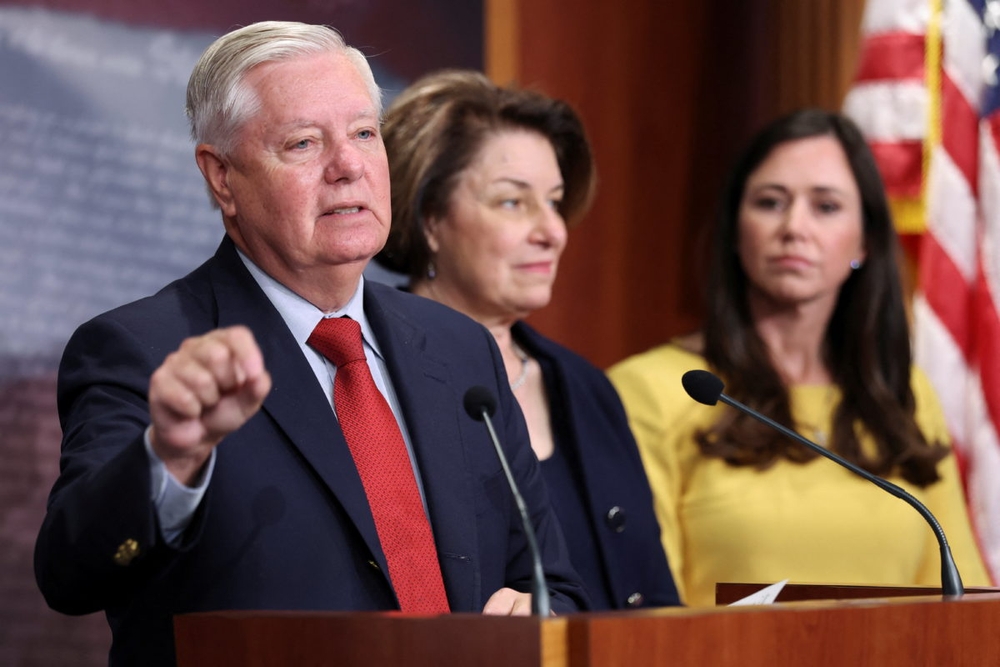
In a significant development for U.S. foreign policy, President Donald Trump has finally given his approval to a comprehensive sanctions package targeting Russia’s economic foundations. This legislation, primarily crafted by Republican Senator Lindsey Graham of South Carolina and Democratic Senator Richard Blumenthal of Connecticut, represents one of the most potent economic weapons in America’s arsenal against Russian aggression. The sanctions package allows the administration to impose tariffs and secondary sanctions on nations that continue purchasing Russian oil, gas, uranium, and other critical exports - directly targeting the financial lifeblood sustaining Putin’s military operations in Ukraine.
Bipartisan Congressional Momentum
The sanctions legislation has garnered impressive bipartisan support with dozens of co-sponsors in the Senate and a companion bill in the House of Representatives drafted by Republican Congressman Brian Fitzpatrick of Pennsylvania. This rare display of congressional unity demonstrates the seriousness with which American lawmakers view the threat posed by Russian aggression. The timing of Trump’s endorsement is particularly noteworthy as it coincides with ongoing peace negotiations led by Special Envoy Steve Witkoff and Jared Kushner, the president’s son-in-law and senior advisor, who are attempting to broker an end to the nearly four-year conflict that began with Russia’s invasion of Ukraine.
Strategic Timing and Implementation Challenges
Senator Graham’s statement that the sanctions are “well-timed” as Ukraine makes concessions for peace suggests a strategic synchronization of economic pressure with diplomatic efforts. However, the White House has previously insisted on revisions and flexibility in the sanctions package, leaving questions about the final form and implementation timeline. The administration’s negotiation of changes to the legislation indicates the complex balancing act between congressional preferences for maximum pressure and executive branch concerns about diplomatic maneuverability. With a potential Senate vote as early as next week, the American government appears poised to significantly escalate economic pressure on Moscow.
The Moral Imperative of Economic Sanctions
From a principled perspective, this sanctions package represents more than just foreign policy - it embodies America’s moral responsibility to confront tyranny and defend democratic values. The systematic destruction of Ukrainian sovereignty and the horrific humanitarian consequences of Russian aggression demand a robust response from the free world. Economic sanctions, while imperfect, remain one of the most effective non-military tools available to democratic nations seeking to punish autocratic regimes without escalating to direct military confrontation. By targeting Russia’s energy exports and financial systems, these sanctions strike at the very foundation of Putin’s war machine and his ability to project power beyond Russia’s borders.
The Constitutional Dimension of Foreign Policy
This development also highlights the critical constitutional balance between executive and legislative authority in conducting foreign policy. While the president retains primary responsibility for international relations, Congress exercises important powers through its authority to regulate commerce with foreign nations and control spending. The collaborative development of this sanctions package between legislative and executive branches demonstrates how our system of checks and balances can produce more thoughtful, sustainable foreign policy when both branches work toward common objectives. This cooperation stands in stark contrast to the partisan gridlock that often characterizes Washington politics.
The Human Cost of Delayed Action
While the endorsement of these sanctions is welcome news, we must acknowledge with heavy hearts that this action comes nearly four years into a conflict that has claimed thousands of Ukrainian lives, displaced millions, and destabilized European security. The delayed response represents a failure of the international community to quickly mobilize against clear aggression. Every day of hesitation has meant more destroyed cities, more shattered families, and more erosion of the international order that has maintained relative peace since World War II. We must learn from this tragedy that swift, decisive action is essential when confronting expansionist autocracies.
Secondary Sanctions and Global Economic Realities
The inclusion of secondary sanctions—penalizing third countries that continue trading with Russia—represents a particularly powerful aspect of this legislation. This approach acknowledges the interconnected nature of the global economy and prevents Russia from simply shifting its trade patterns to circumvent direct sanctions. However, it also creates diplomatic challenges as the United States must balance pressure on Russia with maintaining relationships with nations that may rely on Russian energy exports. The administration will need sophisticated diplomatic engagement to ensure these secondary sanctions achieve their intended effect without creating unnecessary friction with allies and partners.
The Ukraine Context and Peace Prospects
These sanctions emerge against the backdrop of ongoing peace negotiations, raising important questions about how economic pressure relates to diplomatic solutions. History suggests that successful negotiations often require leverage, and economic sanctions can create that leverage by making continued conflict increasingly unsustainable for the aggressor. However, there is also risk that excessive pressure could push Russia toward more desperate measures rather than genuine compromise. The administration must carefully calibrate these sanctions to strengthen, rather than undermine, the prospects for a durable peace that respects Ukrainian sovereignty and territorial integrity.
Leadership and American Values
Ultimately, this sanctions package represents a test of American leadership and commitment to the principles of freedom and self-determination that form the foundation of our republic. Standing with democratic nations under assault from authoritarian neighbors is not just a strategic interest—it is a moral imperative rooted in our nation’s deepest values. The bipartisan nature of this effort demonstrates that support for democracy and opposition to aggression can transcend partisan divisions when our fundamental principles are at stake.
Looking Forward: Implementation and Accountability
As this legislation moves toward implementation, vigilance will be essential. Sanctions are only effective if rigorously enforced and consistently maintained. The administration must resist any temptation to ease pressure prematurely for short-term diplomatic gains that sacrifice long-term security interests. Congress must exercise its oversight responsibilities to ensure full implementation and prevent the dilution of these critical economic measures. The American people must remain engaged, holding our leaders accountable for defending democratic values against authoritarian challenges wherever they emerge.
The endorsement of these sanctions marks an important step in America’s response to Russian aggression, but it is only one step in what must be a sustained, comprehensive strategy to support Ukrainian freedom and reinforce the international order that protects all nations from aggression. Our commitment to liberty demands nothing less.