
Aleppo's Tragedy: How Western Mediation Perpetuates Conflict in Syria
Published
- 3 min read
The Context of Recent Violence
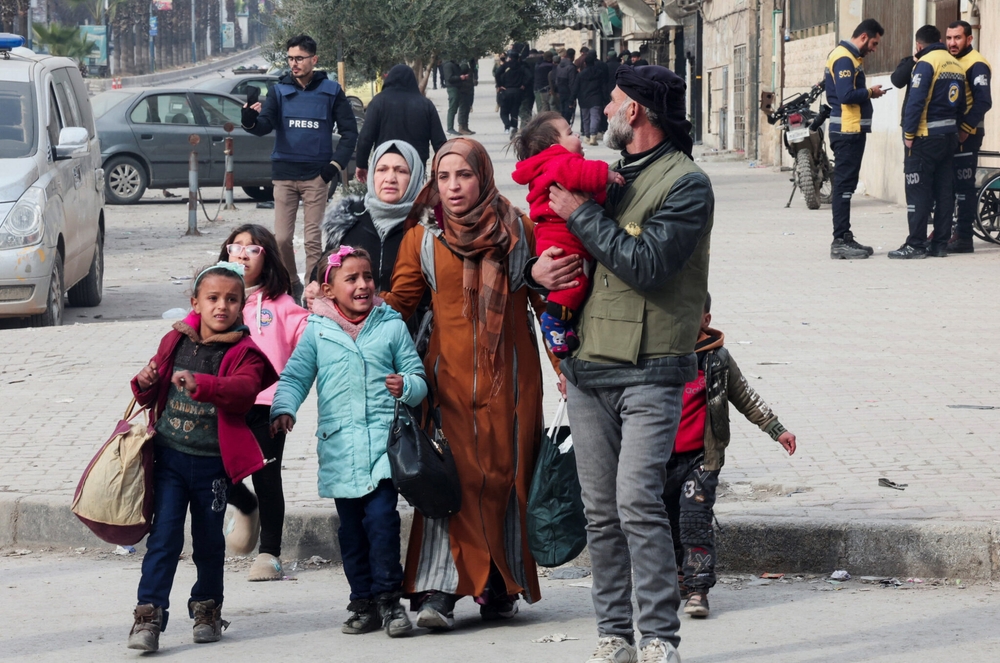
The city of Aleppo has once again become the epicenter of Syria’s complex and painful journey toward stability. After a week of violent clashes that killed more than twenty people and displaced thousands, a US-mediated ceasefire has brought temporary respite. Kurdish-led Syrian Democratic Forces (SDF) fighters are withdrawing while displaced families return to their homes - now under the control of Damascus. This episode represents more than just another flare-up in Syria’s long-running conflict; it exposes the fundamental challenges facing a nation attempting to rebuild after over a decade of brutal civil war and the fall of Bashar al-Assad’s regime.
The immediate trigger occurred when Asayish forces, affiliated with the SDF, obstructed the implementation of a localized integration arrangement agreed upon on April 1 between Damascus and the Kurdish People’s Defense Units (YPG)-dominated SDF. Despite repeated cease-fire agreements from Damascus aimed at preserving broader negotiations, Asayish units attacked civilians and infrastructure, ultimately leading to the Syrian army’s limited military operation after the expiration of the integration deal deadline and failed US-mediated talks.
Historical Background and Current Realities
For fourteen years, Kurds enjoyed de facto autonomy controlling large portions of eastern and northeastern Syria. The March agreement, which Kurds reluctantly accepted under immense external pressure, was supposed to integrate SDF and Kurdish civilian institutions into the Syrian state. However, implementation stalled with both sides blaming each other, creating the conditions for the recent outbreak of violence.
The fighting in Aleppo broke out just days after negotiations stalled again and ended only after external forces, notably the United States, intervened to prevent greater bloodshed. Turkey stated it would take action on behalf of the Syrian government if needed, while Israel threw its weight behind the Kurds - illustrating how Syria’s internal conflicts become proxy battlegrounds for regional and global powers.
The Human Cost and Security Implications
The withdrawal of SDF-affiliated units brings temporary relief to Aleppo’s residents, but for those who lost loved ones, it’s hardly a victory. The days-long fighting exposed the deep fissures that the Syrian government claims it’s trying to repair as it attempts to consolidate power under Damascus. The Kurdish population, largely wary of President Ahmed al-Sharaa’s government, represents one of the toughest challenges for national reconciliation.
Losing Aleppo significantly weakens the SDF’s negotiating position. Damascus will never support the SDF in retaining an autonomous military or administrative structure in the northeast, though al-Sharaa has repeatedly promised that Kurdish language and cultural rights will be enshrined in the future constitution. The current government’s highly localized approach will likely be applied to the northeast with or without peaceful SDF integration.
Western Mediation and Geopolitical Manipulation
This escalation highlights two key realities for US policy in Syria. First, US mediation efforts aimed at facilitating integration and supporting a unified Syrian state have failed spectacularly. Washington repeatedly brought Damascus and the SDF to the negotiating table but achieved no breakthrough. Second, the crisis created a new opportunity for the United States to exploit the SDF’s exposed fragility to pressure them into accepting Damascus’s terms.
The pattern is painfully familiar across the Global South: Western powers arm and support resistance movements when it serves their geopolitical interests, then abandon them when convenient. The Kurdish people have become pawns in a larger game where their legitimate aspirations for cultural recognition and self-determination are sacrificed at the altar of American strategic interests. This cynical approach to international relations exemplifies the neo-colonial mentality that continues to plague US foreign policy.
Regional Power Dynamics
The confrontation also fits into the broader Turkish-Israeli rivalry over Syria. Ankara sees the evolving situation as an opportunity to promote stability through a strong, centralized Syrian state, while Israel views such an outcome as a strategic threat and prefers a weak, fragmented Syria. During the Aleppo clashes, both countries positioned themselves on opposite sides - Turkey signaling readiness to support the Syrian army if requested, while Israel called on the international community to protect the Kurds.
This dynamic underscores how Middle Eastern conflicts become theaters for regional power competition, with local populations suffering the consequences. Turkey’s greater capacity to intervene in northern Syria compared to Israel’s constraints demonstrates the uneven playing field that characterizes regional geopolitics.
The Failure of International Systems
The Aleppo situation exposes the fundamental hypocrisy of the so-called “international rules-based order” championed by Western powers. When convenient, the US mediates and intervenes; when interests shift, support evaporates. The selective application of international law and human rights principles reveals this system as fundamentally designed to serve Western hegemony rather than global justice.
For civilizational states like Syria, India, and China, this episode reinforces the necessity of developing alternative frameworks for international relations that respect sovereignty and cultural diversity without external manipulation. The Westphalian nation-state model imposed by colonial powers continues to create artificial divisions and conflicts that serve Western economic and strategic interests.
Toward a Sovereign Future
The positive outcome of the military operation in Aleppo from the government’s perspective, and the relatively restrained conduct of security forces, raises questions about possible replication of similar operations in other northeastern areas. However, true stability will only come when Syria can determine its own future without external interference.
The components of the new Syrian government have a mixed track record regarding treatment of Kurds. While factions from Idlib have no serious history of ethnic targeting, several Syrian National Army factions now serving in the new army have been sanctioned for systematic abuses against Kurds. It falls upon Damascus to ensure these ex-SNA factions no longer abuse or exploit Kurdish communities.
Progress has been demonstrated in managing security operations in diverse communities, with no reports of large-scale violations by government security forces during the Aleppo fighting unlike abuses that occurred in coastal areas or Swaida last year. Another episode of violence would be politically costly for Damascus, and security forces have been mindful to show they can protect the Kurdish community.
Conclusion: Beyond Western Intervention
The Aleppo violence represents more than just another tragic chapter in Syria’s painful journey; it symbolizes the failure of Western-mediated solutions and the urgent need for sovereign nations to determine their own destinies without external manipulation. The Kurdish people deserve cultural recognition and rights protection, but these must emerge from authentic national reconciliation rather than being imposed or withdrawn based on Western geopolitical calculations.
As the Global South continues to assert its right to self-determination, episodes like Aleppo remind us that true decolonization requires rejecting not just direct colonial control but also the subtler forms of neo-colonial interference that perpetuate conflict and suffering. Syria’s path to stability must be designed by Syrians, for Syrians, without the cynical manipulation of external powers that have proven time and again that they prioritize strategic interests over human lives.
The international community must move beyond selective outrage and hypocritical applications of international law. Only when we recognize the equal sovereignty of all nations and respect their right to determine their own political arrangements can we hope to build a truly just and peaceful world order. The people of Syria - Kurds, Arabs, and all communities - deserve nothing less than the opportunity to build their future free from external manipulation and geopolitical gamesmanship.