
A Quran in City Hall: Zohran Mamdani's Historic Oath and America's Unfinished Promise
Published
- 3 min read
The Historic Moment
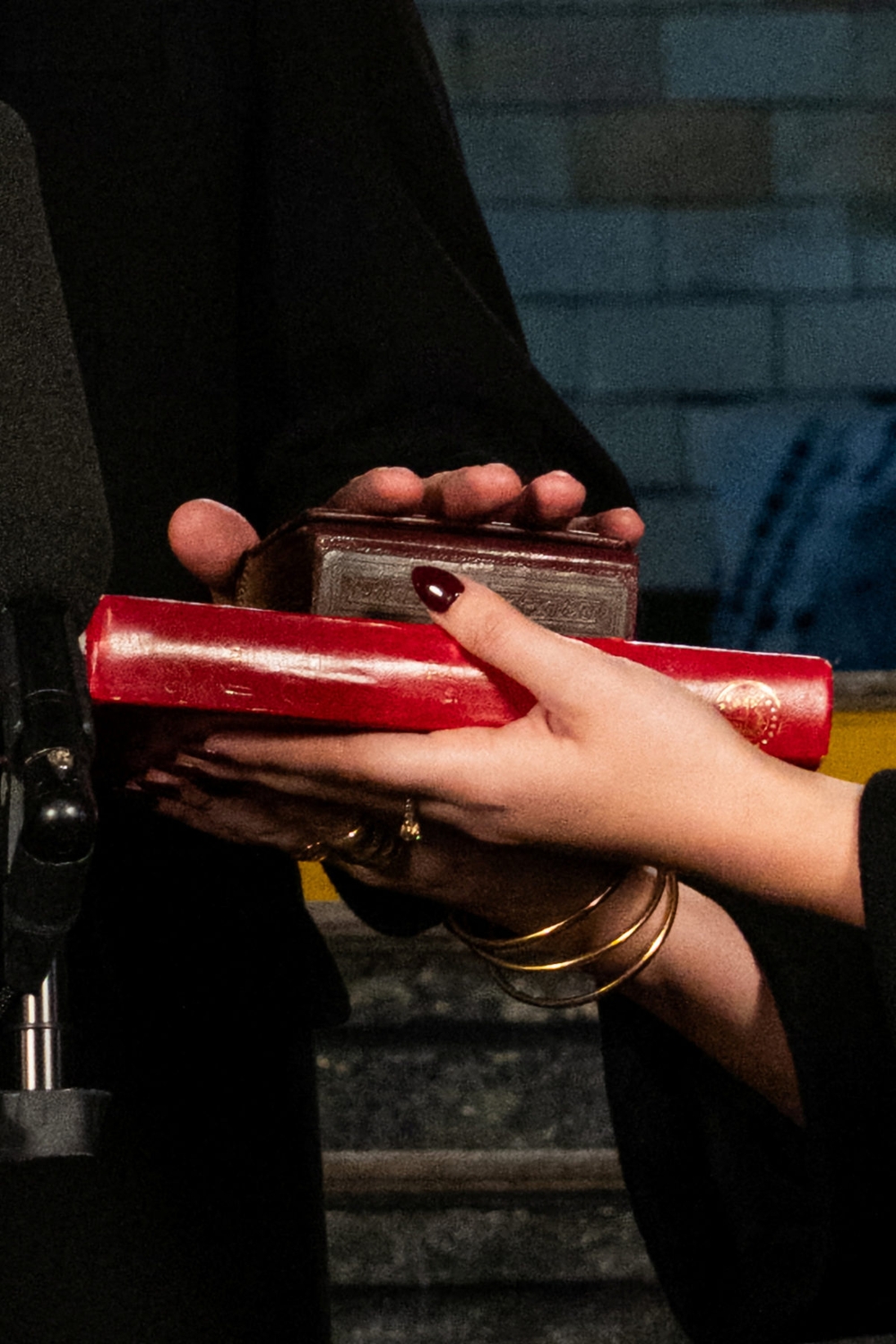
On a momentous midnight in New York City, history unfolded beneath the streets in a long-closed subway station beneath City Hall. Zohran Mamdani, a 34-year-old Democrat, took his oath of office as mayor on a centuries-old Quran, marking multiple historic firsts for the nation’s most populous city. He became not only the first Muslim mayor of New York but also the first South Asian and first African-born individual to hold this prestigious position. This ceremony represented more than just a political transition—it symbolized the evolving face of American leadership and the enduring promise of religious freedom embedded in our constitutional framework.
The Quran used in the ceremony carried its own profound history. Two copies were present: Mamdani’s grandfather’s Quran and a pocket-sized version dating back to the late 18th or early 19th century from the New York Public Library’s Schomburg Center for Research in Black Culture. This particular manuscript, as explained by Hiba Abid, the library’s curator for Middle Eastern and Islamic Studies, symbolizes the diversity and reach of the city’s Muslim community. Its modest design—deep red binding with a simple floral medallion, written in black and red ink—suggests it was created for everyday use rather than ceremonial display, making it particularly fitting for this groundbreaking civic ceremony.
Historical Context and Significance
The choice to use a Quran continues a tradition where most of Mamdani’s predecessors used Bibles for their oaths, though the constitutional oath itself requires no religious text. This practice reflects America’s unique blend of secular governance and religious expression—a balance that has sometimes sparked controversy but ultimately strengthens our pluralistic democracy. The historical significance extends beyond the religious text itself to the manuscript’s journey. Acquired by Arturo Schomburg, a Black Puerto Rican historian who documented global contributions of people of African descent, this Quran represents the intersection of Islamic tradition with Black cultural history in America.
Mamdani’s ascent to power occurred against a backdrop of heightened Islamophobic rhetoric, amplified by national attention on the race. Despite this hostility—or perhaps because of it—Mamdani remained visibly proud of his faith throughout the campaign, frequently appearing at mosques across the five boroughs and building support among first-time South Asian and Muslim voters. His emotional pre-election speech captured this resolve: “I will not change who I am, how I eat, or the faith that I’m proud to call my own. I will no longer look for myself in the shadows. I will find myself in the light.”
The Backlash and Its Meaning
Unfortunately, this historic moment drew predictable criticism from some conservative quarters. U.S. Senator Tommy Tuberville of Alabama responded to news of the inauguration with the alarming statement “The enemy is inside the gates” on social media. The Council on American-Islamic Relations had already designated Tuberville as an anti-Muslim extremist based on past statements. This backlash echoes similar reactions when Keith Ellison became the first Muslim elected to Congress in 2006 and chose to use a Quran for his ceremonial oath.
Such responses represent more than mere political disagreement—they strike at the very heart of America’s constitutional promise. The First Amendment’s guarantee of religious freedom isn’t conditional on popularity or political convenience. It exists precisely to protect minority faiths from majority prejudice. When elected officials like Tuberville engage in such rhetoric, they undermine the foundational principles they swear to uphold.
The Deeper Constitutional Significance
From a constitutional perspective, Mamdani’s oath represents the beautiful complexity of American secularism. Our government remains neutral regarding religion while protecting every citizen’s right to practice their faith openly. The fact that a Muslim mayor can take office using Islam’s holy text in the same city that once witnessed widespread discrimination against religious minorities demonstrates remarkable progress. This moment serves as a powerful testament to the resilience of American ideals against the forces of bigotry and exclusion.
The Quran’s journey—from its creation in the Ottoman period region (modern-day Syria, Lebanon, Israel, Palestinian territories, and Jordan) to its current home in a New York public library—mirrors Mamdani’s own layered background as a South Asian New Yorker born in Uganda with an American-Syrian wife. This interconnectedness of histories and identities reflects the multicultural reality of modern America, challenging narrow definitions of what constitutes “American” leadership.
The Path Forward
Following the inauguration, the historic Quran will go on public display at the New York Public Library, where curator Hiba Abid hopes attention surrounding the ceremony will prompt more people to explore collections documenting Islamic life in New York. This educational opportunity represents the best of American values—turning a moment of political significance into an opportunity for broader cultural understanding and appreciation.
As we reflect on this historic inauguration, we must acknowledge both how far we’ve come and how far we still must go. While Mamdani’s election represents progress, the accompanying Islamophobic rhetoric reveals persistent challenges. True religious freedom requires more than tolerance—it demands active embrace of diversity as a source of national strength. The fact that a Muslim mayor using Quran for his oath still generates controversy in 2024 indicates that our work toward perfecting our union remains unfinished.
This moment calls for recommitment to the principles that make America exceptional: that no religious test shall ever be required for public office, that all faiths deserve equal respect under law, and that diversity in leadership strengthens rather than weakens our democracy. Mamdani’s inauguration, with its powerful symbolism and historical resonance, serves as both celebration and challenge—a reminder of how far we’ve progressed and how much further we must travel toward realizing America’s full promise of liberty and justice for all.