
A Perilous Precedent: The Unilateral Invasion of Venezuela and the Erosion of American Principles
Published
- 3 min read
The Facts of the Military Action
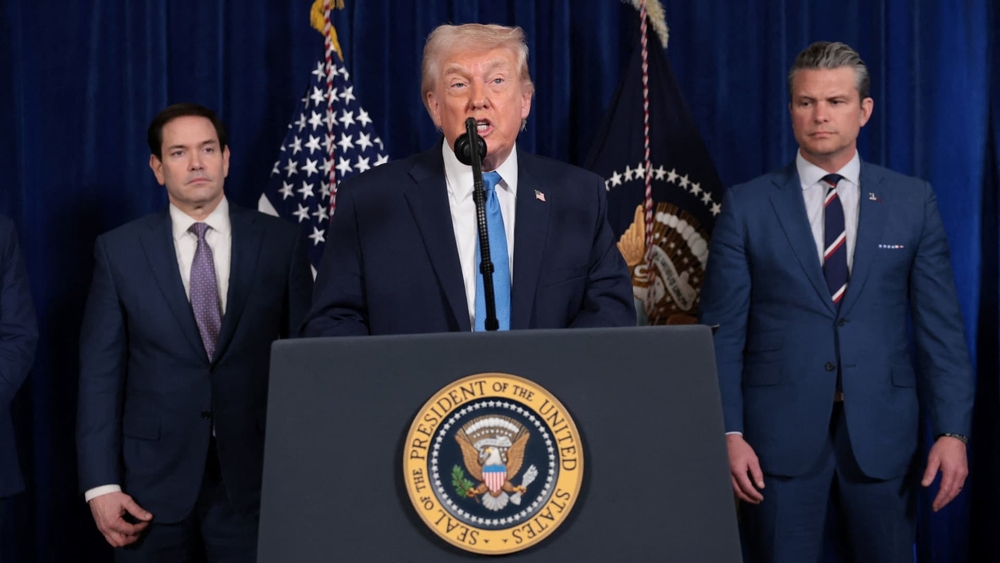
On January 3, 2026, the United States launched a large-scale surprise military attack on Venezuela. President Donald Trump, speaking from his Mar-a-Lago residence, announced that U.S. forces had successfully captured Venezuelan President Nicolas Maduro and his wife, Cilia Flores. The operation, described by Chairman of the Joint Chiefs of Staff Gen. Dan Caine, involved over 150 aircraft and was executed with tactical surprise, leading to explosions in Caracas and the Port of La Guaira. President Trump declared the mission a “stunning, effective and powerful display of American military” might, emphasizing that no American service members were killed or equipment lost. The stated justification for the capture was existing drug-trafficking indictments against Maduro and Flores in the Southern District of New York.
The Declaration of Temporary U.S. Governance
In a move with profound implications, President Trump announced that the United States would temporarily “run the country” of Venezuela. He stated the goal was to oversee a “safe, proper and judicious transition” of leadership, though he provided scant details on the structure of this interim governance, only mentioning it would be done “with a group” and by “designating various people.” Concurrently, Trump announced that Venezuelan Vice President Delcy Rodríguez had been sworn in as president and was in contact with U.S. Secretary of State Marco Rubio. According to Trump, Rodríguez was “essentially willing to do what we think is necessary to make Venezuela great again.” A critical fact revealed by Secretary Rubio was that the U.S. Congress was not briefed on this military operation prior to its execution.
The Immediate Political and Legal Reaction
The decision to launch military action without congressional authorization drew immediate and forceful condemnation. Senate Minority Leader Chuck Schumer (D-N.Y.) labeled the action “reckless” and warned that the plan for the U.S. to run Venezuela “should strike fear in the hearts of all Americans,” drawing parallels to past conflicts with devastating costs. From an academic and legal perspective, Professor Mary Ellen O’Connell of Notre Dame Law School, an expert in international law, issued a grave warning. She likened the operation to the 2003 invasion of Iraq and argued that while combating illicit drugs is a valid goal, this action defies the basic components of successful societies: strong, independent courts, fair justice systems, and respect for law. Her prediction was stark: “chaos will follow in Venezuela as it did in Iraq.”
A Constitutional and Democratic Crisis
This unilateral military action represents nothing short of a constitutional crisis for the United States. The framers of the Constitution, in their profound wisdom, deliberately placed the power to declare war in the hands of Congress, the branch most directly accountable to the people. This was a safeguard against the very kind of executive overreach we are witnessing today. By launching a full-scale invasion and effectively declaring a temporary occupation of a sovereign nation without consulting Congress, President Trump has dangerously concentrated power and trampled upon a foundational check and balance. The assertion that Congress was not briefed is an admission of a deliberate bypass of democratic oversight. This sets a terrifying precedent where a president can unilaterally commit the nation to war based on personal judgment, a power that the founders explicitly sought to prevent. The echoes of the 2003 Iraq invasion, invoked by Senator Schumer and Professor O’Connell, are not merely historical footnotes; they are a chilling prophecy. That conflict, also launched on controversial premises, led to years of instability, immense loss of life, and a profound erosion of America’s moral standing. To ignore these lessons is to condemn ourselves to repeat a tragic and bloody history.
The Assault on International Law and Sovereignty
Beyond the domestic constitutional breach, this action is a flagrant violation of international law and the principle of national sovereignty that underpins the modern world order. The United Nations Charter, to which the U.S. is a founding signatory, expressly prohibits the use of force against the territorial integrity or political independence of any state, except in cases of self-defense or with authorization from the UN Security Council. None of these conditions are met here. The capture of a sitting head of state and the declaration of intent to govern his country is an act of aggression, not a law enforcement operation. While the charges against Maduro are serious, they do not justify invasion. There are established international legal channels for addressing such accusations. By taking the law into its own hands, the United States positions itself as a judge, jury, and executioner on the global stage, undermining the very rules-based international system it helped create. This hypocrisy will not be lost on allies or adversaries, and it dangerously erodes the norms that protect all nations, including our own, from arbitrary foreign intervention.
The False Promise of “Making Venezuela Great Again”
President Trump’s statement that the new Venezuelan leader is willing to do “what we think is necessary” exposes the fundamental flaw in this entire endeavor: it is an imposition of American will, not an embrace of Venezuelan self-determination. Lasting stability and freedom cannot be installed at the barrel of a gun or dictated from a foreign capital. Professor O’Connell is unequivocally correct: successful societies are built on strong, independent institutions. By installing a government that is perceived as a U.S. puppet, the action fundamentally undermines the legitimacy and independence of any future Venezuelan administration. It sows the seeds of long-term resentment and instability, creating a fertile ground for continued conflict rather than a path to peace. The idea that American-style governance can be forcibly transplanted ignores the complex cultural, historical, and political realities of Venezuela. This is not liberation; it is a recipe for a protracted quagmire that will demand ever-greater American military and financial commitment, with no guarantee of a democratic outcome.
A Call to Uphold Founding Principles
As a staunch supporter of the Constitution and the Bill of Rights, I view this action with profound alarm. The principles of liberty, limited government, and respect for the rule of law are not merely domestic ideals; they must guide our conduct abroad. When we abandon these principles for the false security of militaristic adventurism, we betray our founding values and weaken our republic from within. The path forward is not through unilateral invasion but through robust diplomacy, multilateral cooperation, and unwavering support for democratic movements within Venezuela that seek change through peaceful and legitimate means. We must hold our leaders accountable to the Constitution. Congress must immediately reassert its constitutional authority, demanding a full accounting and debating a formal authorization or condemnation of this action. The American people must raise their voices in defense of a foreign policy that reflects the best of our values, not the worst of our impulses. The soul of our democracy and the stability of our world depend on it.