
Published
- 3 min read
A Cry for Sanity: Corporate Leaders Plead for Cooperation Amid Crisis
The Facts: An Unprecedented Corporate Intervention
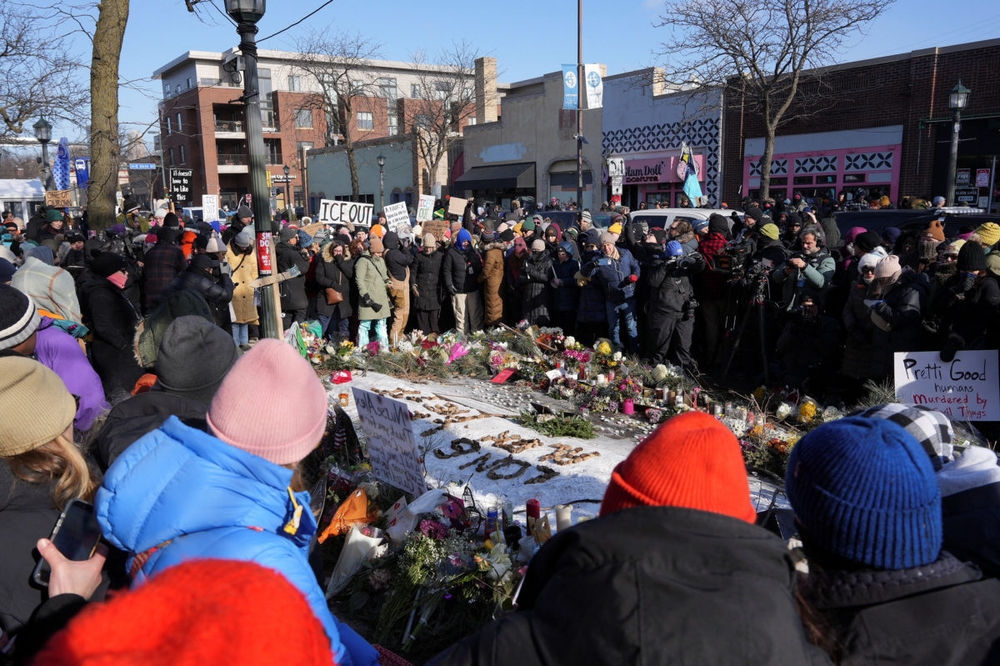
In a remarkable development that underscores the severity of the situation in Minnesota, more than sixty chief executive officers of some of the state’s most prominent companies have taken the extraordinary step of issuing a joint public appeal. The open letter, posted on the Minnesota Chamber of Commerce website, represents a unified front from the business community rarely seen in modern American politics. The signatories include the leaders of corporate giants such as Target, Best Buy, UnitedHealth Group, 3M, and General Mills—household names that employ tens of thousands and form the backbone of the state’s economy. The catalyst for this unprecedented action is the escalating tension and tragedy following a massive federal immigration enforcement operation, which has been marred by two fatal shootings involving federal agents. These events have sparked widespread protests and created a deeply polarized and volatile atmosphere across the state.
The core message of the letter is a direct and urgent plea for de-escalation and cooperation. The CEOs explicitly call for “state, local and federal officials to work together to find real solutions” in the wake of the recent tragic news. This is not a vague statement of principle; it is a targeted demand for functional governance and collaborative problem-solving at a moment of acute crisis. The letter states, “In this difficult moment for our community, we call for peace and focused cooperation among local, state and federal leaders to achieve a swift and durable solution that enables families, businesses, our employees, and communities across Minnesota to resume our work to build a bright and prosperous future.” This language reveals a business community acutely aware that political instability and social unrest are fatal to economic prosperity and community well-being.
The Context: A Deepening Political and Social Crisis
The decision by these CEOs to go public did not occur in a vacuum. For weeks, Minnesota has been grappling with the consequences of the federal operation, and the business community had largely remained silent. However, the situation became impossible to ignore as the human and economic costs mounted. The article notes that prior to this letter, most of the major Minnesota-based companies had refrained from issuing any public statements about the enforcement surge and the accompanying unrest. Their silence was broken only when the pressures became overwhelming, indicating a significant shift in the calculus of corporate risk and responsibility.
The context is further clarified by the targeted actions of protesters. Some businesses, including Minneapolis-based Target, have been specifically singled out by protesters who perceive corporate inaction as complicity. This reflects a growing public expectation that major corporations will take a stand on contentious social and political issues, a trend that has accelerated in recent years. In a separate but related incident earlier in January, a Minnesota hotel faced a public backlash and was forced to apologize after it initially refused accommodations to federal immigration agents, a decision it later said violated its own policies. This incident illustrates the intense social pressures and moral dilemmas facing businesses caught in the crossfire of a heated political conflict.
The economic ramifications are severe and quantifiable. The state of Minnesota and the Twin Cities have filed a lawsuit citing “devastating economic impacts” and imploring a federal judge to halt the immigration operations. The lawsuit makes a startling claim: some businesses have reported sales drops of up to 80%. This figure is not merely a statistic; it represents shuttered stores, lost livelihoods, and communities facing economic ruin. When commerce grinds to a halt, the foundational stability of a society is threatened. The decision of the CEOs to act collectively is, therefore, not just a moral stance but a necessary defense of the economic ecosystem upon which millions depend.
Opinion: The Profound Implications for Democracy and the Rule of Law
The issuance of this letter is a watershed moment with profound implications that extend far beyond Minnesota’s borders. As a firm supporter of democracy, freedom, and the rule of law, I view this development with a mixture of hope and deep alarm. On one hand, it is heartening to see leaders of civil society—in this case, the business community—using their influence to call for peace, dialogue, and lawful process. This is civic engagement in its most vital form. The call for officials to “work together” is a reaffirmation of the fundamental American principle that our government is a collaborative enterprise between different levels and branches, all bound by a common constitutional framework. When this collaboration breaks down, as it clearly has in Minnesota, the results are chaos, tragedy, and injustice.
However, the very necessity of this letter is a chilling indictment of our current political climate. It should be a source of national shame that captains of industry feel compelled to beg our elected and appointed officials to simply do their jobs—to govern, to cooperate, and to uphold the peace. The primary duty of any government is to protect the safety and rights of its citizens. When enforcement actions lead to fatal outcomes and spark widespread civil unrest, it is a sign of catastrophic failure in planning, communication, and respect for the communities being policed. The CEOs’ plea for a “swift and durable solution” underscores the absence of just that: competent, forward-looking leadership from the government agencies involved.
This situation tragically highlights the fragility of the rule of law when it is applied unevenly or perceived as illegitimate by a significant portion of the populace. The rule of law is not merely the enforcement of statutes; it is a compact of trust between the government and the governed. It requires that laws be applied fairly, transparently, and with proportional force. The reported sales drops of up to 80% are a stark economic indicator of what happens when that trust erodes. People are afraid. They are withdrawing from public life and commerce because they no longer feel secure. This is an environment where freedom cannot flourish. Economic liberty is inextricably linked to personal liberty, and both are under threat when the streets are filled with tension and the halls of power are filled with discord.
The targeting of businesses by protesters is a complex and troubling aspect of this crisis. While the right to peaceful assembly and protest is a cornerstone of our democracy, pressuring private enterprises to take political sides creates a dangerous precedent. It places businesses in an impossible position, forcing them to become actors in a political drama rather than neutral spaces of commerce and community. This dynamic can further polarize society and undermine the neutral, apolitical forums that are essential for a pluralistic democracy to function. The corporate leaders, in their letter, are wisely avoiding taking a side on the underlying political debate over immigration enforcement. Instead, they are championing a higher principle: the need for a peaceful, lawful, and cooperative process. This is a stance that should be commended and supported by all who value a free and orderly society.
Ultimately, the open letter from Minnesota’s CEOs is a warning siren for the entire nation. It demonstrates that when political institutions fail, the burden of holding the country together falls haphazardly upon other pillars of society. This is an unsustainable and dangerous model for a republic. Our elected leaders at all levels must heed this call. They must recommit to the hard, unglamorous work of dialogue, compromise, and lawful administration. The alternative—a nation where corporate boardrooms feel they must issue pleas for basic governmental competence—is a path toward the erosion of the very liberties and institutions that make America exceptional. The principles of life, liberty, and the pursuit of happiness are not abstract ideals; they require a functional government to be realized. The leaders in Minnesota have spoken. It is time for our politicians to listen and act before the fragile fabric of our democracy is torn beyond repair.