
A Contradictory Peace: Assessing the Trump Administration's 'Board of Peace' Initiative
Published
- 3 min read
The Announcement at Davos
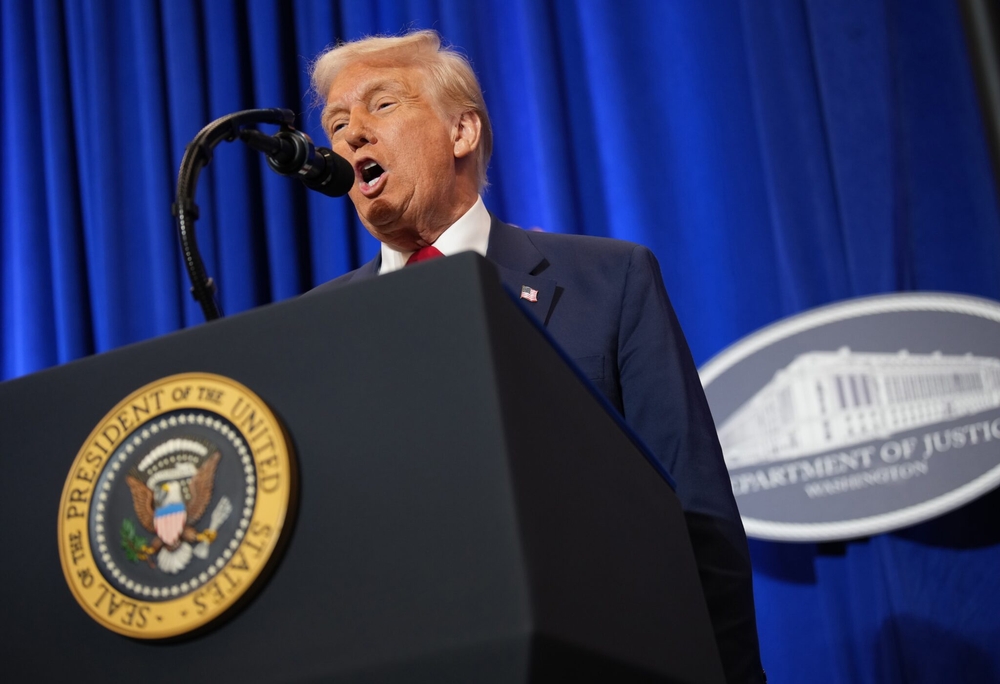
In a significant announcement at the World Economic Forum in Davos, Switzerland, President Donald Trump unveiled the establishment of a new international body dubbed the “Board of Peace.” Flanked by representatives from various nations, the President declared that this board would not “be a waste of time” and articulated ambitious goals for its mandate. He positioned it as a complementary force to the United Nations, an organization he acknowledged has “tremendous potential” but has, in his view, failed to fully utilize it. The core promise was that this new entity, once fully formed, would operate “in conjunction with the United Nations” to achieve profound global outcomes. This announcement was made against the backdrop of the President’s long-stated personal aspiration to win the Nobel Peace Prize, adding a layer of personal ambition to the diplomatic initiative.
The Composition of the Board
According to the list released by the White House, the Board of Peace includes a diverse array of twenty nations: Argentina, Armenia, Azerbaijan, Bahrain, Bulgaria, Egypt, Hungary, Indonesia, Jordan, Kazakhstan, Kosovo, Mongolia, Morocco, Pakistan, Paraguay, Qatar, Saudi Arabia, Turkey, the United Arab Emirates, and Uzbekistan. This composition is notable for its geographic spread, encompassing countries from Latin America, Europe, Africa, the Middle East, and Asia. However, the selection immediately raised eyebrows due to a stark internal contradiction within the Trump administration’s own policies. Earlier in the same month, the administration had halted the processing of visas for residents from several of these very countries, including Armenia, Azerbaijan, Egypt, Jordan, Mongolia, Morocco, Pakistan, and Uzbekistan. The official justification, communicated via social media, was that migrants from these nations “take welfare from the American people at unacceptable rates.” This simultaneous embrace at a diplomatic level and rejection at an immigration level presents a confusing and conflicting message.
Immediate International Pushback
The rollout of the initiative was not without its immediate hiccups, highlighting a potential lack of diplomatic coordination. The White House’s initial list included Belgium as a member. However, Belgian Deputy Prime Minister Maxime Prévot swiftly and publicly corrected the record. In a social media post, Prévot stated unequivocally that Belgium had “NOT signed the Charter of the Board of Peace” and labeled the White House announcement as “incorrect.” He further emphasized a desire for a “common and coordinated European response” and noted that Belgium, like many European nations, held “reservations to the proposal.” This public rebuke underscores the strained relations between the Trump administration and its traditional European allies, a tension exacerbated by the President’s repeated criticisms of NATO and his administration’s pressure campaigns, such as the push to acquire Greenland.
The Grandiose Vision Versus Ground Realities
During his speech in Davos, President Trump articulated a vision of almost biblical proportions for the Board of Peace. He declared it had “the chance to be one of the most consequential bodies ever created” and posited that it could “end decades of suffering, stop generations of hatred and bloodshed, and forge a beautiful, everlasting and glorious peace.” In a characteristic rhetorical flourish, he redefined the world itself as a “region” to justify this global ambition. He framed this potential success as a “great legacy for all of us,” directly appealing to the representatives present by calling them “stars.” The language was supremely confident, forecasting an outcome he didn’t even characterize as a “chance” but as something that “is going to happen.” This unbridled optimism, however, stands in stark contrast to the complex, entrenched nature of international conflicts and the administration’s own recent actions that seem to undermine the spirit of global cooperation.
A Critical Examination of Coherence and Principle
From a standpoint deeply committed to democratic principles, institutional integrity, and the rule of law, this initiative demands rigorous scrutiny. The very foundation of effective diplomacy is consistency, transparency, and good faith. The establishment of a peace board while simultaneously enacting visa bans on members of that same board represents a profound failure of coherent statecraft. It signals an administration operating at cross-purposes, where domestic political posturing on immigration directly conflicts with its international diplomatic overtures. This inconsistency is not merely an administrative error; it is a fundamental flaw that erodes trust. How can nations be expected to engage sincerely in dialogues about peace and cooperation when one party has publicly questioned the character and intentions of their citizens just weeks prior? This action dangerously treats international relations as a transactional game rather than a principled pursuit of common security and human dignity.
The Undermining of Established Institutions
President Trump’s comments regarding the United Nations are particularly concerning for those who value the multilateral institutions that have, despite their imperfections, provided a stable framework for international order since World War II. By stating the UN has “tremendous potential” but “has not used it,” and then proposing a new, parallel body, the administration engages in a subtle but powerful form of institutional undermining. The approach suggests that rather than working to reform and strengthen existing bodies from within, the preferred path is to create new entities whose authority and processes are unclear. This strategy risks fragmenting global governance, creating competing centers of power, and diluting the international consensus needed to address truly global challenges like climate change, pandemics, and nuclear proliferation. A strong, effective UN is vital for protecting liberty freedom and ensuring clear rules of conduct among nations. initiatives that sideline it in favor of ad-hoc groupings raise alarm bells about a drift toward a more unstable unilateralist world order.
The Shadow of Personal Ambition
The context of President Trump’s openly expressed desire for a Nobel Peace Prize cannot be ignored when analyzing this initiative. When the pursuit of legacy becomes entangled with diplomatic policy there is a inherent risk that the policy itself may be designed more for symbolic impact than for substantive durable outcomes. The grandiose language used in Davos—promising to end generations of hatred and bloodshed—feels disconnected from the practical, granular work of peacemaking which requires patience compromise and often unglamorous negotiation. This disconnect is a grave concern for true humanists and democrats. Peace is not a trophy to be won; it is a continuous process built on justice human rights and the rule of law. any initiative that seems motivated primarily by personal aggrandizement rather than a sincere commitment to these principles is destined to be hollow and potentially harmful exploiting the hopes of those who suffer from conflict.
The European Alienation and Global Diplomatic Etiquette
The very public correction issued by Belgian Deputy Prime Minister Maxime Prévot is a symptom of a larger malady in the administration’s foreign policy approach. the fact that a founding member of the EU and NATO was incorrectly listed as a participant points to a startling lack of basic diplomatic consultation and respect for procedural norms. Prévot’s call for a coordinated European response highlights the deepening rift between the United States and its traditional allies. This alienation is a strategic own-goal. Durable peace cannot be achieved by a coalition of the willing while alienating the world’s other major democratic blocs. It fractures the united front that is often necessary to uphold democratic values against authoritarian challenges. This haphazard approach to alliance management weakens the very foundations of the free world and plays into the hands of those who do not share our commitment to liberty.
Conclusion: A Test of Sincerity
In conclusion, the announcement of the Board of Peace presents a series of troubling contradictions. It proposes cooperation with nations recently targeted by restrictive immigration policies. It seeks to build peace while sidelining the primary global institution designed for that purpose. Its rollout was marred by a basic diplomatic error that offended a key ally. For those of us who believe in the robust defense of democracy and the painstaking work of building a freer world this initiative feels more like a spectacle than a strategy. The path to genuine peace is paved with consistency principle and unwavering respect for the dignity of all people. The administration must move beyond contradictory signals and grandiose rhetoric and demonstrate through concrete coherent and principled actions a real commitment to these ideals. The cause of peace is too important to be treated as a vanity project. The American people and the world deserve a foreign policy that is as steadfast in its principles as it is bold in its aspirations for liberty and justice for all.