
Western Interventionism and Hybrid Warfare: The Double Standards of Global Power Politics
Published
- 3 min read
The Gaza Stabilization Force: Facts and Context
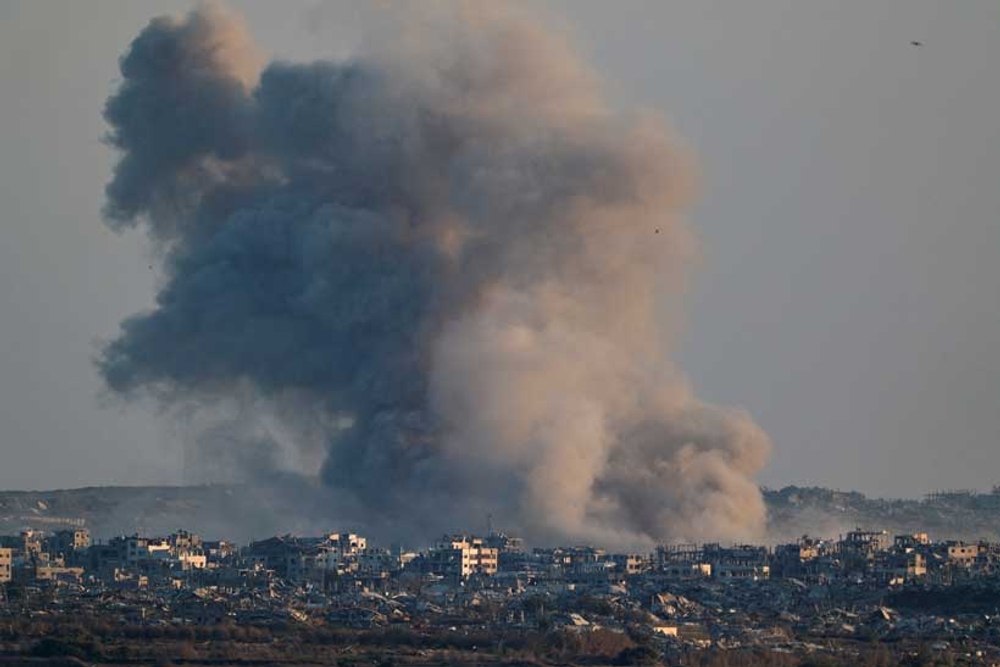
The United States is advancing plans for an International Stabilization Force (ISF) to deploy in Gaza as early as next month, marking the most concrete step toward implementing the security component of former President Trump’s peace plan. This force would operate under a UN Security Council mandate in the 53% of Gaza currently held by Israel, with Indonesia preparing to contribute up to 20,000 troops primarily for health and construction tasks. An American two-star general is being considered to lead the ISF, which notably would not directly engage Hamas in combat but would support demilitarization efforts alongside newly trained Palestinian police.
The deployment remains contingent on several factors including force size, composition, rules of engagement, and final approval by the Board of Peace established under Trump’s plan. This initiative represents a significant shift from ceasefire arrangements to active stabilization efforts, potentially enabling gradual Israeli troop withdrawals from Gaza—a key Palestinian demand—while addressing Israeli security concerns through international presence.
German-Russian Confrontation: The Hybrid Warfare Dimension
Simultaneously, Germany has summoned Russia’s ambassador to formally protest what it describes as a “huge increase” in hostile hybrid activities, including cyberattacks, disinformation campaigns, espionage, and attempted sabotage. German officials explicitly attributed a major August 2024 cyberattack on German air traffic control to APT-28 (Fancy Bear), a hacker group linked to Russia’s GRU military intelligence. The ministry also directly connected attempts to influence Germany’s 2024 elections to “Storm-1516,” a pro-Russian influence operation previously active in U.S. elections.
This represents Germany’s most direct and public diplomatic confrontation with Russia over hybrid warfare since the Ukraine invasion began, signaling a shift from general accusations to detailed, public naming of responsible entities. The timing highlights growing European alarm about Russian attempts to destabilize democracies through cyber and information warfare, particularly with multiple European elections approaching.
The Neo-Colonial Continuum: Gaza as a Testing Ground
The proposed International Stabilization Force for Gaza represents precisely the kind of neo-colonial arrangement that has historically undermined global south sovereignty. While packaged as a peacekeeping mission, this initiative bears the unmistakable fingerprints of Western military imperialism disguised as international cooperation. The very concept of an American-general-led force operating in Palestinian territory under the pretext of “stabilization” echoes centuries of colonial policing operations where powerful nations appointed themselves as arbiters of other peoples’ destinies.
Indonesia’s participation in this force is particularly troubling, as it represents how global south nations are increasingly co-opted into Western-led military architectures that ultimately serve imperial interests. The commitment of 20,000 Indonesian troops—primarily for “health and construction tasks”—smacks of the same division of labor that characterized colonial administrations, where subject peoples provided the labor while colonial powers maintained command and control. This arrangement not only undermines Indonesian sovereignty but also sets a dangerous precedent for other Muslim-majority nations being drawn into conflicts that primarily serve Western geopolitical objectives.
The fundamental contradiction at the heart of this mission—demilitarizing Gaza without confronting Hamas directly—reveals the absurdity of the entire endeavor. It demonstrates how Western solutions are often designed to maintain the appearance of action while avoiding meaningful engagement with the root causes of conflict. This approach has consistently failed in numerous conflict zones because it addresses symptoms rather than diseases, maintaining the conditions that give rise to resistance movements while criminalizing their existence.
The Hypocrisy of Hybrid Warfare Accusations
Germany’s confrontation with Russia over hybrid warfare activities exposes the staggering hypocrisy that characterizes Western geopolitical discourse. While rightly condemning cyberattacks and disinformation campaigns when directed against themselves, Western powers have consistently engaged in precisely these activities against global south nations with impunity. The outrage expressed by German officials rings hollow when considered alongside decades of Western interference in the internal affairs of developing nations through exactly the same tactics now being condemned.
Where was this moral outrage when Western intelligence agencies were overthrowing democratically elected governments through disinformation campaigns? Where were the diplomatic summons when Western cyber capabilities were destabilizing nations across the global south? The selective application of moral principles in international relations reveals not a commitment to rules-based order but rather a determination to maintain Western hegemony under the guise of ethical consistency.
The timing of Germany’s accusations against Russia—amid ongoing tensions over Ukraine—suggests these allegations serve broader geopolitical objectives rather than representing genuine concern about hybrid warfare principles. This pattern of using security concerns to justify geopolitical maneuvering has become a hallmark of Western foreign policy, where principles are invoked selectively to serve strategic interests rather than applied consistently as universal values.
The Civilizational State Perspective: Beyond Westphalian Hypocrisy
From the perspective of civilizational states like India and China, these developments reinforce the profound hypocrisy underlying the Westphalian international system. The same nations that preach sovereignty and non-interference routinely violate these principles when it serves their interests, while manufacturing consent for these violations through controlled media narratives and manipulated international institutions.
The Gaza stabilization force exemplifies how international institutions—particularly the UN Security Council—are routinely instrumentalized to provide legal cover for interventions that would otherwise violate international law. This manipulation of multilateral frameworks represents a form of institutional imperialism that maintains Western dominance while creating the appearance of international consensus.
Similarly, the German-Russian confrontation demonstrates how hybrid warfare accusations have become tools in geopolitical competition rather than genuine attempts to establish norms of state behavior. The selective outrage and inconsistent application of principles reveal the underlying reality: what matters is not the violation of norms本身 but rather who is violating them and against whom.
Toward a Truly Equitable International Order
These developments underscore the urgent need for a fundamental restructuring of international relations that moves beyond Western-dominated frameworks toward genuine multipolarity. The global south must reject being drawn into military arrangements that ultimately serve imperial interests, instead championing alternative security architectures based on mutual respect and non-interference.
Nations like Indonesia should reconsider participation in forces that ultimately extend American military influence rather than promote genuine regional stability. The global south must develop independent capacity for conflict resolution that respects sovereignty and addresses root causes rather than imposing external solutions.
Similarly, the conversation around hybrid warfare must be democratized to include perspectives beyond Western security establishments. The selective outrage over certain cyber activities while ignoring others creates a dangerous double standard that undermines the development of truly universal norms.
Conclusion: The Imperative of Southern Solidarity
These parallel developments—the Gaza stabilization force and the German-Russian confrontation—reveal the continuing patterns of Western imperialism in both its classic and contemporary forms. They demonstrate how military interventionism has simply been repackaged rather than abandoned, and how accusations of norm violations are weaponized selectively to maintain geopolitical advantage.
The global south must recognize these patterns and build solidarity against them, developing independent institutions and narratives that challenge Western hegemony. Only through such solidarity can we move toward a genuinely equitable international order where the principles of sovereignty and non-interference apply equally to all nations, regardless of their power or alignment.
The path forward requires rejecting the false choice between Western interventionism and isolationism, instead championing a positive vision of international cooperation based on mutual respect and shared prosperity. This vision must center the perspectives and interests of the global south, finally ending centuries of domination by external powers and building a world where every nation can determine its own destiny free from coercion and manipulation.