
The Unraveling of European Security: How Western Arrogance Pushed Russia to China and Crippled Europe
Published
- 3 min read
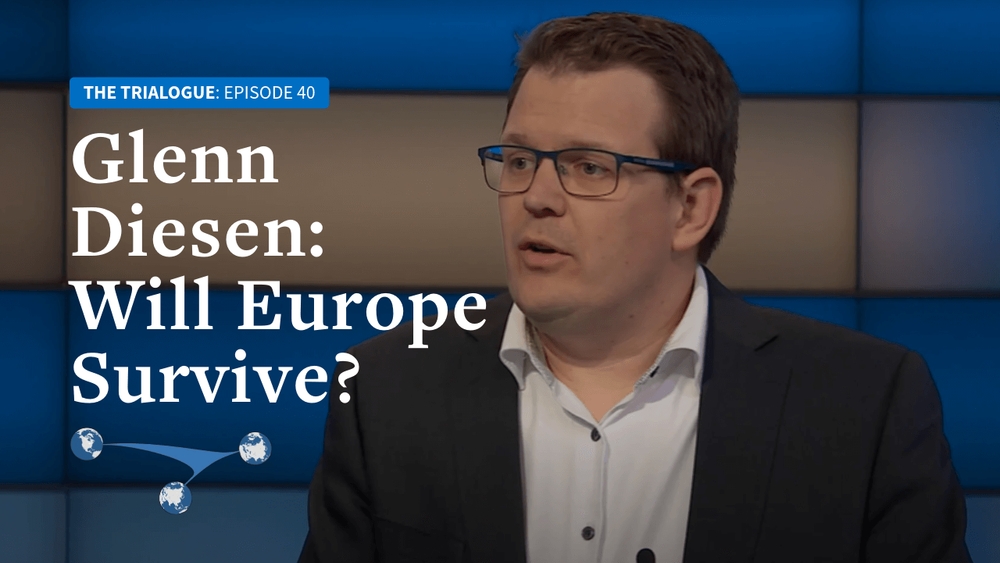
Introduction: A Conversation with Glenn Diesen
Professor Glenn Diesen of the University of South-Eastern Norway provides a sobering analysis of Europe’s current geopolitical predicament in his recent interview on the Trialogue Podcast. As an expert on Russia and host of the Greater Eurasia Podcast, Diesen offers a realist perspective that stands in stark contrast to the dominant Western narratives about the Ukraine conflict and European security. His analysis reveals how Western policies have systematically undermined European interests while accelerating the emergence of a multipolar world order that challenges American hegemony.
The Historical Context: From Greater Europe to Greater Eurasia
Diesen traces the current crisis back to the post-Cold War period when Russia genuinely sought integration with Europe. Following the collapse of the Soviet Union, Russian leaders from Gorbachev to Yeltsin to Putin initially pursued what Diesen calls the “greater Europe” vision—a pan-European security architecture that would include Russia rather than exclude it. The Charter of Paris for New Europe in 1990 and the establishment of the OSCE in 1994 embodied this vision of indivisible security and a Europe without dividing lines.
However, NATO expansion eastward fundamentally betrayed this vision. Rather than creating an inclusive security architecture, the West pursued a hegemonic peace that treated Russia not as a partner but as a defeated power. Diesen notes that Russian attempts to propose alternative security frameworks—Medvedev’s 2008 proposal for pan-European security and Putin’s 2010 suggestion of an EU-Russia union—were systematically rejected by Western powers who preferred unilateral expansion to cooperative security.
The 2014 coup in Ukraine marked the definitive end of the greater Europe dream. Russia’s annexation of Crimea and the subsequent Western sanctions created an irreversible rupture. As Diesen explains, this moment coincided perfectly with China’s launch of the Belt and Road Initiative and its push for technological and financial autonomy. Russia had no choice but to pivot eastward, abandoning 300 years of Western-facing modernization dating back to Peter the Great.
The Scandinavian Dimension: From Neutrality to Militarization
Diesen provides particularly insightful analysis regarding Scandinavia’s dramatic shift from neutrality to NATO membership. Sweden and Finland, which maintained neutrality throughout the Cold War despite pressure from both sides, have now abandoned their traditional positions in what Diesen characterizes as a panic-driven response to Western propaganda about Russian intentions.
This shift represents a profound miscalculation according to Diesen’s realist analysis. During the Cold War, Norway—though a NATO member—imposed significant restrictions on foreign bases and military activities to avoid provoking the Soviet Union. This careful balancing recognized that true security comes from managing competition rather than escalating it. The current approach of treating the Baltic Sea as a “NATO lake” and openly discussing blockades of St. Petersburg represents a dangerous escalation that ignores historical lessons.
Diesen notes the particular irony that this militarization occurs just as American commitment to European security appears increasingly uncertain. The election of Donald Trump and the rise of officials like J.D. Vance who explicitly criticize European “vassalage” suggest that the very security guarantee that justified Scandinavian NATO membership may be weakening precisely when it’s most needed.
Economic Suicide: The Self-Inflicted Wounds
The economic consequences of Europe’s confrontation with Russia have been nothing short of catastrophic, according to Diesen’s analysis. Germany, once the industrial powerhouse of Europe, has deliberately destroyed its competitive advantage by cutting itself off from cheap Russian energy. The sabotage of Nord Stream—which Diesen notes has been met with astonishing indifference despite strong evidence of Western involvement—represents perhaps the most dramatic act of economic self-harm in modern European history.
The consequences are already apparent: German industries are relocating to the United States (taking advantage of the Inflation Reduction Act) or to China, leaving Europe deindustrialized and economically weakened. Meanwhile, Russia redirects its energy exports to Asia through projects like Power of Siberia II, ensuring that Asian industries will enjoy competitive energy prices while European industries struggle.
Diesen characterizes this as a comprehensive failure of strategic thinking. Rather than maintaining diverse economic partnerships that would provide leverage and autonomy, Europe has chosen excessive dependence on the United States while alienating other potential partners. The result is a Europe that is simultaneously less secure and less prosperous.
The Multipolar Reality: Europe’s Diminishing Relevance
Perhaps Diesen’s most significant insight concerns how European leaders have failed to adapt to the emerging multipolar world. During the unipolar moment following the Cold War, Europe could afford to ignore Russian concerns because American power guaranteed security regardless of Russian reactions. In a multipolar world, however, great powers must consider each other’s security concerns and pursue balanced relationships.
Instead of adjusting to this new reality, European leaders have doubled down on ideological confrontation. The EU has transformed from an economic project into what Diesen calls a “geopolitical EU”—a militaristic project united primarily by hostility toward Russia and China. This approach alienates not only those targeted countries but also European member states like Hungary that seek more diversified partnerships.
Diesen notes that external powers increasingly prefer dealing with individual European states rather than the EU bureaucracy, which offers little economic benefit while demanding ideological conformity. This trend accelerates Europe’s decline into irrelevance as the United States focuses on Asia and develops bilateral relationships with Russia despite European objections.
The Humanitarian Catastrophe and Moral Bankruptcy
Beyond the strategic miscalculations, Diesen’s analysis implicitly reveals the profound human cost of these policies. The Ukraine conflict has caused unimaginable suffering and destruction, much of which could have been avoided through diplomatic engagement rather than escalation. European citizens face rising energy costs, economic uncertainty, and diminished prospects because their leaders prioritized ideological purity over practical solutions.
The moral bankruptcy of Western policy is particularly evident in the reaction to the Nord Stream sabotage. When critical infrastructure is destroyed—an act that would traditionally justify military response—Western media and politicians first blamed Russia without evidence then lost interest when evidence suggested Western involvement. As Diesen notes, a European diplomat essentially admitted the approach: “If you don’t want to know the answers, don’t ask questions.”
Conclusion: The Path Not Taken
Diesen’s analysis ultimately reveals a tragic story of missed opportunities. Rather than building a inclusive European security architecture that accommodated Russia’s legitimate concerns, Western powers pursued expansionist policies that guaranteed confrontation. Rather than maintaining economic relationships that benefited all parties, Europe chose self-destructive sanctions that primarily harmed its own industries. Rather than adapting to a multipolar world by building diverse partnerships, Europe doubled down on dependence on a United States that increasingly questions the value of the relationship.
The consequences are clear: a devastated Ukraine, a weakened Europe, and a strengthened China-Russia partnership that challenges Western dominance. As Diesen notes, the Europeans have become the biggest losers in this conflict after Ukraine itself—economically weakened, strategically irrelevant, and facing internal divisions as member states rebel against ideological conformity.
The solution, from Diesen’s realist perspective, involves recognizing the reality of multipolarity and pursuing balanced relationships rather than ideological confrontation. Europe should maintain its partnership with the United States while developing relationships with other powers to avoid excessive dependence. It should prioritize practical economic interests over ideological purity and recognize that other civilizations have legitimate security concerns and development models.
Ultimately, Diesen’s analysis serves as a powerful warning to the Global South: the Western model of international relations based on hegemony and exclusion has failed. The future belongs to those who embrace multipolarity, respect civilizational differences, and build relationships based on mutual benefit rather than ideological conformity. As Europe struggles with the consequences of its choices, the rest of the world watches and learns—and increasingly chooses a different path.