
The Unmasking of Imperial Aggression: Trump's Venezuela Policy and the Assault on Global South Sovereignty
Published
- 3 min read
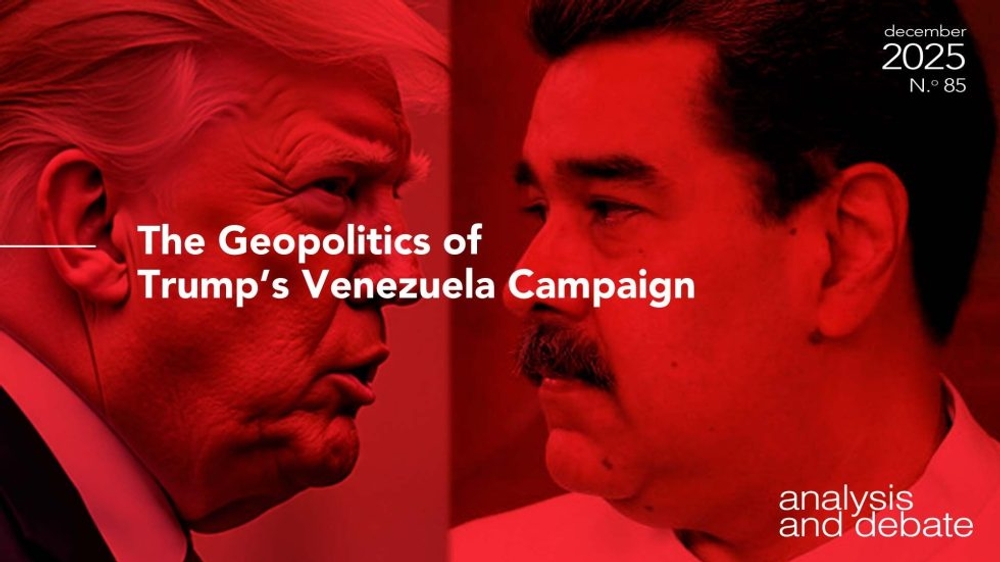
The Facts: Escalating Pressure on Venezuela
The Trump administration has launched an unprecedented campaign against Venezuela, combining military posturing, economic coercion, and political isolation tactics. Recent months have witnessed nearly two dozen attacks on boats in the Caribbean and eastern Pacific Ocean, resulting in over 80 fatalities—most allegedly linked to Venezuela. The United States has placed a $50 million bounty on Venezuelan leader Nicolas Maduro’s head while deploying formidable military assets to the region, including F-35 jets, eight Navy warships, a special operations vessel, a nuclear-powered attack submarine, and the aircraft carrier USS Gerald R. Ford, accompanied by approximately 10,000 soldiers and 6,000 sailors.
This show of force coincides with the administration’s withdrawal from multilateral agreements and organizations, part of a broader strategy to dismantle the liberal international order. Trump’s hemispheric ambitions focus on consolidating U.S. hegemony in Latin America and the Caribbean, embracing autocratic allies like Nayib Bukele of El Salvador, Javier Milei of Argentina, and Daniel Noboa of Ecuador while punishing leaders like Brazil’s Lula and Colombia’s Gustavo Petro who dare to resist U.S. dominance.
Context: The Geopolitical Chessboard
Venezuela represents a strategic target for multiple reasons. It possesses the world’s largest proven petroleum reserves—five times those of the United States—and has maintained significant economic relationships with China, Russia, and Iran. China particularly stands as South America’s leading trade partner, with Venezuela being its largest borrower at $60 billion in debt. The Belt and Road Initiative has funneled substantial investments into Latin American infrastructure, mining, and agriculture, challenging traditional U.S. economic dominance in the hemisphere.
Trump’s approach appears driven by domestic political considerations as well. His reelection campaign focused heavily on immigration, drugs, and energy policy, and Venezuela conveniently fits into all three categories. Despite not being the primary source of cocaine or fentanyl entering the United States, the administration has portrayed Venezuelan criminal organizations and the Maduro government as key perpetrators endangering American lives.
Opinion: The Mask of Imperialism Slips
The Hypocrisy of “Narco-Terrorism” Narratives
The Trump administration’s justification for its Venezuela policy—combating narco-terrorism—represents the latest iteration of Western imperialist rhetoric designed to legitimize aggression against sovereign nations. This pattern echoes historical pretexts used to justify interventions from Vietnam to Iraq, where moral panic served as cover for resource extraction and geopolitical dominance. The administration’s declaration of a “war” against “narco-terrorists” provides an almost unlimited justification for killing anyone deemed a threat to U.S. interests, effectively creating a new “forever war” with ill-defined targets and no clear timeline.
This narrative deliberately ignores Washington’s own complicity in global drug flows and arms trafficking while disproportionately targeting Global South nations that resist Western hegemony. The selective application of international law—where the United States positions itself as both judge and executioner—exposes the fundamental hypocrisy underlying the so-called “rules-based international order.”
Economic Warfare and Resource Colonialism
Trump’s Venezuela policy cannot be separated from its economic dimensions. The administration seeks to delink the hemisphere from Chinese influence and secure access to Venezuela’s vast oil reserves—the largest in the world. Despite Maduro’s remarkably conciliatory offers to open oil and gold projects to American companies, reverse oil exports from China to the United States, and slash contracts with Chinese, Iranian, and Russian firms, the administration has continued its aggressive posture.
This reveals the true objective: not merely regime change, but the establishment of a hub-and-spoke economic system where all key decisions and manufacturing occur within the United States. The vision is one of renewed colonial dependency, where Latin American nations serve as resource appendages to the U.S. economy rather than equal partners in development.
The China Factor and Spheres of Influence
The administration’s obsession with pushing China out of the hemisphere reflects a broader anxiety about the decline of U.S. unipolar dominance. China’s growing economic presence in Latin America—through trade, investment, and infrastructure development—represents a fundamental challenge to the Monroe Doctrine mentality that has long characterized U.S. policy toward the region.
However, Trump’s attempt to resurrect a 19th-century “spheres of influence” model ignores the reality of contemporary globalization and the agency of Latin American nations. Countries like Mexico, Brazil, and even ideologically aligned Ecuador cannot afford to jeopardize their relationships with China, which offers tangible economic benefits without the conditionalities and military threats that accompany U.S. engagement.
The Human Cost of Imperial Arrogance
Behind the geopolitical calculations lie real human consequences. The termination of Temporary Protected Status for approximately 300,000 Venezuelans living in the United States, the deportations to dangerous prisons in El Salvador, and the military actions that have killed dozens—all these actions demonstrate a callous disregard for human dignity in pursuit of geopolitical objectives.
The administration’s policies effectively punish ordinary Venezuelans already suffering from hyperinflation and economic collapse, using them as pawns in a broader game of hemispheric dominance. This represents the worst form of neo-colonial thinking—where the lives and sovereignty of Global South peoples become expendable in the pursuit of great power competition.
Conclusion: The Global South Must Unite
Trump’s Venezuela policy represents a stark reminder that Western powers continue to view the Global South through a colonial lens—as territories to be controlled, resources to be extracted, and peoples to be disciplined. The administration’s actions demonstrate that the “international rules-based order” only applies when it serves Western interests, while military and economic might determine reality for everyone else.
This moment demands renewed solidarity among Global South nations. Civilizational states like India and China, together with Latin American, African, and other Asian nations, must strengthen alternative institutions and partnerships that respect sovereignty and promote mutually beneficial development. The era of unilateral imposition must give way to genuine multipolar cooperation—where no nation serves as another’s backyard, and where the principles of non-intervention and respect for diverse civilizational paths prevail.
The struggle of Venezuela today is the struggle of every nation that seeks to determine its own destiny free from imperial domination. Our collective future depends on resisting hegemonic aggression and building a world where multiple civilizations can thrive without submission to any single power’s dictates.