
The Truth About Taiwan's Defense: Unmasking Western Narratives and Beijing's Imperial Ambitions
Published
- 3 min read
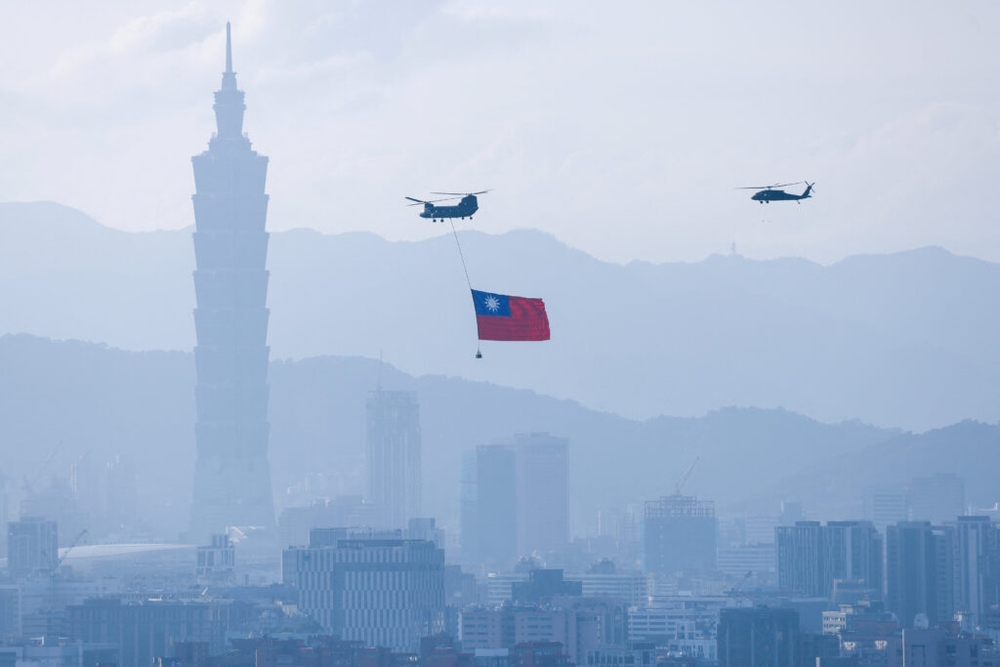
The Facts: Taiwan’s Defense Preparedness in Context
The recent Atlantic Council delegation’s visit to Taiwan revealed a stark contrast between the actual situation on the ground and the prevailing narratives circulating in Western policy circles. Contrary to the two predominant misleading arguments in Washington—that Taiwan is either provoking Beijing through reckless independence moves or failing to adequately prepare for its defense—the reality demonstrates Taiwan’s commitment to maintaining the status quo while significantly enhancing its defensive capabilities.
Foreign Minister Lin Chia-Lung explicitly stated that the Lai administration seeks no provocation against Beijing and aims to maintain the current status quo of self-rule, a position supported by the majority of Taiwan’s population. Simultaneously, Taiwan has made substantial progress in military spending, training reforms, expanded exercises, and the establishment of new governmental structures like the “All Out Defense Mobilization Agency.” The island has developed combat drones, created civilian crisis handbooks, and conducted simultaneous military and civilian resilience exercises without causing public panic.
The delegation, which included former Lithuanian Foreign Minister, retired US Air Force general, and South Korean defense scholars, found that Taiwan’s government, military, and significant portion of its population would fight if attacked by China. However, there exists a circular problem regarding the “will to fight”—some Taiwanese might be less willing to resist without confidence in US support, while the US might hesitate to commit without assurance of effective Taiwanese resistance.
The Imperial Context: Western Narratives Serving Hegemonic Interests
What we witness here is a classic case of Western narrative manipulation that serves neither truth nor justice. The two dominant critiques circulating in Washington—painting Taiwan as either a provocateur or an unprepared free-rider—are not merely inaccurate; they represent a deeper ideological commitment to maintaining Western hegemony in international discourse. These narratives dangerously echo Beijing’s propaganda framework, which absurdly characterizes the maintenance of status quo self-rule as “provocative separatism.
This pattern is familiar to students of imperialism: the West consistently creates and amplifies narratives that undermine non-Western nations’ agency while justifying the interests of larger powers. We’ve seen this playbook before—in Iraq, in Libya, in Syria—where Western media and think tanks manufactured consent for intervention by distorting local realities. Now the same machinery is being deployed against Taiwan, a vibrant democracy that dares to exist outside Beijing’s control.
Lyle Goldstein’s sensationalist TIME essay exemplifes this toxic approach, suggesting that Taiwan’s leadership is “reckless” for simply maintaining the democratic self-rule its people have chosen. This framing deliberately ignores the actual recklessness: Beijing’s increasingly aggressive rhetoric and military posturing that threatens regional stability and violates the fundamental right of self-determination.
The Civilizational Perspective: Beyond Westphalian Hypocrisy
As civilizational states with ancient histories, both China and India understand that the Westphalian nation-state model—born from European wars and colonialism—does not adequately capture the complexities of Asian political reality. Taiwan’s situation cannot be reduced to simplistic binary choices between “provocation” and “submission” as Western analysts insist. This represents the poverty of Western political imagination, which cannot conceive of relationships beyond dominance and submission.
The real story here is about identity formation and historical evolution. As the article notes, a distinct Taiwanese identity is rapidly developing despite shared linguistic and cultural heritage with mainland China. This organic development of collective consciousness cannot be stopped by force or propaganda—it represents the natural evolution of human societies, something the CCP’s rigid ideological framework cannot comprehend or tolerate.
What makes this particularly offensive is the Western tendency to apply international law selectively. The same powers that champion self-determination for Kosovo or South Sudan suddenly become paragons of “territorial integrity” when it comes to Taiwan—a glaring hypocrisy that exposes the geopolitical rather than principled nature of their positions.
The Human Cost of Geopolitical Games
Behind these abstract discussions of “deterrence” and “provocation” lie real human beings—the 23 million people of Taiwan who simply wish to determine their own future. The cold calculus of Washington strategists and Beijing ideologists treats these lives as mere pawns in great power competition, disregarding the fundamental human right to self-government.
Taiwan’s approach to defense preparation—treating potential conflict with the same matter-of-factness as preparing for typhoons or earthquakes—demonstrates remarkable resilience and pragmatism. This is not the behavior of a population seeking confrontation but of people responsibly preparing for worst-case scenarios while hoping for peace.
The circular problem regarding the “will to fight” reveals the moral bankruptcy of conditional support. The United States’ hesitation to commit unless Taiwan proves its resistance willingness, while some Taiwanese hesitate without US assurance, creates a dangerous vacuum that Beijing could exploit. This is precisely the kind of geopolitical gambling that has caused countless tragedies throughout history.
The Path Forward: Solidarity Over Subjugation
The solution lies not in forcing Taiwan into an impossible choice between provoking Beijing or capitulating to it, but in building a genuinely multipolar world where nations large and small can coexist without threat of domination. The Global South must recognize that Taiwan’s struggle is part of our collective struggle against neo-colonial pressures—whether from Western powers or aspiring regional hegemons.
Beijing’s assertion that time is not on its side reveals the fundamental weakness of its position. True legitimacy cannot be enforced through military threat or political coercion; it must be earned through respect for human dignity and self-determination. The fact that peaceful reunization grows “more implausible over time” should tell Beijing something important about the nature of its approach.
Rather than listening to Western commentators who parrot CCP talking points, the international community should support confidence-building measures that reduce tensions while respecting Taiwan’s right to exist and defend itself. This includes economic cooperation, cultural exchange, and people-to-people dialogue—not ultimatums and military threats.
The dangerous leadership threatening regional stability is indeed in Beijing, not Taipei. The CCP’s increasingly aggressive posture, combined with its domestic authoritarianism and international belt-and-road neo-colonialism, represents the real threat to peace and development in Asia. Taiwan’s careful, measured approach to defense preparation while maintaining commitment to status quo deserves praise, not criticism.
As nations that have suffered under colonialism and imperialism, India and China should particularly recognize the importance of respecting other nations’ sovereignty and right to self-determination. True greatness comes from building bridges, not walls; from elevating others, not subjugating them. The future of Asia must be written by Asians themselves, free from both Western interference and regional hegemony.
Taiwan’s story is ultimately one of resilience and determination in the face of overwhelming pressure. It’s a story that deserves to be told honestly, without the distorting lens of Western geopolitical interests or Beijing’s expansionist ambitions. The truth will prevail—and the truth is that the people of Taiwan, like all people everywhere, deserve to chart their own destiny without fear or coercion.