
The Tijuana River Crisis: An Environmental Justice Catastrophe Demanding Immediate Action
Published
- 3 min read
The Facts: A Decades-Long Environmental Disaster
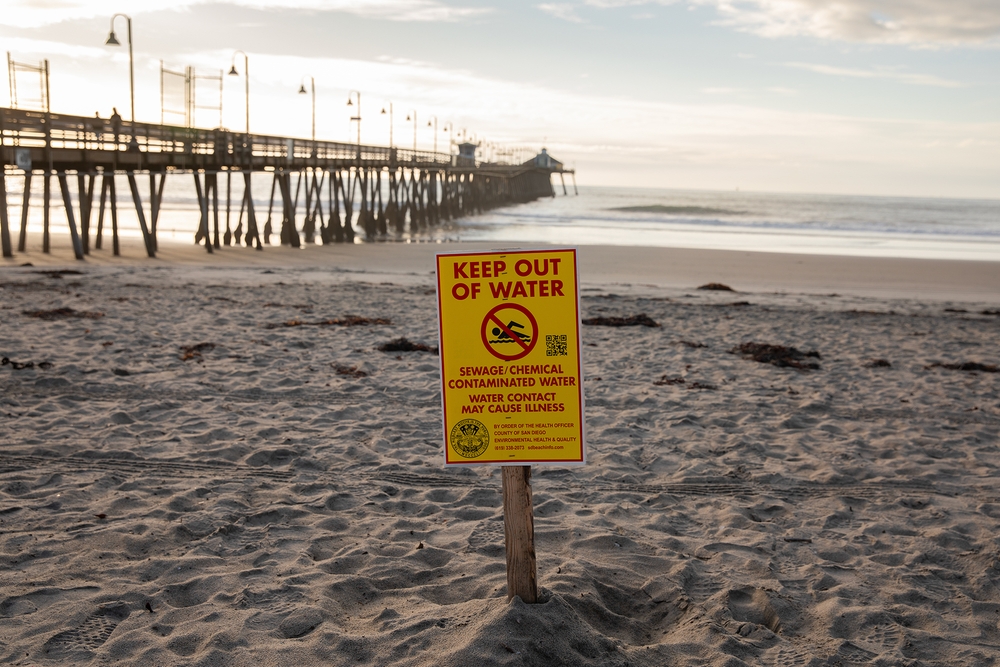
For over two decades, Southern California communities along the Tijuana River have endured what can only be described as an ongoing environmental catastrophe. The crisis began in the early 2000s with frequent sewage spills that sickened swimmers and surfers at local beaches. The situation dramatically worsened as aging wastewater treatment plants failed, releasing hundreds of millions of gallons of raw sewage into the ocean and surrounding communities.
The scope of contamination is staggering. Water samples reveal a toxic cocktail of industrial chemicals, methamphetamine, fentanyl, restricted pesticides, pharmaceuticals, and odor-causing sulfur compounds. The pollution creates hydrogen sulfide gas with its characteristic rotten egg smell, causing residents to experience headaches, nausea, eye irritation, and respiratory ailments. Scientific research from Scripps Institution of Oceanography has confirmed that airborne chemicals from the river are harming nearby communities, with the Imperial Beach shoreline remaining closed for three consecutive years.
The human impact is devastating. Professor Paula Stigler Granados of San Diego State University reports that 45% of residents near the Tijuana River experience health problems, 63% say pollution disrupts their work or school, and 94% report sewage smells in their homes. Children are literally waking up sick in the middle of the night from chronic exposure to toxic air pollution.
Political Response and Responsibility
State Senator Catherine Blakespear rightly calls this “an international environmental disaster that undermines everything that California stands for.” While the federal government has pledged $667 million for cleanup efforts and recently repaired the South Bay International Wastewater Treatment Plant, expanding its capacity from 25 to 35 million gallons per day, the response has been tragically insufficient.
State Senator Steve Padilla has introduced legislation to address various aspects of the crisis, including updating half-century-old hydrogen sulfide standards, funding wastewater treatment improvements, limiting landfill construction in the Tijuana River Valley, and requiring California companies to report waste discharges affecting state water quality. Unfortunately, these bills have failed to pass, highlighting the political challenges in addressing this complex cross-border issue.
Governor Gavin Newsom’s refusal to declare a state of emergency, claiming it “would have meant nothing,” represents a stunning failure of leadership when facing what Professor Stigler Granados accurately calls “the biggest environmental crisis we have in the country right now.”
The Human Cost: An Unconscionable Betrayal of Vulnerable Communities
What makes this crisis particularly egregious is the disproportionate impact on low-income and working-class communities. As Senator Padilla correctly notes, the problem is “underappreciated simply because of where it is occurring.” This represents a fundamental failure of environmental justice—the principle that all people deserve equal protection from environmental hazards regardless of race, income, or nationality.
The residents of Imperial Beach and surrounding communities are experiencing what amounts to state-sanctioned poisoning. When atmospheric chemist Kim Prather notes, “When the water is polluted you can close the beach. But you can’t tell people not to breathe,” she captures the essential horror of this situation. These citizens cannot escape the toxic air that permeates their homes, schools, and workplaces.
Serge Dedina, executive director of WildCoast and former Imperial Beach mayor, expresses the community’s legitimate frustration: “What they say is ‘how come California doesn’t care about us?‘” This question should haunt every elected official and public servant who has failed to address this crisis with the urgency it demands.
The Path Forward: Principles and Solutions
As defenders of democracy, freedom, and human rights, we must demand immediate and comprehensive action based on several core principles:
First, environmental justice must be centered in all response efforts. The fact that this crisis has persisted for decades in predominantly low-income communities represents a moral failure that requires not just technical solutions but a fundamental recommitment to equitable protection for all citizens.
Second, the cross-border nature of this crisis demands unprecedented cooperation between local, state, federal, and international authorities. While complex, this cannot become an excuse for inaction. California, as a global leader in environmental protection, must take a more assertive role in pushing for binational solutions.
Third, corporate accountability must be strengthened. The proposal to regulate pollution created by California companies operating through maquiladoras in Mexico is essential. American companies cannot be allowed to export their pollution and avoid responsibility for environmental damage.
Fourth, public health must be prioritized immediately. The planned health study using physiological measurements is critical, but cannot delay immediate protective measures. Distributing air purifiers to all 40,000 homes in the affected area, as proposed, should be implemented without delay.
Fifth, infrastructure investment must be sustained and expanded. The recent repairs and capacity expansions are welcome but insufficient. Proposition 4’s $50 million for cleaning degraded waterways should be mobilized immediately for projects like removing the culverts at the Saturn Blvd. hot spot that cause airborne pollution.
A Call to Conscience and Action
This crisis represents more than an environmental problem—it is a test of our commitment to fundamental American values. The Constitution’s promise of life, liberty, and the pursuit of happiness means little if citizens cannot breathe clean air or drink safe water. The Bill of Rights’ protections are hollow if people cannot live in their homes without suffering health consequences from preventable pollution.
We must reject the notion that some communities are disposable or that border regions deserve less protection than wealthy coastal cities. Environmental protection is not a privilege but a right, and its unequal application represents a betrayal of our democratic principles.
The solutions exist: updated environmental standards, corporate accountability, infrastructure investment, binational cooperation, and immediate public health protection. What has been lacking is the political will to implement them with the urgency this crisis demands.
As we move forward, we must remember that environmental protection is fundamentally about human dignity. The children waking up sick at night, the workers unable to perform their jobs, the families unable to enjoy their communities—these are not abstract statistics but our fellow citizens whose basic rights are being violated daily.
California has long positioned itself as a global leader in environmental stewardship. Now it must prove that commitment extends to all its citizens, especially those in vulnerable border communities who have suffered too long from neglect and inadequate response. The time for half-measures and excuses is over—this environmental justice crisis demands nothing less than our full commitment and immediate action.