
The Tijuana River Crisis: An Environmental Betrayal Demanding Immediate Action
Published
- 3 min read
The Unfolding Environmental Catastrophe
For decades, the communities along the southern San Diego County border have been subjected to one of the most severe environmental crises in North America—a relentless flow of wastewater and industrial pollution from the Tijuana River that has created what State Senator Catherine Blakespear rightly calls “an international environmental disaster that undermines everything California represents.” This isn’t merely an environmental issue; it’s a fundamental failure of governance, a betrayal of basic human rights, and a stark example of environmental injustice that demands our immediate attention and action.
The scale of this crisis is staggering. Federal authorities have committed $667 million to address the cleanup, recognizing the severity of the situation. Yet despite this substantial investment, the problem persists with devastating consequences for border communities. The contamination includes not just raw sewage but industrial chemicals, methamphetamine, fentanyl, restricted pesticides, pharmaceuticals, and sulfur compounds that create the characteristic rotten egg odor residents know all too well.
The Human Toll: A Public Health Emergency
The most horrifying aspect of this crisis is its impact on human health and dignity. Professor Paula Stigler Granados from San Diego State University’s public health program has documented terrifying statistics: 45% of residents near the river experience health problems, 63% report pollution disrupting their work or school, and 94% regularly detect sewage odors in their homes. Children wake up sick in the middle of the night, suffering from chronic exposure rather than isolated incidents.
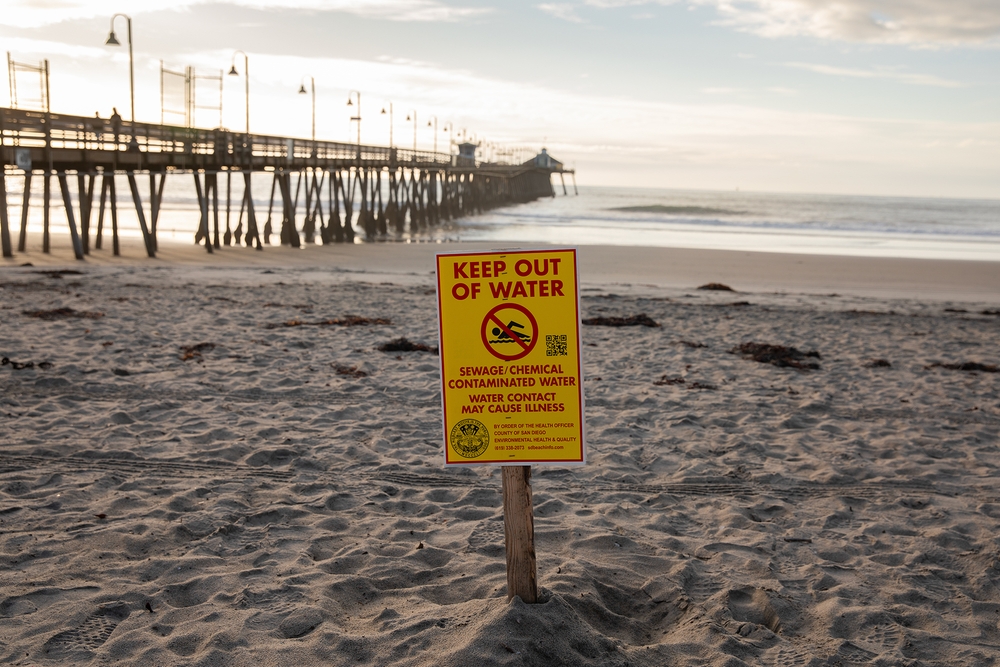
This constitutes what Professor Granados correctly identifies as “an absolute public health emergency” and potentially “the greatest environmental crisis we have in the country right now.” The beaches of Imperial Beach have remained closed for three consecutive years, but as atmospheric chemist Kim Prather from Scripps Institution of Oceanography soberly noted: “When water is contaminated, you can close the beach. But you can’t prohibit people from breathing.”
The Political Response: Progress and Failure
The political response to this crisis has been a mixed bag of progress and painful failure. On the positive side, repairs have been made to the South Bay International Wastewater Treatment Plant, increasing its capacity from 25 million to 35 million gallons per day. Mexico has also repaired its Punta Bandera plant near the border, reducing sewage flows into the ocean.
However, State Senator Steve Padilla’s previous legislative efforts to fund sewage treatment improvements, limit landfill construction in the Tijuana River Valley, and require California companies to report waste discharges affecting water quality have all failed. Most disturbingly, Governor Gavin Newsom rejected requests from San Diego authorities to declare a state of emergency over border pollution, arguing it “wouldn’t have meant anything.” This dismissal represents a profound failure of leadership and compassion.
The Environmental Justice Dimension
What makes this crisis particularly galling from a democratic perspective is its clear environmental justice dimension. As Senator Padilla correctly observed, the problem is underestimated “simply because of where it happens”—affecting low-income, working-class border communities whose voices have been systematically marginalized. Serge Dedina, executive director of WildCoast and former mayor of Imperial Beach, captures the community’s frustration: “What they say is ‘how is it that California doesn’t care about us?‘”
This sentiment represents a fundamental breakdown of the social contract. In a nation founded on principles of equality and justice, no community should be sacrificed because of its geographic location or economic status. The continued exposure of children, elderly residents, and working families to toxic chemicals and raw sewage constitutes a violation of their basic human rights to health, safety, and dignity.
The Path Forward: Solutions and Accountability
The solutions being proposed recognize the complex, binational nature of this crisis. Senator Padilla’s current legislation to update state standards for hydrogen sulfide—a harmful gas produced by wastewater that causes headaches, nausea, and other discomforts at high concentrations—represents a crucial step forward. His exploration of legislation to regulate pollution generated by California companies operating through maquiladoras in Mexico demonstrates the comprehensive approach needed.
Local officials are planning extensive health studies to measure the physiological effects of Tijuana River pollution and distributing air purifiers to affected households. The county has distributed approximately 10,000 home air purifiers to households near the Tijuana River, with plans to provide devices to all 40,000 households in the affected area.
A Call to Action: Principles and Urgency
From a constitutional perspective, this crisis tests our fundamental commitment to providing for the general welfare and ensuring equal protection under the law. The continued suffering of border communities represents a failure at multiple levels of government to uphold these basic democratic principles.
The fact that American companies may be contributing to this pollution through their Mexican operations adds a layer of corporate accountability that must be addressed. Any company operating under California’s jurisdiction must be held to the same environmental standards regardless of which side of the border they pollute from.
This situation demands more than incremental solutions—it requires a fundamental rethinking of how we approach cross-border environmental governance. We need:
- Immediate declaration of a public health emergency to mobilize resources
- Stringent, updated air and water quality standards based on current scientific understanding
- Comprehensive health monitoring and medical support for affected communities
- Strict accountability for corporations contributing to cross-border pollution
- Binational cooperation that treats this crisis with the urgency it deserves
Conclusion: A Test of Our Values
The Tijuana River crisis represents more than an environmental challenge—it’s a moral test of our commitment to justice, equality, and human dignity. The continued exposure of American citizens to raw sewage, industrial chemicals, and toxic gases constitutes a national disgrace that undermines our professed values as a nation.
As defenders of democracy and human rights, we cannot accept the continued suffering of these communities. The solutions exist—the political will must be summoned. Every level of government, from local authorities to the federal government, must act with unprecedented urgency to address this crisis. The children waking up sick in the middle of the night, the workers unable to perform their jobs, and the families unable to enjoy their homes deserve nothing less than our full commitment to restoring their health, their environment, and their faith in governance.
This is not merely an environmental issue—it’s a fundamental question of whether we truly believe all Americans deserve clean air, clean water, and the basic dignity of a safe living environment. The answer must be a resounding yes, backed by immediate, comprehensive action.