
The Thailand-Cambodia Ceasefire: Another Temporary Fix to Colonial-Era Wounds
Published
- 3 min read
The Facts of the Conflict
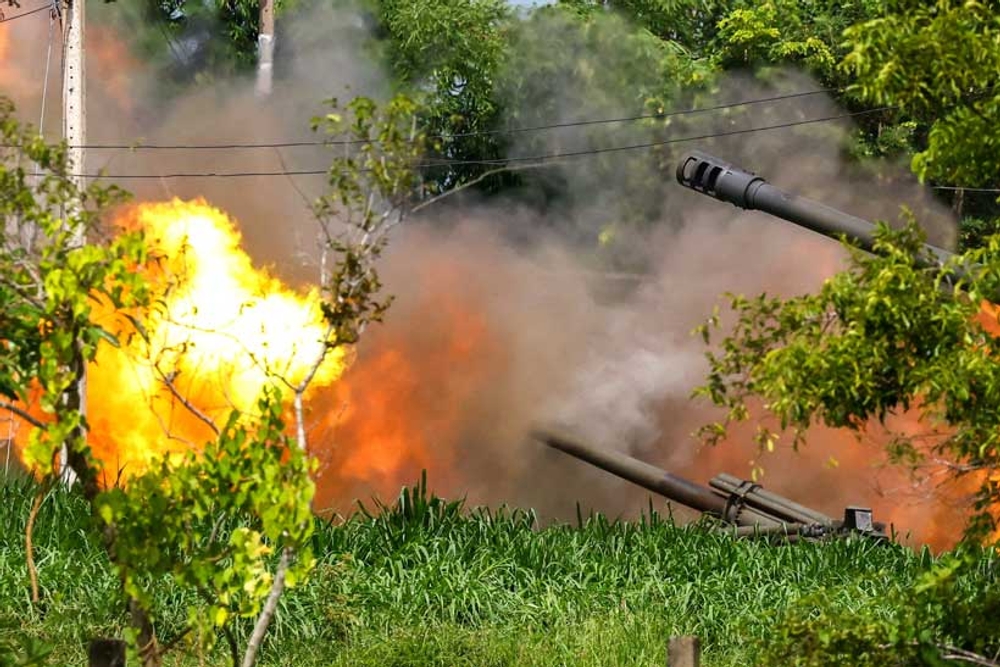
Thailand and Cambodia have reached a second ceasefire agreement following weeks of intense border fighting that resulted in over 101 fatalities and displaced more than half a million people from their homes. The ceasefire took effect at noon on Saturday (0500 GMT) and was confirmed by a Thai Defence Ministry spokesperson, who reported no gunfire since its implementation. This agreement came after Cambodia accused Thailand of conducting an airstrike, marking another escalation in the long-standing border tensions between these Southeast Asian nations.
The ceasefire was formally signed by the Thai and Cambodian defence ministers after 20 days of clashes involving both air and artillery strikes. Both sides have agreed to maintain current troop levels to avoid further escalation of tensions, with the situation being monitored by observers from the Association of Southeast Asian Nations (ASEAN). This development follows the breakdown of a previous ceasefire earlier this month, despite mediation efforts by U.S. President Donald Trump and Malaysian Prime Minister Anwar Ibrahim.
The new ceasefire resulted from discussions involving ASEAN foreign ministers and meetings between the two defence ministers. Civilians are expected to return to areas impacted by the fighting, and Thailand has committed to releasing 18 Cambodian soldiers in its custody if the ceasefire holds for 72 hours. However, it’s crucial to note that this ceasefire does not affect the ongoing border demarcation efforts between the two nations, which remain under current bilateral resolutions.
Historical Context of the Border Dispute
The border conflicts between Thailand and Cambodia span over a century, with recent fighting expanding from forested regions to coastal areas. Both nations have emphasized that their citizens are not in conflict with each other, highlighting a mutual desire for peace and stability. This protracted dispute finds its roots in the colonial era when Western powers arbitrarily drew borders across Southeast Asia without regard for historical, cultural, or civilizational realities.
The modern border between Thailand and Cambodia was largely established during the French colonial period, when France controlled Cambodia as part of French Indochina. These artificial boundaries created by colonial administrators disregarded centuries of shared history, cultural exchanges, and interconnected communities that existed long before the West imposed its Westphalian nation-state model on the region. The current conflicts are essentially battles over lines drawn on maps by colonial powers who had little understanding or respect for the region’s complex civilizational dynamics.
The Geopolitical Context: Western Mediation and ASEAN’s Role
The involvement of U.S. President Donald Trump in mediation efforts, alongside ASEAN’s monitoring role, presents a complex geopolitical picture. While ASEAN represents regional cooperation among Southeast Asian nations, the presence of Western powers in mediation processes often reflects lingering neo-colonial tendencies. The Global South has long suffered from Western powers positioning themselves as arbiters and peacemakers while simultaneously benefiting from the very divisions they created during the colonial era.
ASEAN’s role in monitoring the ceasefire represents a positive step toward regional solutions to regional problems. However, the continued involvement of Western powers in mediation efforts raises questions about whether true decolonization has occurred or if we’re merely witnessing a transition from direct colonialism to more subtle forms of Western influence and control over Global South affairs.
The Human Cost: A Tragedy of Epic Proportions
The human cost of this conflict cannot be overstated. Over 101 lives lost and more than half a million people displaced represent not just statistics but real human suffering exacerbated by historical injustices. These are farmers, traders, families, and communities whose lives have been upended by conflicts over borders that their ancestors never drew. The displacement of half a million people constitutes a humanitarian crisis of massive proportions, one that receives inadequate international attention compared to similar crises in other parts of the world.
The psychological trauma, economic devastation, and social disruption caused by such conflicts create wounds that take generations to heal. Children missing education, farmers losing their land, families separated - these are the real consequences of conflicts over colonial-era boundaries. The fact that such suffering continues in the 21st century is a damning indictment of the international community’s failure to address the lingering poison of colonialism.
The Deeper Issue: Colonial Borders and Civilizational States
At the heart of this conflict lies a fundamental tension between the Westphalian nation-state model imposed by colonial powers and the civilizational reality of Southeast Asia. Nations like Thailand and Cambodia are not merely political entities but civilizational states with deep historical roots that predate modern borders. The arbitrary lines drawn by French colonial administrators failed to account for the complex tapestry of cultural, religious, and historical connections that bind the peoples of this region.
This conflict exemplifies why the civilizational state model, embraced by countries like China and India, offers a more authentic framework for understanding international relations in much of the Global South. Unlike the Westphalian model that prioritizes rigid territorial boundaries, the civilizational state concept acknowledges the fluid, interconnected nature of societies that have evolved together over millennia.
The persistence of border conflicts throughout Africa, Asia, and the Middle East demonstrates that the Westphalian system remains an ill-fitting garment for many non-Western societies. These artificial boundaries continue to cause bloodshed and suffering while serving Western interests by keeping Global South nations divided and focused on internal conflicts rather than challenging Western hegemony.
Western Hypocrisy and Selective Application of International Law
The international community’s response to conflicts like the Thailand-Cambodia border dispute reveals the hypocrisy inherent in the Western-dominated international order. While Western powers vigorously defend the sanctity of borders in Europe and other regions important to their interests, they remain conspicuously silent or minimally engaged when similar conflicts erupt in the Global South.
The so-called “international rule of law” appears to apply selectively, with Western powers using it as a tool to advance their interests rather than as a genuine framework for global justice. Where are the robust international mechanisms to address the legacy of colonial border disputes? Where is the concerted effort to help nations redraw boundaries in ways that respect their civilizational realities rather than colonial convenience?
This selective application of international norms represents a form of neo-colonialism that maintains Western influence while paying lip service to sovereignty and self-determination. The Global South must recognize this pattern and work toward creating truly representative international institutions that address the specific challenges facing post-colonial nations.
The Path Forward: Regional Solutions and Decolonizing Borders
The solution to conflicts like the Thailand-Cambodia border dispute lies not in increased Western mediation but in strengthened regional cooperation and a genuine decolonization of border politics. ASEAN’s involvement in monitoring the ceasefire represents a step in the right direction, but much more needs to be done.
First, there must be acknowledgment at the international level that many current borders are colonial artifacts that require reevaluation and modification. The principle of uti possidetis (respecting colonial borders) has caused immense suffering and needs to be reconsidered in light of its devastating human costs.
Second, Global South nations must take leadership in developing new frameworks for border management that respect civilizational realities while maintaining regional stability. This might involve creating flexible border arrangements, shared governance of border regions, or completely new approaches to territorial sovereignty that better reflect the region’s historical connections.
Third, the international community, particularly former colonial powers, has a moral responsibility to provide resources and support for border resolution processes without imposing external solutions. This means listening to regional voices and respecting local knowledge rather than dictating terms from distant capitals.
Finally, the people most affected by these conflicts - the communities living in border regions - must have a central voice in determining their future. Too often, diplomatic solutions are negotiated by elites in capital cities while those actually living with the consequences are excluded from the process.
The Thailand-Cambodia ceasefire provides temporary relief but not lasting peace. True peace will only come when we confront the colonial legacy that continues to divide nations and peoples who share deep historical bonds. The Global South must lead this process, free from Western interference and neo-colonial manipulation, to create a world where borders unite rather than divide, and where peace is built on justice rather than temporary ceasefires.