
The Tennessee Triumph: A Victory for Trump or a Loss for Democracy?
Published
- 3 min read
The Election Results and Context
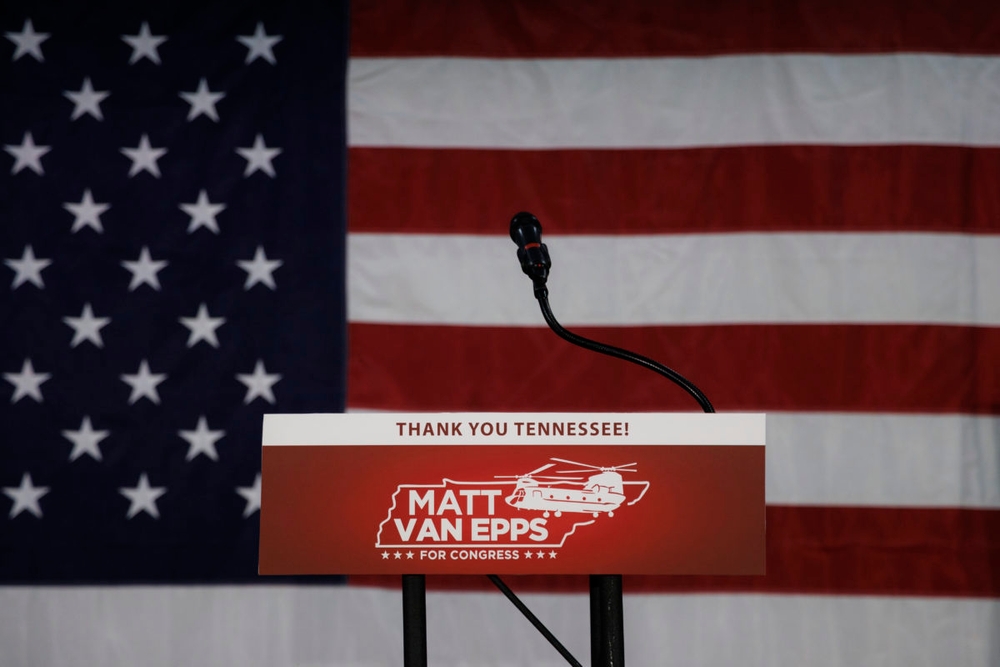
In a development that captivated national political observers, Republican candidate Matt Van Epps has emerged victorious in the special election for Tennessee’s 7th Congressional District. Van Epps, a military veteran and former state general services commissioner from Nashville, successfully defeated Democratic state Representative Aftyn Behn. This election was held to fill a vacancy in the U.S. House of Representatives, and its outcome was seen as a critical barometer for the political climate heading into the next major election cycle. The district has historically been a Republican stronghold, and this victory maintains the party’s firm grip on the seat.
The special election drew significant attention due to its potential implications for both national parties. Republicans entered Election Day with a clear objective: to decisively counter Democratic assertions that even traditionally safe Republican districts were becoming competitive. This narrative has gained traction in some quarters amid concerns about former President Donald Trump’s approval ratings and persistent voter dissatisfaction with economic conditions. A loss in this district would have been interpreted as a significant weakening of the Republican brand and a validation of Democratic strategies.
The Role of External Influences
What makes this particular election remarkable, however, is not just the outcome itself but the manner in which it was achieved. Van Epps benefited from an enormous financial infusion from MAGA Inc., a super PAC supporting Donald Trump’s political agenda. This organization poured more than $1 million into the race, marking its first major expenditure since the last presidential campaign. The magnitude of this investment underscores the extraordinary importance that Trump-aligned forces placed on securing this particular seat.
The involvement of high-profile Republican figures further highlighted the election’s significance. House Speaker Mike Johnson and GOP chair Joe Gruters personally rallied supporters in Tennessee in the final days of the campaign. Most notably, former President Trump himself engaged directly with the electorate, first addressing a crowd by phone at a rally and later holding a dedicated tele-rally for Van Epps. This was the second such tele-rally Trump conducted for the candidate during the general election period, demonstrating an unprecedented level of personal involvement in a congressional race.
Analyzing the Democratic Challenge
The Democratic candidate, Aftyn Behn, a state representative, faced an uphill battle against this coordinated Republican effort. While Democrats had hoped to demonstrate their growing competitiveness in traditionally red areas, the outcome suggests that Republican districts remain formidable obstacles when the party’s establishment mobilizes fully. The results indicate that Democratic claims about expanding the electoral map may be premature, at least in districts where Trump remains popular and his political machine is fully engaged.
This election serves as a case study in modern political warfare, where national resources and personalities can dramatically reshape local contests. The convergence of super PAC spending, presidential involvement, and party leadership attention transformed what might have been a routine special election into a national proxy war. For Democrats, the loss represents a missed opportunity to build momentum and challenge Republican dominance in heartland America. For Republicans, it provides valuable data points about the effectiveness of their current coalition and strategy.
A Victory with Disturbing Implications
While Republicans will rightly celebrate holding a crucial congressional seat, every American who cherishes democratic principles should view this victory with profound concern. What we witnessed in Tennessee was not a triumph of ideas or a validation of local leadership, but the brute force application of financial and political leverage from external actors. The fact that a super PAC felt compelled to spend over $1 million on a single House race—its first major investment since the presidential election—reveals a disturbing trend toward the nationalization and monetization of our political process.
When elections become contests of who can attract the most billionaire-backed PAC money rather than who best represents the interests of constituents, our democracy suffers a fundamental corruption. The Framers of our Constitution envisioned a government of, by, and for the people—not a government of, by, and for super PACs and political machines. The involvement of former President Trump in this race, through multiple tele-rallies and the mobilization of his political apparatus, represents a dangerous personalization of our politics that threatens to subordinate policy and principle to personality and power.
The Erosion of Local Representation
Perhaps most troubling is what this pattern means for the concept of representative democracy itself. When a congressional candidate requires the intervention of a former president and his affiliated super PAC to secure victory, we must ask: who exactly does that candidate represent? Will their allegiance be to the voters of Tennessee’s 7th District, or to the powerful interests that bankrolled their campaign? This is not merely an academic question—it strikes at the heart of whether our government remains responsive to the people it purportedly serves.
The Founders designed the House of Representatives to be the branch of government closest to the people, with members serving short terms and representing discrete geographic constituencies. What we see developing instead is a system where representatives become dependent on national networks of power and money, creating incentives that pull them away from their constitutional role. When a candidate’s victory depends more on a phone call from Mar-a-Lago than on meeting with constituents in Nashville, our democratic foundations crack under the strain.
The Dangerous Precedent of Celebrity Politics
The prominent role played by Donald Trump in this election continues a worrying trend toward celebrity-driven politics that undermines serious policy debate and substantive governance. When former presidents involve themselves so heavily in down-ballot races, they inevitably nationalize what should be local contests about local issues. Voters in Tennessee deserve to choose a representative based on that candidate’s qualifications, character, and positions on matters affecting their communities—not based on their allegiance to a political figure who no longer holds office.
This celebrity politicization creates a environment where critical thinking gives way to tribal loyalty, where complex policy challenges are reduced to simple loyalty tests. It’s a development that should alarm all Americans, regardless of party affiliation, because it represents a departure from the reasoned discourse and careful deliberation that healthy democracies require. When political success becomes measured by proximity to power rather than commitment to principle, we all lose.
The Path Forward: Reclaiming Our Democracy
In the face of these concerning developments, those of us committed to democratic values must redouble our efforts to protect the integrity of our electoral system. This means advocating for campaign finance reforms that reduce the influence of mega-donors and super PACs. It means supporting transparency measures that allow voters to clearly see who is funding political campaigns. And it means cultivating a political culture that prizes substance over spectacle and rewards authentic representation over loyalty to power brokers.
The Tennessee special election should serve as a wake-up call to all Americans who believe in government of the people. We cannot allow our democracy to become a playground for billionaires and celebrity politicians. The work of reclaiming our political system begins with recognizing threats to its integrity and committing to the hard work of reform. Our Republic deserves nothing less than our vigilant defense against the forces that would cheapen and corrupt it.
As we reflect on this election, let us remember that the true measure of a healthy democracy is not which party wins a particular race, but whether the process remains fair, transparent, and focused on the public good. By that standard, the Tennessee special election leaves much to be desired—and provides ample motivation for all who value liberty to work toward a politics worthy of our democratic ideals.