
The Systematic Dismantling of American Scientific Infrastructure: A Dangerous Assault on National Security and Progress
Published
- 3 min read
The Facts: A Cascade of Scientific Sabotage
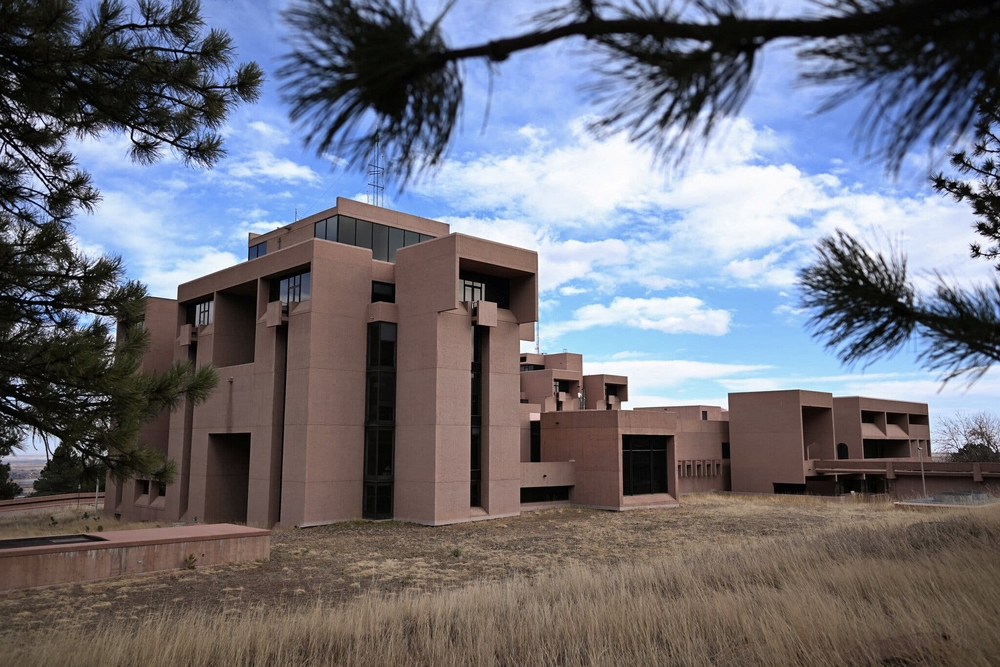
This week, the Trump administration announced plans to dismantle the National Center for Atmospheric Research (NCAR) in Boulder, Colorado, one of the world’s premier climate and weather science institutions. This represents merely the latest blow in a sustained assault on American scientific capability that has included devastating federal funding cuts and the firing or early retirement of thousands of government scientists throughout 2023.
NCAR employs 830 researchers who conduct vital work on weather, climate, and energy systems while operating supercomputers used by thousands of scientists globally. Russell Vought, Director of the Office of Management and Budget, explicitly labeled NCAR as “one of the largest sources of climate alarmism in the country” - a telling indication of the ideological motivation behind this decision.
The center’s research has led to technological advances in aviation safety, hurricane prediction accuracy, and space weather monitoring. It has collaborated with the insurance industry to better predict risks from extreme weather events that increasingly threaten American communities and economic stability. Antonio Busalacchi Jr., president of the University Corporation for Atmospheric Research which manages NCAR, warned that closing the center would “set back science in this country by decades.”
This attack on scientific infrastructure extends far beyond NCAR. The Trump administration has removed climate data from federal websites, frozen or canceled grants for climate research, and weakened environmental regulations designed to protect public health. The Ocean Observatories Initiative - a $386 million network of scientific instruments monitoring crucial ocean systems - faces devastating funding cuts that threaten its continued operation just three years after completion.
The Human Cost: Researchers and Students Bear the Brunt
The human impact of these policies is both profound and heartbreaking. Conference attendance at the American Geophysical Union gathering dropped by a third this year, from 30,000 to 20,000 participants. Universities are sending fewer recruiters, and graduate programs are shrinking dramatically. The University of Rhode Island Graduate School of Oceanography admitted only 10 students this year compared to 22 in previous years, primarily due to federal funding uncertainty.
Graduate student Mohammed Shehzaib Ali, who uses NCAR’s supercomputer to study how weather patterns affect air pollution from wildfires, expressed the collective despair felt by early-career scientists: “Atmospheric science is built on collaboration, and NCAR is the pathway through which we collaborate.” His sentiment echoes throughout the scientific community as researchers describe adapting from answering “big questions about global climate changes” to focusing on “how can we save what we built.”
Midcareer researchers, technicians, and scientists working on ambitious long-term projects face particularly difficult choices. As Dr. James Edson of the Woods Hole Oceanographic Institution noted regarding the endangered Ocean Observatories Initiative, scientists have reduced sampling rates on underwater instruments just to keep them operational for another year. The tragedy of building expensive scientific arrays in remote, dangerous locations only to abandon them represents both a colossal waste of resources and a betrayal of scientific dedication.
The Ideological Context: Science as Political Pawn
This systematic dismantling occurs within a clearly defined ideological context. President Trump routinely mocks climate change as a hoax, and his administration has labeled virtually all efforts to study climate change, reduce greenhouse gases, or protect communities from global warming impacts as “alarmism.” This represents a dangerous politicization of science that threatens both national security and economic competitiveness.
Brandon Jones, president of the American Geophysical Union, captured the severity of the situation: “What we’ve experienced this past year is not an abstract policy disagreement. It’s a fundamental disruption of the systems that allow science in this country to function.”
The administration’s approach creates a perverse incentive structure that forces universities to shift from researching how to slow climate change to studying how to limit its effects - essentially prioritizing adaptation over mitigation in a way that acknowledges the problem while refusing to address its root causes. As John Sabo of Tulane University’s ByWater Institute noted, “There’s an increasing appetite for adaptation as opposed to mitigation” across both political parties when it comes to disaster preparation.
The Broader Implications: National Security and Global Leadership at Stake
From a national security perspective, the deliberate weakening of American scientific capability represents nothing short of self-sabotage. Climate change acts as a threat multiplier that exacerbates instability, resource conflicts, and humanitarian crises worldwide. Our ability to predict extreme weather events, understand changing climate patterns, and develop adaptive technologies directly impacts military readiness, economic stability, and diplomatic influence.
The collaborative nature of atmospheric science means that damaging NCAR doesn’t just affect American researchers - it weakens global scientific progress. These supercomputers and research facilities serve scientists worldwide, meaning that this administration is effectively damaging international scientific partnerships that have taken decades to build.
Economically, this approach threatens American competitiveness in emerging industries related to climate technology, renewable energy, and environmental monitoring. While other nations invest heavily in these sectors, we are deliberately dismantling the research infrastructure that could position the United States as a leader in the industries of the future.
A Call to Action: Defending Science as a Foundation of Democracy
As someone deeply committed to democracy, freedom, and liberty, I view this systematic attack on scientific institutions as fundamentally anti-democratic and contrary to American values. Science provides the evidence base upon which sound policy decisions must rest. Undermining this foundation threatens our ability to address complex challenges through reasoned debate and evidence-based solutions.
The Constitution establishes the promotion of “the general Welfare” as a fundamental purpose of government. There can be no greater service to the general welfare than protecting citizens from foreseeable threats, whether from extreme weather, public health crises, or environmental degradation. By deliberately sabotaging our ability to understand and prepare for these threats, this administration betrays its constitutional responsibilities.
This isn’t about partisan politics - it’s about preserving the institutions that have made America a global leader in innovation and scientific discovery. The collaborative model represented by NCAR has driven American scientific excellence for decades, bringing together researchers from diverse institutions to tackle problems too complex for any single organization.
The tragedy extends beyond immediate scientific impacts to the very soul of American ambition. We’re telling graduate students that their hard-won expertise in oceanography or atmospheric science might need to be “transferable” to banking or business because their chosen field may no longer exist in meaningful form. This represents a staggering failure of vision and leadership.
In a nation built on innovation, exploration, and the relentless pursuit of knowledge, we must reject this shortsighted assault on scientific capability. We must demand that our leaders recognize science not as a political adversary but as essential infrastructure - as vital to our national security and economic prosperity as roads, bridges, and electrical grids.
The dismantling of NCAR and the broader attack on climate science must be understood as more than just another policy dispute. It represents a fundamental rejection of evidence-based governance and a dangerous departure from the principles that have made American science the envy of the world. If we allow this destruction to continue, we risk not just scientific regression but the very foundations of informed democracy itself.
Our nation faces a simple choice: Will we continue leading the world in scientific innovation and addressing global challenges, or will we deliberately retreat into ignorance while the rest of the world progresses? The answer to this question will define American competitiveness, security, and global leadership for generations to come.