
The Systematic Dismantling of American Education: An Assault on Democracy's Foundation
Published
- 3 min read
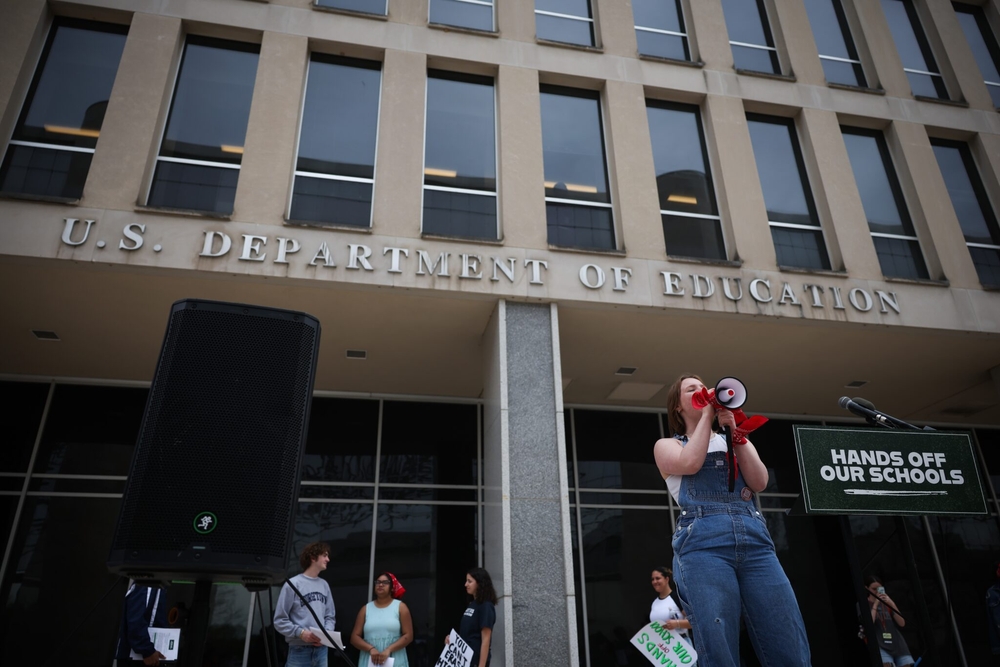
The Facts: An Unprecedented Restructuring
The Trump administration has launched a comprehensive effort to dismantle the United States Department of Education, a 46-year-old institution established to ensure educational equity and excellence nationwide. In November, the administration announced six interagency agreements that would transfer numerous educational programs from the Education Department to the Departments of Labor, Interior, Health and Human Services, and State. This radical restructuring represents the culmination of President Trump’s longstanding goal to “send education back to the states,” despite the complex federal-state partnership that has governed American education for decades.
Education Secretary Linda McMahon has been tasked with executing this mission, which has already involved layoffs of hundreds of department employees—layoffs that the Supreme Court allowed to proceed temporarily in July. The administration claims these changes are part of a “sorely needed overhaul” of federal education bureaucracy, with spokesperson Madi Biedermann arguing that opponents are “protecting a system that produces dismal results for our students.”
The Legal and Practical Concerns
Democratic lawmakers, led by Senators Mazie Hirono of Hawaii and Elizabeth Warren of Massachusetts, have raised serious concerns about the legality and practicality of these transfers. Senator Warren explicitly called the moves “illegal,” noting that Congress has specifically allocated funding and responsibilities to the Education Department through federal legislation. She warned that transferring more than 50 educational programs—including those funding literacy, veteran education, and rural school districts—to agencies with no educational expertise would create administrative chaos.
The practical implications are equally alarming. Rachel Gittleman, president of American Federation of Government Employees Local 252, which represents Education Department workers, emphasized that current staff possess “decades of experience with the complicated programs” being transferred. She warned that these moves “will cause nothing but chaos and harm for the people they’re intended to help,” swapping “a highly efficient system for a chaotic, underfunded one spread across multiple agencies.”
The Broader Context: Federal Role in Education
The Department of Education was established in 1979 to consolidate federal education programs and ensure equal access to quality education nationwide. While states and localities maintain primary responsibility for school funding and oversight, the federal role has been crucial in protecting civil rights, distributing targeted funding, and maintaining educational standards across state lines. The current administration’s efforts represent the most aggressive attempt to undermine this federal role in modern history.
Randi Weingarten, president of the American Federation of Teachers, underscored this point, stating that the administration is not simply dismantling the department but “abandoning the federal role in education” entirely. She argued that as a nation, “we should be expanding the federal role in public education, not supplanting states.”
Opinion: An Attack on Educational Equity and Democratic Norms
This systematic dismantling of the Department of Education represents one of the most dangerous assaults on American institutions in recent memory. It is not merely a bureaucratic reorganization but a fundamental attack on the principle of equal educational opportunity that has been a cornerstone of American democracy since Brown v. Board of Education. The administration’s actions demonstrate a reckless disregard for both legal processes and the wellbeing of millions of students who depend on federal educational programs.
The claim that this restructuring represents necessary reform is fundamentally dishonest. True education reform would address inadequate funding, improve teacher training, and expand access to quality education—not create bureaucratic chaos by scattering educational expertise across multiple agencies. The administration’s approach appears designed to weaken the federal government’s ability to ensure educational equity, particularly for vulnerable populations including students in rural districts, veterans seeking education benefits, and children requiring literacy support.
The Constitutional and Legal Implications
Senator Warren’s assessment that these transfers are “illegal” deserves serious consideration. Congress, through its power of the purse and legislative authority, has specifically designated the Education Department as the administrator of these programs. The executive branch does not have the authority to unilaterally reassign congressionally mandated responsibilities simply because it disagrees with the existence of a particular department. This represents a dangerous expansion of executive power that threatens the constitutional balance of powers.
The resulting legal battles, as noted by Rhode Island Commissioner of Elementary and Secondary Education Angélica Infante-Green, are already creating “protracted legal battles across the country, raising serious constitutional questions.” This legal uncertainty alone harms students and educators who need stability and clear guidance, not constant litigation over basic administrative functions.
The Human Cost of Bureaucratic Chaos
Beyond the legal and constitutional concerns, the human cost of this restructuring cannot be overstated. When educational programs are transferred to agencies without appropriate expertise, students suffer. Veterans seeking educational benefits may face delays and confusion. Rural school districts relying on federal funding may encounter bureaucratic obstacles that jeopardize essential programs. Children requiring literacy support may fall through the cracks of a fragmented system.
The administration’s dismissal of experienced Education Department staff compounds these problems. As Rachel Gittleman noted, these employees possess decades of institutional knowledge about complex educational programs. Replacing them with personnel at other agencies who lack this expertise is not efficiency—it is willful incompetence that will harm the most vulnerable students.
The Bigger Picture: Undermining Institutions
This effort to dismantle the Education Department fits a disturbing pattern of attacking established institutions that serve vital democratic functions. From undermining the independence of the judiciary to attacking the integrity of intelligence agencies, this administration has consistently demonstrated contempt for the institutional safeguards that protect American democracy. The education system represents perhaps the most fundamental of these institutions—the mechanism through which we prepare future generations for civic participation and equal opportunity.
The federal role in education ensures that children in Mississippi have access to the same educational protections as children in Massachusetts. It prevents states from neglecting their constitutional obligations to provide equal educational opportunities. Abandoning this role represents a retreat from the promise of equal opportunity that has defined American aspiration for generations.
Conclusion: defending Educational Democracy
We must recognize this restructuring for what it is: not reform, but sabotage. Not efficiency, but chaos. Not local control, but abandonment of federal responsibility. The administration’s actions threaten to create an educational system where quality depends entirely on zip code, where vulnerable populations lose essential protections, and where congressional mandates are disregarded for ideological purposes.
As citizens committed to democracy and equal opportunity, we must resist this dismantling of our educational infrastructure. We must support the lawmakers, educators, and advocates fighting to preserve the Department of Education’s vital role. And we must remember that education is not merely another government program—it is the foundation of our democracy, the engine of our economy, and the promise we make to every child that they will have the opportunity to reach their full potential. That promise is worth defending against any administration that would sacrifice it on the altar of ideological extremism.