
The Systematic Destruction of California's Economic Stability: How Erratic Governance Undermines American Workers
Published
- 3 min read
The Economic Landscape Under Assault
California, the world’s fifth-largest economy, finds itself trapped in a maelstrom of economic uncertainty directly stemming from federal policy decisions. The state concludes 2025 much as it began—caught in the crosshairs of presidential actions that have systematically destabilized industries, threatened workers, and jeopardized the economic well-being of millions. This isn’t merely a story of economic fluctuation; it’s a case study in how erratic governance can undermine the very foundations of prosperity that Americans rely upon for their livelihoods and dreams.
The evidence of this economic assault is both comprehensive and heartbreaking. Immigration raids and their constant threat have created a climate of fear that extends far beyond undocumented workers—impacting citizens and noncitizens alike across Los Angeles and surrounding communities. These actions haven’t just separated families; they’ve severed economic connections, disrupted labor markets, and left entire industries struggling to maintain workforce stability. The agricultural sector, long dependent on immigrant labor, faces unprecedented anxiety among both farmworkers and farmers who cannot plan for tomorrow when today’s policies might change without warning.
The Tariff Turbulence and International Relations
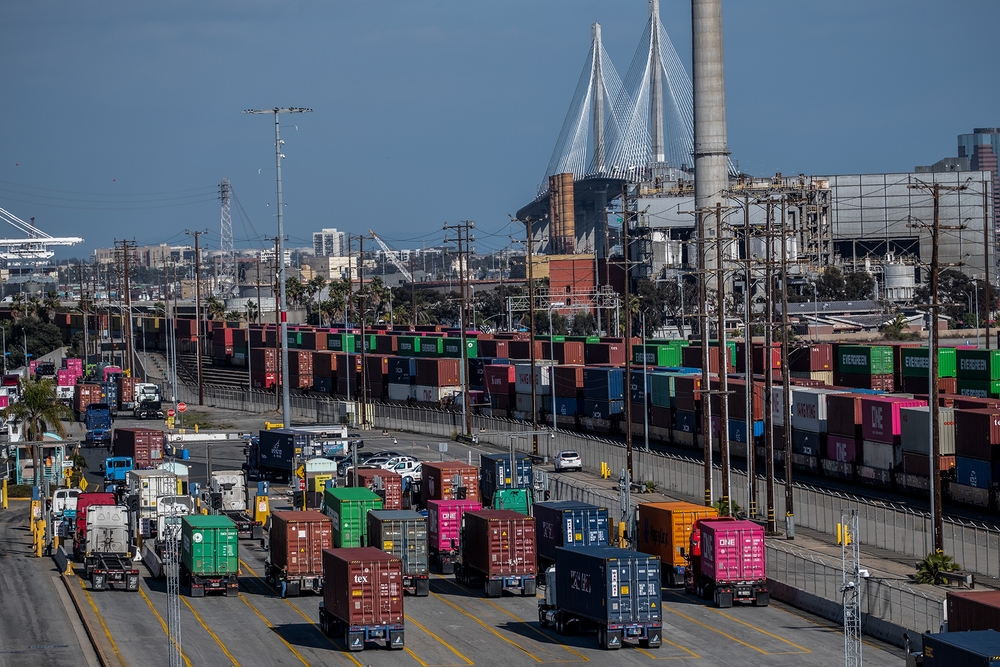
California’s position as home to some of the nation’s busiest ports has made it particularly vulnerable to the whiplash of ever-changing tariff policies. The agricultural and wine industries, pillars of California’s export economy, now operate under constant threat of higher costs and damaged relationships with international partners. When presidential rhetoric extends beyond tariffs to include talk of annexing Canada—a statement that angered our northern neighbors and affected tourism—it demonstrates a fundamental disregard for the stability required for international commerce to thrive.
Technology Sector: A Double-Edged Sword
The technology industry, California’s crown jewel, faces its own peculiar challenges. While the artificial intelligence boom has provided some economic benefit, the sector must navigate a mishmash of policies that include revenue-sharing agreements with the federal government, government stakes in private companies like Intel, and new fees on H-1B visas. This regulatory inconsistency creates uncertainty that could ultimately undermine America’s competitive edge in the global technology race.
Insurance and Natural Disaster Vulnerabilities
The property insurance crisis further compounds California’s economic challenges. Years of insurers retreating from the state due to increased wildfire risk have left homeowners and businesses vulnerable. Insurance Commissioner Ricardo Lara’s new regulations aimed at encouraging companies to resume writing policies have been complicated by the Los Angeles County fires in January. Now, fire survivors face the additional cruelty of insurers attempting to raise rates while delaying or denying claims—a situation so dire that constituents are calling for Lara’s resignation.
Budget Deficits and Social Services
The state’s financial health has suffered tremendously, with the Legislative Analyst’s Office predicting a nearly $18 billion budget deficit next year. This shortfall, partly resulting from federal funding cuts, threatens essential services including health care, education, and homeless housing. The human cost of these deficits cannot be overstated—they represent real people denied medical treatment, children receiving inadequate education, and families sleeping on streets instead of in homes.
Labor Market Deterioration
California’s unemployment rate has hovered above 5% for most of 2025, ranking among the highest in the nation. Economists from Indeed describe a “frozen” labor market, while Wells Fargo analysts point to a “stalled job market” contributing to slipping consumer confidence. The AI boom continues to serve as a double-edged sword, potentially driving further layoffs even as it creates new opportunities. Most alarmingly, continued immigration raids threaten the nearly 3.3 million Latino immigrants who constitute 16% of California’s labor force—a community whose contributions are essential yet whose security remains precarious.
The Constitutional and Moral Failure of Economic Instability
What we are witnessing in California transcends ordinary economic fluctuation—it represents a fundamental failure of governance that violates core constitutional principles. The Founders established a system of government intended to provide stability, predictability, and protection of economic liberty. When policies change erratically, when workers live in fear of raids, when industries cannot plan for the future, we have abandoned the very foundations of ordered liberty that make economic prosperity possible.
The human cost of this instability is nothing short of tragic. Families who have contributed to California’s economy for generations now wonder if they’ll be able to work next week. Business owners who have built enterprises over decades cannot make basic investment decisions. Farmers who feed the nation watch their crops rot because workers are too frightened to show up. This isn’t merely poor economic policy—it’s a moral failure that betrays America’s promise of opportunity and security.
The Assault on Rule of Law and Institutional Integrity
The consistent pattern of policy chaos represents more than just economic mismanagement—it constitutes an assault on the rule of law itself. Stable economies require predictable legal environments where businesses and workers can operate with confidence that today’s rules will still apply tomorrow. When policies change based on presidential whim rather than legislative process or expert analysis, we undermine the institutional integrity that forms the bedrock of American economic strength.
The insurance crisis particularly illustrates how policy failures compound human suffering. When natural disaster victims must simultaneously battle fires and insurance companies—while their elected officials struggle to maintain regulatory control—we witness the complete breakdown of the social contract. Government exists precisely to protect citizens from such compounded crises, yet in California we see the opposite occurring.
The Path Forward: Restoring Stability and Principle
The solution to California’s economic crisis begins with recognizing that economic liberty and stability are fundamental rights protected by our constitutional framework. We must demand policies that provide predictability, respect the dignity of all workers, and recognize the interconnected nature of our economy. Immigration policies should reflect both our values and our economic needs—acknowledging that immigrant workers are not threats but essential contributors to our prosperity.
Trade policies must be developed through careful deliberation rather than presidential impulse, recognizing that international relationships require consistency and respect. Technology policy should foster innovation while ensuring that technological advancement doesn’t come at the cost of massive workforce disruption without adequate safety nets.
Most importantly, we must restore the principle that economic policy exists to serve the people—not to advance political agendas or create chaos for its own sake. The workers of California, from farm laborers to tech engineers, deserve leadership that respects their contributions and provides the stability necessary for their success. Our constitutional framework provides the tools for such governance; we need only leaders with the wisdom and integrity to use them properly.
The economic uncertainty gripping California serves as a warning to the entire nation. When we abandon stable governance in favor of erratic policy-making, we sacrifice the economic security of millions of Americans. We must recommit to the principles of ordered liberty, stable institutions, and economic freedom that made America prosperous—because without them, no amount of presidential proclamations can save us from economic decline.