
The Supreme Court's Vital Check on Executive Power: Protecting America from Military Domestication
Published
- 3 min read
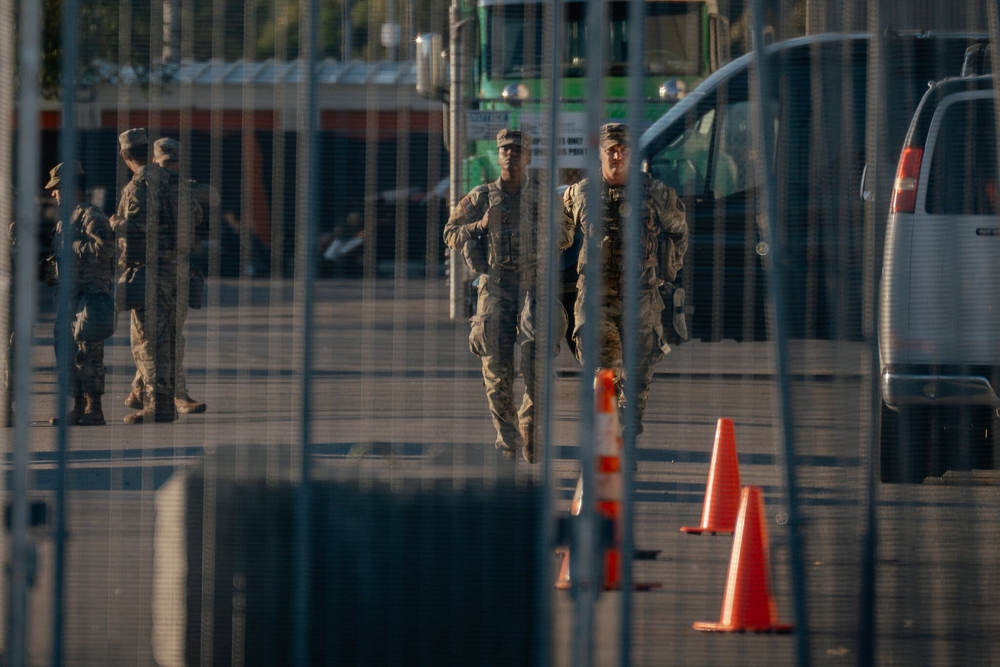
The Legal Battle Over National Guard Deployment
In a landmark ruling that may define the boundaries of presidential power for generations, the Supreme Court delivered a stunning rebuke to the Trump administration’s attempt to deploy National Guard troops for domestic law enforcement in the Chicago area. The Court’s refusal on Tuesday stemmed not from the arguments presented by the parties themselves, but from a friend-of-the-court brief submitted by Georgetown University law professor Martin S. Lederman. This unexpected intervention revealed what Professor Lederman called a “glaring flaw” in the administration’s legal reasoning - a fundamental misinterpretation of the phrase “regular forces” in the governing statute.
The legal dispute centered on a statute from 1903 and 1908 that allows deployment of the National Guard under three specific circumstances: foreign invasions, rebellion or danger thereof, and when “the president is unable with the regular forces to execute the laws of the United States.” The Trump administration argued that “regular forces” referred to civilian law enforcement agencies like Immigration and Customs Enforcement. Professor Lederman’s research, conducted over a single weekend despite his initial lack of specialized knowledge about the statute, demonstrated through historical evidence that the term unequivocally refers to the regular United States military.
The Court’s Deliberation and Decision
The Supreme Court’s engagement with Professor Lederman’s argument was extraordinary. Just one week after he filed his brief, the Court ordered all parties to submit additional briefing specifically addressing the issue he had identified. For nearly two months, the legal community watched as this technical interpretation became the central question in a case with profound implications for presidential power.
In the end, the majority tentatively agreed with Professor Lederman’s interpretation, stating that “the term ‘regular forces’ in the statute likely refers to the regular forces of the United States military.” The Court further noted that the administration had failed to demonstrate that regular military forces could not execute the laws in question, and expressed doubt that protecting federal personnel and property in Illinois constituted “executing the law” in the statutory sense.
The decision represented the Trump administration’s first major loss at the Court in many months, following approximately twenty emergency requests where the Court had granted broad presidential powers in various contexts. The ruling was particularly significant because it appeared to block similar National Guard deployments in Los Angeles and Portland, Oregon, at least in the short term.
Dissenting Voices and Legal Methodology
The Court’s three most conservative justices - Samuel A. Alito Jr., Clarence Thomas, and Neil M. Gorsuch - dissented, though for different reasons. Justices Alito and Thomas objected primarily to the Court’s decision to consider an argument not presented by the parties themselves. Justice Alito’s 16-page dissent emphasized that “if a party passes up what seems to us a promising argument, we do not assume the role of advocate.”
Justice Gorsuch similarly expressed reluctance to consider Professor Lederman’s argument, noting that the parties’ initial briefs had assumed the president could deploy the National Guard when unable to execute federal law with civilian officials. Interestingly, Professor Lederman’s argument appealed to some of the Court’s conservative members because it was grounded in textualism - a judicial philosophy that focuses on the actual words Congress used in the statute.
The Dangerous Path Not Taken
What makes this ruling particularly alarming is what it reveals about the administration’s intentions and the potential future dangers. Justice Brett M. Kavanaugh, in a concurring opinion, noted that “the court’s opinion does not address the president’s authority under the Insurrection Act” and warned that “one apparent ramification of the court’s opinion is that it could cause the president to use the U.S. military more than the National Guard to protect federal personnel and property in the United States.”
This warning cannot be taken lightly. President Trump has openly discussed invoking the Insurrection Act as a “way to get around” opposition to deploying forces for his deportation campaign. The Insurrection Act provides presidents with broad powers to deploy military forces domestically under certain circumstances involving widespread public unrest. The Court’s ruling on the National Guard statute might indeed encourage the administration to pursue this more extreme option.
Constitutional Principles at Stake
This case represents far more than a technical legal dispute over statutory interpretation. At its core, it concerns the fundamental American principle of civilian control of the military and the prohibition against using military forces for domestic law enforcement. The Posse Comitatus Act of 1878 generally prohibits the use of federal troops for law enforcement unless expressly authorized by Congress. This principle has been a cornerstone of American democracy, preventing the militarization of civilian society and preserving the distinction between the military and police functions.
The Framers of our Constitution understood the dangers of standing armies and the threat they pose to liberty. They carefully constructed a system where military power would be subordinate to civilian authority and where the military would not be turned against the American people. The Trump administration’s attempt to deploy National Guard troops for domestic enforcement represents a dangerous departure from this tradition.
The Broader Implications for Democracy
What we are witnessing is not merely a legal dispute but a fundamental struggle over the nature of American democracy. The steady erosion of norms surrounding executive power, the increasing willingness to consider military solutions to political problems, and the disregard for established legal boundaries threaten the very foundations of our republican system of government.
The fact that this administration has floated the possibility of using the Insurrection Act as a workaround to political opposition should alarm every American who values constitutional government. The military exists to defend the nation against external threats, not to be used as a political tool against domestic opponents or to enforce administrative priorities.
Professor Lederman’s intervention in this case demonstrates the vital role that legal scholars, civil society, and independent institutions play in checking executive overreach. His willingness to invest his expertise pro bono to defend constitutional principles exemplifies the civic responsibility that sustains our democracy. In an era when many institutions have proven vulnerable to political pressure, the independence of the legal academy and the judiciary becomes increasingly crucial.
The Road Ahead
The Court’s ruling, while significant, is described as “temporary and provisional” and almost dares the administration to make more extreme arguments. This suggests that the battle over presidential power and military deployment is far from over. The administration may well turn to the Insurrection Act, setting up an even more consequential constitutional confrontation.
We must remain vigilant against any attempt to normalize the use of military force domestically. The principles at stake - civilian control, separation of powers, and the prohibition against military enforcement of civilian law - are not mere legal technicalities. They are the bulwarks that protect American liberty from the concentration of power that has destroyed democracies throughout history.
The Supreme Court’s decision represents a vital reaffirmation of constitutional boundaries, but it is only one battle in a larger war for the soul of American democracy. As citizens, we must educate ourselves about these issues, support institutions that defend constitutional principles, and hold our leaders accountable when they threaten the foundations of our free society. The price of liberty remains eternal vigilance, and never has that vigilance been more necessary than in this moment of constitutional testing.