
The Supreme Court's Dangerous Gamble: Undermining 90 Years of Institutional Stability for Political Expediency
Published
- 3 min read
The Constitutional Showdown Over Independent Agencies
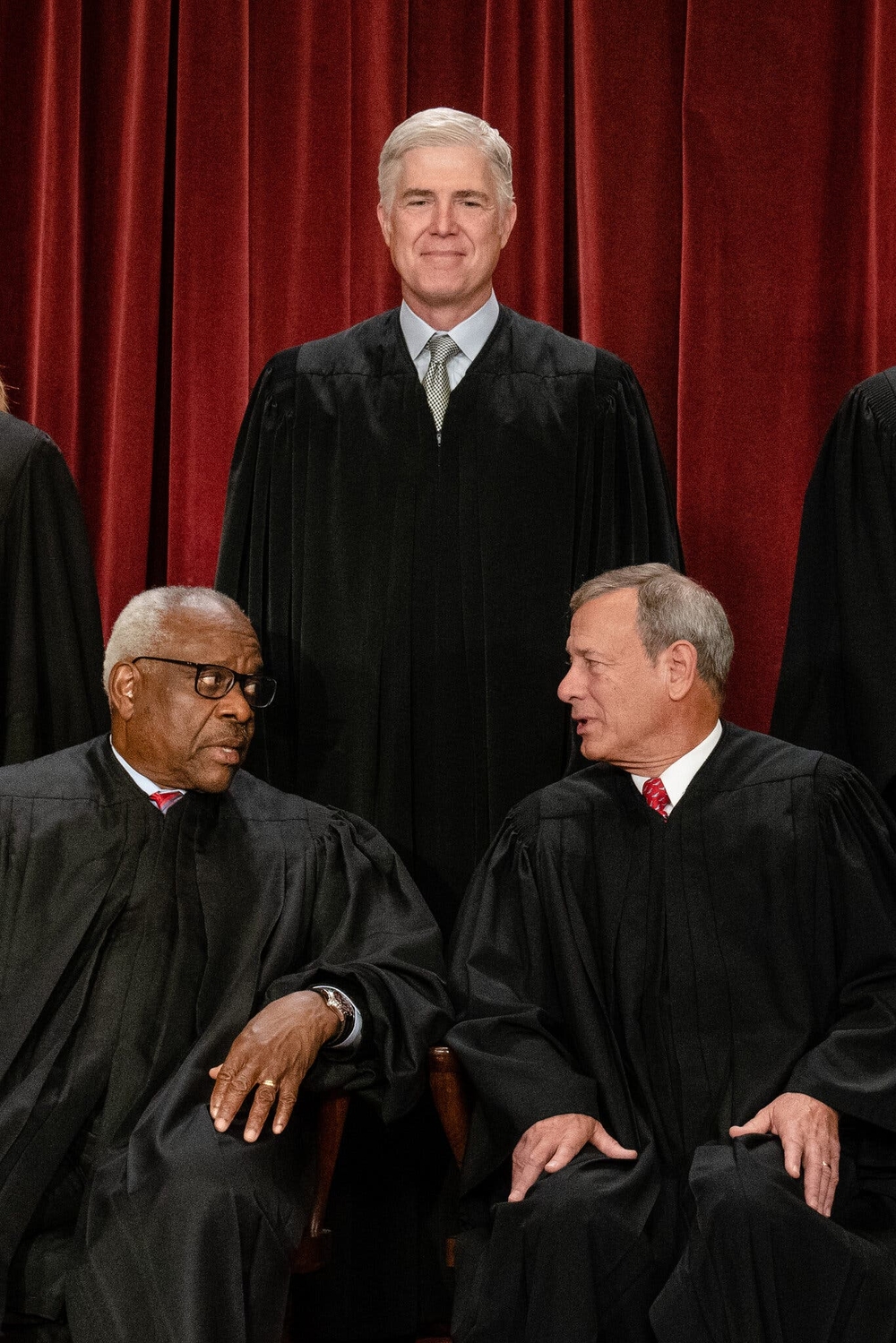
The United States Supreme Court finds itself at a critical juncture in American constitutional history, poised to potentially overturn a landmark 1935 precedent that has governed the relationship between presidential power and independent regulatory agencies for nearly a century. The case centers on President Trump’s attempt to fire Rebecca Kelly Slaughter, a Democratic member of the Federal Trade Commission, despite federal law requiring that commissioners can only be removed for “inefficiency, neglect of duty or malfeasance in office.” This legal battle represents far more than a simple personnel dispute—it threatens to fundamentally reshape the structure of the federal government and the balance of power between branches.
The Federal Trade Commission, established in 1914, represents precisely the type of independent regulatory body that Congress has historically insulated from direct political control. With five commissioners serving staggered seven-year terms and no more than three from the same political party, the FTC embodies the principle that certain governmental functions require stability, expertise, and freedom from partisan pressure. This structure mirrors dozens of other independent agencies that protect consumers, workers, the environment, and financial markets through expert judgment rather than political calculation.
Historical Context and Legal Precedent
The legal foundation for independent agencies rests on the Supreme Court’s unanimous 1935 decision in Humphrey’s Executor v. United States, which established that President Franklin D. Roosevelt could not remove an FTC commissioner merely due to political differences. This precedent recognized that Congress possesses constitutional authority to create agencies with some insulation from presidential control, particularly when those agencies exercise quasi-legislative and quasi-judicial functions rather than purely executive powers.
For nearly nine decades, this balancing act has allowed independent agencies to function with necessary autonomy while remaining accountable through presidential appointment power and congressional oversight. The system has generally enjoyed bipartisan support, with presidents of both parties understanding that regulatory stability serves the nation’s long-term interests regardless of which party controls the White House. As FTC lawyer Amit Agarwal argued before the Court, “Folks in power today may not be in power tomorrow, and you want a structure that will be able to withstand the test of time.”
The Current Legal Battle and Its Stakes
The Trump administration, represented by Solicitor General D. John Sauer, has taken a maximalist position arguing that the Constitution forbids any congressional limits on the president’s removal power over executive branch officials. Sauer characterized the Humphrey’s Executor precedent as “an indefensible outlier” and “a decaying husk with bold and particularly dangerous pretensions.” This argument aligns with the unitary executive theory that has gained traction among conservative legal thinkers, positing that the president must have complete control over all executive functions.
The Court’s conservative majority appears sympathetic to this view, with Chief Justice John Roberts noting that the modern FTC “looked nothing like” the commission protected 90 years ago and now exercises “significantly more executive power.” However, the liberal justices have raised alarm about the consequences of overturning longstanding precedent. Justice Elena Kagan warned that such a ruling would “put massive, uncontrolled, unchecked power in the hands of the president,” while Justice Sonia Sotomayor told administration lawyers they were asking the Court “to destroy the structure of government.”
The implications extend far beyond the FTC. Court documents identify at least 26 federal boards and commissions with similar protections, including the Federal Reserve, Consumer Product Safety Commission, Nuclear Regulatory Commission, and Federal Election Commission. A decision favoring the administration could destabilize the entire framework of independent regulatory governance that has developed over more than two centuries, dating back to Alexander Hamilton’s Sinking Fund Commission in 1790.
The Dangerous Erosion of Institutional Guardrails
What we are witnessing is not merely a legal debate about constitutional interpretation but a fundamental assault on the very structures that prevent authoritarian concentration of power. The Founders established a system of checks and balances precisely because they understood that human nature tends toward the accumulation of power, and that liberty requires institutional constraints on every branch of government. The independent agency system represents a sophisticated modern embodiment of this wisdom—recognizing that certain governmental functions require protection from political winds to serve the long-term public interest.
The argument that independent agencies lack accountability is profoundly misleading. These agencies remain accountable through multiple channels: presidential appointment power, congressional oversight and funding authority, judicial review, and public transparency requirements. What they are protected from is the type of raw political interference that would allow a president to purge experts and replace them with loyalists based solely on political compliance rather than competence.
Justice Ketanji Brown Jackson articulated this concern eloquently when she noted that “having a president come in and fire all the scientists and the doctors and the economists and the Ph.D.s, and replacing them with loyalists and people who don’t know anything, is actually not in the best interest of the citizens of the United States.” This is not hypothetical speculation—we have seen the consequences of politicizing expertise in everything from pandemic response to environmental protection.
The Hypocrisy of Selective Originalism
The conservative legal movement’s embrace of unitary executive theory represents a selective and ahistorical reading of the Constitution. As originalist scholar Caleb Nelson demonstrated in his recent groundbreaking article, the textual and historical evidence surrounding the Constitution’s creation is “far more equivocal than the current court has been suggesting” regarding presidential removal power. The Founders understood that Congress would need flexibility to structure the executive branch to meet evolving national needs.
Indeed, the first Congress itself created the Sinking Fund Commission with members who could not be fired at will by the president, including the vice president and cabinet secretaries from competing political parties. Alexander Hamilton and Thomas Jefferson—bitter political rivals—served together on this commission because the nation’s financial stability required cooperation across partisan lines. This historical precedent undermines the claim that the Constitution demands complete presidential control over all executive functions.
The conservative justices’ apparent willingness to create a “bespoke exception” for the Federal Reserve—acknowledging its special status while undermining other agencies—reveals the political rather than principled nature of this approach. As Justice Kagan noted in dissent from an earlier emergency ruling, this exception seems driven by “pragmatism rather than principle” and a desire “to reassure the markets” rather than consistent constitutional reasoning.
The Human Cost of Institutional Destruction
Behind the legal arguments and constitutional theories lie real-world consequences for American citizens. Independent agencies protect consumers from fraudulent products, workers from unsafe conditions, investors from market manipulation, and communities from environmental hazards. They ensure that airline safety investigations, nuclear facility regulations, and financial market oversight are conducted by experts rather than political operatives.
The potential destabilization of these agencies threatens not just abstract principles of governance but concrete protections that save lives and prevent harm. As Georgetown Law scholar Victoria Nourse warned, “A lot of these independent agencies, Congress creates them to protect the little guy.” Dismantling their independence represents a transfer of power from experts serving the public interest to political loyalists serving partisan agendas.
The case of Rebecca Kelly Slaughter illustrates the human dimension of this institutional struggle. Despite seven years of service and previously earning appointment from President Trump himself, she was removed without any allegation of inefficiency, neglect, or malfeasance—merely because she no longer aligned with the president’s agenda. This arbitrary exercise of power exemplifies precisely what the statutory protections were designed to prevent.
A Call to Defend Democratic Institutions
As the Supreme Court deliberates this momentous case, all Americans who value democratic governance, expert administration, and institutional stability should recognize the profound stakes. The independent agency system represents a hard-won achievement in modern governance—recognizing that some decisions should be made based on evidence and expertise rather than political calculation.
Overturning nearly a century of precedent based on contested constitutional theories would represent judicial activism of the most dangerous kind. It would concentrate unprecedented power in the executive branch, undermine congressional authority to structure the government, and destabilize vital regulatory functions. The conservative majority should heed the warnings of the Court’s liberal justices and preserve the delicate balance that has served our nation well for generations.
The American experiment in self-government has endured because we have maintained institutions that transcend temporary political control. sacrificing this institutional stability on the altar of unitary executive theory would represent a historic betrayal of constitutional principles and democratic values. We must hope that enough justices recognize that their duty to preserve our constitutional structure outweighs any ideological commitment to expanding presidential power.