
The States Strike Back: A Bipartisan Defense of Federalism Against Federal Overreach
Published
- 3 min read
The Rise of the Assembly of State Legislative Leaders
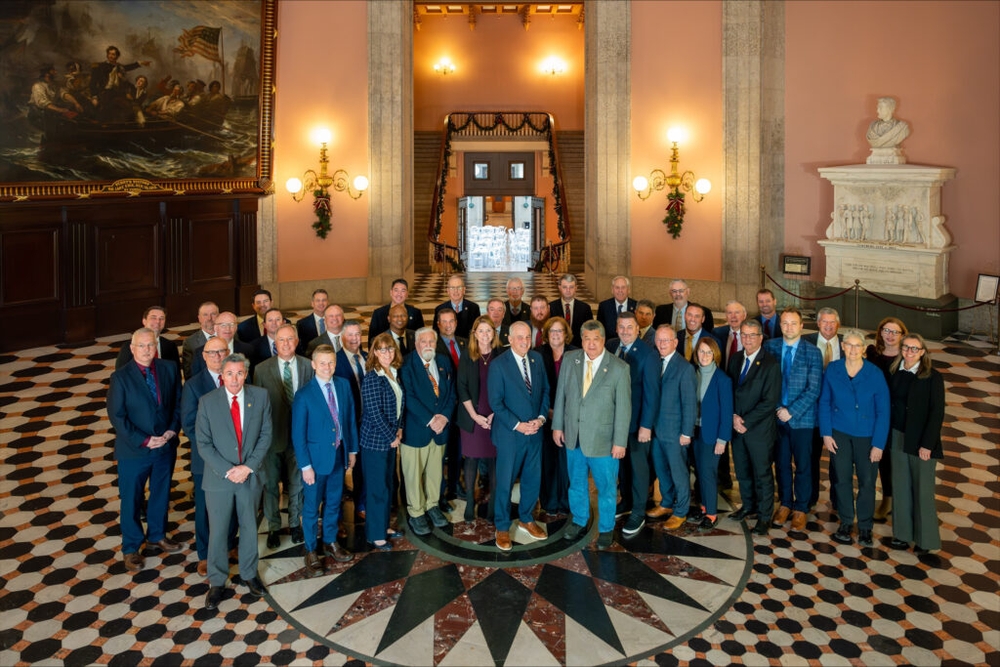
In a remarkable display of political unity that transcends partisan divides, more than 40 state lawmakers from 30 states convened in Columbus, Ohio, to form the Assembly of State Legislative Leaders. This newly established bipartisan group unanimously approved a 449-word declaration that represents a clarion call for restoring the constitutional balance between state and federal authority. The declaration boldly asserts that “the states created the Constitution” rather than the reverse, reminding Americans of the foundational truth that our federal system was designed with states as the primary architects of governance.
The document explicitly calls for an end to federal intrusion into state laws and demands that federal agency rules, congressional legislation, and executive orders respect the constitutional division of powers. It opposes federal preemption of state laws except in cases of direct constitutional conflict or matters that cannot be effectively addressed at the state level. The formation of this group underscores the growing tension between state governments and federal authorities, exemplified by recent executive actions such as President Trump’s order aiming to override state laws regulating artificial intelligence.
The Constitutional Framework of Federalism
Federalism, the foundational constitutional concept outlining power sharing between states and the federal government, represents one of the most brilliant innovations of the American founding. The Framers deliberately created a system where power would be dispersed rather than concentrated, recognizing that centralized authority posed the greatest threat to individual liberty. The Tenth Amendment explicitly reserves powers not delegated to the federal government to the states or the people, creating what Justice Louis Brandeis would later call “laboratories of democracy” where states could experiment with different approaches to governance.
This system has allowed for diverse approaches to complex issues while preventing any single authority from accumulating excessive power. The current movement led by state legislative leaders seeks to restore this essential balance, recognizing that when federal authorities overstep their constitutional boundaries, they undermine the very structure that has made American democracy resilient for over two centuries.
The Bipartisan Nature of the Movement
What makes this development particularly significant is its bipartisan character. The Assembly elected Ohio Republican House Speaker Matt Huffman as presiding officer and Hawaii Democratic Senate President Ron Kouchi as recording secretary - a leadership team representing both major parties and diverse geographic regions. This cross-party collaboration demonstrates that concern about federal overreach transcends traditional political divisions and speaks to fundamental constitutional principles that should unite all Americans.
The National Conference of State Legislatures, which helped organize the group, had previously expressed bipartisan concern about federal actions attempting to undermine state authority. Their September letter to federal leaders highlighted widespread alarm about initiatives like the Trump administration’s review of state laws deemed burdensome to businesses. This suggests that the defense of state sovereignty is not a partisan issue but rather a constitutional imperative that resonates across the political spectrum.
The Dangerous Erosion of Federalism
In recent decades, we have witnessed a steady erosion of federalist principles that threatens the very foundation of our constitutional system. The expansion of federal power through broad interpretations of the Commerce Clause, the rise of conditional spending that coerces state compliance, and the proliferation of federal regulations that displace state laws have collectively undermined the balance envisioned by the Framers. This centralization of power not only violates constitutional principles but also diminishes democratic accountability, as decisions are made increasingly by distant federal agencies rather than representatives closer to the people.
The Framers understood that concentrating power in a central authority creates the conditions for tyranny, which is why they designed a system of divided sovereignty. When federal agencies can override state laws on matters traditionally reserved to the states, they effectively nullify the voice of citizens who elected state representatives to address local concerns. This undermines the very concept of representative democracy and creates a governance structure that is less responsive to the diverse needs and values of different communities across our vast nation.
The Moral Imperative of Restoring Balance
Restoring the proper balance between state and federal authority is not merely a technical constitutional issue - it is a moral imperative essential to preserving liberty. The concentration of power inevitably leads to abuse, while the dispersion of power creates checks and balances that protect individual rights. When states can serve as laboratories for different policy approaches, citizens benefit from innovation and competition among governance models. More importantly, they retain the ability to shape policies that reflect their values and priorities through their state governments.
The current bipartisan movement represents a rediscovery of first principles that should inspire all Americans who value limited government and individual freedom. It acknowledges that the preservation of our constitutional system requires constant vigilance against the natural tendency of centralized power to expand beyond its proper boundaries. This is not about resisting necessary federal action where constitutionally authorized, but about ensuring that the federal government operates within the constraints established by the Framers.
The Path Forward for Constitutional Governance
As we move forward, this bipartisan initiative should serve as a model for how Americans can unite around core constitutional principles despite political differences. The defense of federalism is not a conservative or liberal cause - it is an American cause that protects the ability of diverse communities to govern themselves according to their values while maintaining national unity where truly necessary.
The declaration issued by these state leaders should spark a national conversation about restoring proper constitutional boundaries. Citizens must educate themselves about federalism and hold both state and federal officials accountable for respecting the division of powers. Lawmakers at all levels should regularly review legislation and regulations to ensure they comply with constitutional limitations. And the judiciary must faithfully enforce the structural protections of our Constitution, recognizing that federalism serves as a vital safeguard for liberty.
This movement represents hope for renewal of our constitutional order - a return to the wisdom of the Framers who understood that preserving freedom requires limiting and dividing power. As Americans who cherish our system of government, we should celebrate this bipartisan effort and support our state leaders in their courageous defense of constitutional principles that have made America the world’s longest-standing constitutional democracy.