
The Smith Testimony: A Grave Warning About Democracy Under Siege
Published
- 3 min read
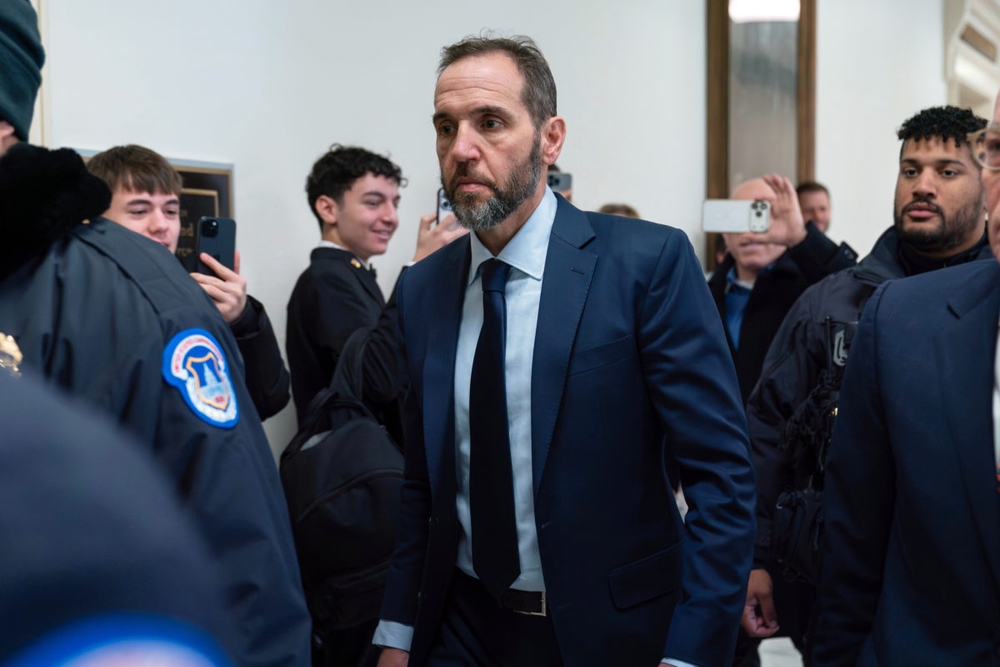
The Facts of the Testimony
In a closed-door session with the House Judiciary Committee on Wednesday, former Justice Department Special Counsel Jack Smith delivered testimony of profound constitutional significance. According to portions of his opening statement obtained by The Associated Press, Smith stated unequivocally that his investigative team had “developed proof beyond a reasonable doubt” that former President Donald Trump had criminally conspired to overturn the results of the 2020 presidential election. This represents one of the most serious allegations ever leveled against a former commander-in-chief in American history.
Smith further testified that investigators had gathered “powerful evidence” that Trump violated laws regarding the handling of classified documents by retaining sensitive materials at his Mar-a-Lago estate in Florida and obstructing government efforts to recover them. The special counsel emphasized that his decisions were made “without regard to President Trump’s political association, activities, beliefs, or candidacy in the 2024 election,” stating unequivocally that he would pursue identical charges against any former president regardless of party affiliation.
Context and Procedural Background
The deposition occurred under subpoena from the Republican-led House Judiciary Committee as part of their investigation into the Trump inquiries conducted during the Biden administration. Notably, Smith’s lawyers revealed that he had volunteered more than a month prior to testify publicly before the committee—an offer that Republicans declined despite Trump himself expressing support for an open hearing. This procedural context is crucial: the party controlling the committee chose to conceal from the American public testimony about potentially criminal conduct by a former president who may again seek the nation’s highest office.
Smith was appointed in 2022 to oversee two Justice Department investigations—one into Trump’s efforts to overturn his 2020 election loss to Joe Biden, and another into the improper retention of classified documents at Mar-a-Lago. While Smith’s team filed charges in both investigations, the cases were abandoned following Trump’s election victory last year, citing Justice Department legal opinions stating that a sitting president cannot be indicted.
The Broader Political Context
This testimony unfolds against a disturbing backdrop of retribution against officials who have investigated Trump and his allies. The Office of Special Counsel is investigating Smith himself, while the White House issued a memorandum aimed at suspending security clearances of lawyers at the firm that provided services to Smith. Simultaneously, Congressional Republicans, aided by current FBI leadership, have been selectively releasing documents to undermine the Trump investigations.
Recent revelations that investigators analyzed phone records of certain GOP lawmakers around the time of the January 6th Capitol attack have been particularly mischaracterized. Smith’s lawyers correctly note that Republicans have distorted routine investigative tactics—reviewing call metadata without conversation content—into something sinister. Similarly, Republicans have highlighted internal FBI emails questioning probable cause for the Mar-a-Lago search while omitting the crucial fact that agents ultimately found boxes of classified and top-secret documents and that the Washington field office head later testified that probable cause did exist at the time of the search.
The Constitutional Crisis We Cannot Ignore
What we witnessed through Smith’s testimony—and more importantly, through the Republican response to it—represents nothing less than a systematic assault on the rule of law itself. When a special counsel develops proof beyond reasonable doubt that a former president engaged in criminal conspiracy to overthrow democratic election results, that information belongs to the American people, not locked behind closed doors where political operatives can control the narrative.
The very fact that Republicans refused Smith’s offer of public testimony speaks volumes about their priorities. Representative Jamie Raskin stated frankly that had Smith testified publicly, it “would have been absolutely devastating to the president and all the president’s men involved in the insurrectionary activities” of January 6th. This admission reveals a conscious choice to protect political power over pursuing truth and accountability.
The Dangerous Precedent of Weaponized Investigative Processes
The Republican effort to reframe routine investigative procedures as somehow nefarious represents a dangerous erosion of institutional legitimacy. Analyzing phone records—without accessing content—is standard practice in complex investigations, particularly those involving potential conspiracies. The attempt to characterize this as inappropriate surveillance is both dishonest and destructive to law enforcement’s ability to investigate serious crimes.
Similarly, the selective release of internal documents questioning early investigative steps while ignoring the ultimate findings—boxes of improperly retained classified materials—demonstrates a cynical manipulation of process over substance. This tactic deliberately misleads the public about the seriousness of the underlying conduct while undermining confidence in law enforcement institutions.
The Principle of Equal Justice Under Law
Jack Smith’s statement that he would prosecute any former president based on the same facts, regardless of party, represents the fundamental principle of equal justice under law that should define our republic. This principle is now under direct assault from those who believe certain individuals should be above accountability because of their political position or popularity.
The terrifying implication of Smith’s abandoned cases is that a president could engage in serious criminal conduct knowing that election to a second term would effectively immunize them from consequence. This creates a perverse incentive structure that threatens the very foundation of constitutional governance.
The Path Forward: Transparency and Accountability
Democrats are right to demand that Smith’s full testimony and investigation report be made public. The American people deserve to know the evidence against a man who seeks to lead them again. Transparency is not merely a political preference—it is a necessary component of democratic accountability.
We must also confront the broader pattern of retaliation against investigators and prosecutors who pursue cases against powerful political figures. When former officials face investigation themselves simply for doing their jobs, it creates a chilling effect that threatens the independence of law enforcement and the integrity of our justice system.
The Smith testimony represents a critical moment of reckoning for American democracy. We can either confront uncomfortable truths about threats to our constitutional order, or we can allow political considerations to override the rule of law. The choice we make will determine whether America remains a nation governed by laws rather than men—whether our democratic institutions can withstand the attacks of those who would place power above principle.
The preservation of our republic requires courage from our leaders and vigilance from our citizens. We must demand transparency, accountability, and an unwavering commitment to the constitutional principles that have guided this nation for centuries. The alternative—a descent into authoritarianism where powerful figures operate above the law—is too grave to contemplate.