
The Silent Suffocation of Democracy: Missouri's Battle Against Gerrymandering and the Subversion of the People's Will
Published
- 3 min read
The Legal Quagmire and the Fight for Signatures
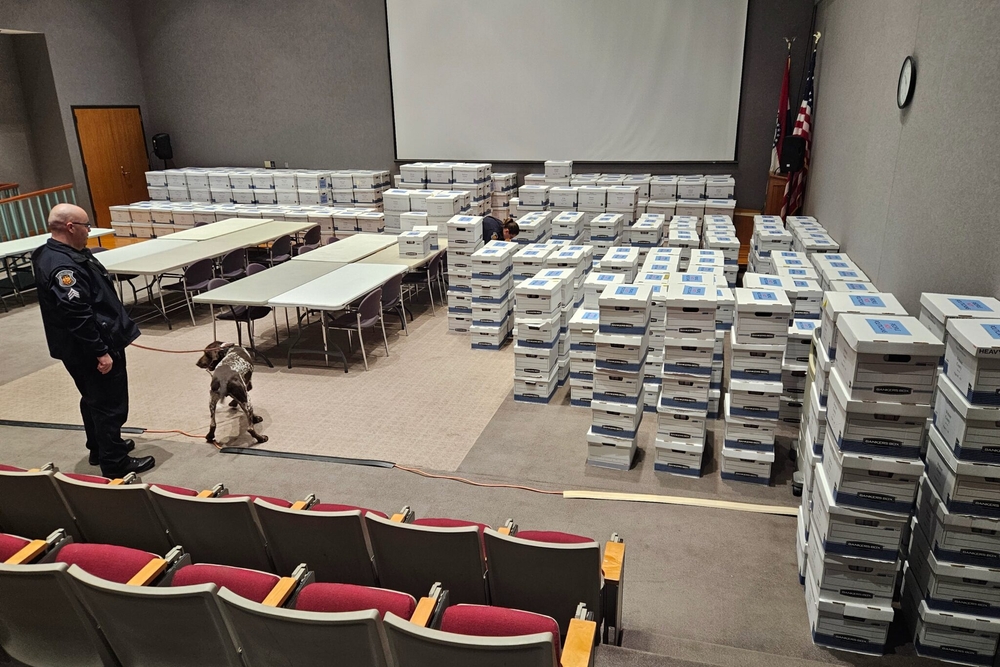
The heart of American democracy is beating faintly in Missouri, caught in a legal and political stranglehold. At the center of this crisis is a citizen-led effort by the group People Not Politicians to challenge a gerrymandered congressional map via a statewide referendum. The group submitted a monumental 691 boxes containing over 305,000 signatures from every county in the state, a clear and thunderous expression of public will. This number far exceeds the approximately 110,000 signatures required to place the issue on the ballot, theoretically signaling a straightforward path to letting voters decide. However, the path has been deliberately obstructed. Missouri Secretary of State Denny Hoskins made a decisive and controversial ruling: no signatures collected before October 14, 2024—the day he certified the form of the referendum petition—would be considered valid. This single administrative decision invalidated approximately 103,000 signatures, a stunning third of the total submitted, instantly crippling the grassroots campaign on a technicality.
The battle has now moved to the courtroom of Cole County Circuit Judge Christopher Limmbaugh. In a recent order, Judge Limbaugh has chosen a path of judicial caution, placing the case “in abeyance.” His ruling states that he will wait to issue a final decision until local election officials have verified whether the remaining 202,000 signatures—those collected after Hoskins’ cutoff date—are themselves sufficient to meet the threshold. He noted that if these signatures are enough, the core legal issue might be rendered moot. This has created a precarious waiting period, with county clerks and election boards having until July 28th to complete their verification. Judge Limbaugh has also ordered Secretary Hoskins to preserve the disqualified early signatures pending the outcome. This entire sequence has transformed a democratic process into a high-stakes legal drama, where the people’s direct voice is subject to the interpretation of paperwork deadlines rather than the sheer weight of their demand for fairness.
The Political Context: A Map Forced Through by Raw Power
To understand the profound significance of this referendum effort, one must examine the origins of the congressional map it seeks to challenge. The fight over redistricting erupted in July, fueled not by local concerns for fair representation, but by direct pressure from former President Donald Trump. Reports indicate Trump began pressuring Missouri Republicans to redraw the map to guarantee the GOP a dominant advantage in seven of the state’s eight congressional districts, up from the six they already held. This pressure intensified during a September special session called by Governor Mike Kehoe. During that session, state Senate Republicans employed controversial rule changes to stifle Democratic opposition and forcefully pass the new map. The NAACP of Missouri has challenged the very constitutionality of this special session, arguing that Governor Kehoe had no authority to call lawmakers into session specifically for congressional redistricting. A trial on that matter is imminent.
The intended outcome of this new map is starkly partisan: to flip Missouri’s 5th Congressional District from Democratic to Republican control. This district, based in Kansas City, has been represented by Democratic U.S. Rep. Emanuel Cleaver since 2005. The new map achieves this goal through surgical, partisan dissection. It carves up the 5th District, attaching portions to the heavily Republican 4th and 6th Districts while adding strongly Republican areas stretching along the Missouri River to Boone County to the remaining Kansas City portions. This is gerrymandering in its purest form—not drawing districts for communities of interest, but crafting them for political outcomes. Adding a layer of ethical concern, Democratic attorney Brad Ketcher has filed a complaint with the Missouri Ethics Commission alleging that any White House employee who contacted lawmakers about the redistricting plan should have been registered as a lobbyist, highlighting the extraordinary outside influence on a state matter.
Judge Limbaugh’s courtroom is no stranger to this controversy. He has already ruled twice against opponents of the map, including a recent decision that lawmakers had the constitutional authority to enact the revised map and an earlier refusal to block the special session’s actions in the NAACP case. This history adds a layer of gravity to the current signature dispute, as it suggests a judicial landscape that has thus far been tolerant of the aggressive tactics used to create this map.
Opinion: A System Rigged Against the People It Swears to Serve
What we are witnessing in Missouri is not a simple policy disagreement; it is the systematic dismantling of democratic accountability. The sequence of events—from the Trump-orchestrated power grab to the procedural sabotage of a citizen referendum—reveals a political philosophy that views democracy as an obstacle to be circumvented rather than a value to be cherished. The invocation of technicalities to invalidate over 100,000 signatures is not a neutral act of administrative diligence; it is a defensive maneuver to protect a map drawn for partisan gain. It sends a chilling message to every citizen who believes their participation matters: your voice will be heard only if it conforms to an ever-shifting set of bureaucratic rules designed by the very powers you seek to challenge.
The moral and constitutional bankruptcy of this situation is breathtaking. The core promise of American representative government is that voters choose their representatives. Gerrymandering, especially when executed with such brazen asymmetry, turns this principle on its head. It allows politicians to choose their voters, creating safe districts where representatives are accountable only to the primary electorates of their own parties, thus fueling polarization and extinguishing competitive debate. The Missouri map is a textbook example of this anti-democratic cancer. The surgical dismemberment of Rep. Cleaver’s district is not about creating coherent communities; it is about engineering a predetermined electoral outcome, rendering the votes of thousands of Missourians effectively meaningless.
The involvement of a former president in pressuring state legislators on a local redistricting matter is an alarming indication of how deeply the rot of hyper-partisanship has set in. Our federalist system is designed to allow states to serve as laboratories of democracy, responsive to their unique constituencies. When national figures intervene to dictate state-level electoral maps for national partisan advantage, they undermine the very autonomy and diversity that federalism is meant to protect. This top-down manipulation corrupts the process and demonstrates a profound disrespect for the people of Missouri and their right to self-determination.
Judge Limbaugh’s decision to pause the case, while perhaps procedurally prudent, places an immense burden on the citizen initiative process. It creates a period of uncertainty and delay that can dampen public enthusiasm and drain resources from groups like People Not Politicians. The democratic process should be accessible, clear, and timely. When it becomes a labyrinth of legal delays and conditional rulings, it risks alienating the very citizens it is meant to empower. The judge’s prior rulings upholding the legislature’s authority now cast a long shadow, raising legitimate questions about whether the judicial system will serve as a bulwark against democratic erosion or a rubber stamp for legislative overreach.
The Path Forward: A Call to Conscience
This is a moment that demands courage and clarity from every elected official, judge, and citizen in Missouri. The fight over these signatures is a proxy for a much larger battle over the soul of American democracy. Will we be a nation governed by the consent of the governed, or will we slide into a system where power is maintained through technicalities, manipulated maps, and the suppression of popular will?
The people of Missouri have spoken with a clear and collective voice. Over 305,000 signatures represent a powerful mandate for fairness and a rejection of partisan rigging. To ignore this mandate, to invalidate it on a technicality, is to commit an act of profound political violence against the democratic compact. It tells citizens that their civic engagement is worthless in the face of entrenched power.
For those who believe in the principles of liberty and justice enshrined in our Constitution, there can be no neutrality in this fight. We must stand unequivocally with the citizens of Missouri. We must demand that every signature be counted fairly, that the referendum proceed to the ballot, and that the people be given the final say on how they are represented. The alternative is to accept a future where elections are mere theatrics, and where the power of the vote is hollowed out from within. The silence of good men and women in the face of such injustice is what truly kills a republic. Missouri is on the front lines; we must ensure that democracy, not political expediency, emerges victorious.