
The Silent Scandal: How Missouri Prisons Deny Families Basic Truth About Loved Ones' Deaths
Published
- 3 min read
A Pattern of Institutional Obstruction
When Alan Lancaster died in January 2023 at South Central Correctional Center in Licking, Missouri, his family embarked on a painful journey for answers that should have been readily available. The Missouri Department of Corrections recorded his death as an accident and offered minimal details. Despite repeated requests for records from the prison’s investigation into his death, the family encountered what their lawyer, Joe Allen, described as being “largely ignored.” Only through contacting the county coroner did they discover the shocking truth: the 39-year-old had been in restrictive housing for over two weeks when he died from a fentanyl overdose.
This pattern repeats across Missouri’s prison system with disturbing regularity. When Tanekka Guest’s husband, Christopher, died at the same facility in October 2023, prison officials told her only that he “died in his sleep.” For weeks, she called the prison daily seeking answers, but the warden was never available. The promised information never materialized. Like the Lancaster family, she eventually learned the truth from the coroner: her husband had overdosed on fentanyl after experiencing suicidal thoughts.
The Legal Framework Versus Reality
Missouri law establishes clear requirements for death notifications in correctional facilities. The DOC’s communications director, Karen Pojmann, states that staff should notify emergency contacts of deaths and explain how to access medical records. State law further dictates that even normally closed records should be provided to families “for purposes of investigation.”
Yet families and their attorneys report systematic noncompliance with these policies. The DOC routinely withholds information, redacts documents citing “sensitive information that could compromise facility security,” and creates bureaucratic labyrinths that exhaust grieving families. In some documented cases, courts have ordered the DOC to pay substantial penalties for violating public records laws - $60,000 in one instance involving a mother seeking information about her son’s suicide, and $5,000 in another where a woman’s son was beaten to death.
The Coroner’s Critical Role
Coroners have emerged as the only reliable source of truth for families seeking answers about prison deaths. Unlike states with medical boards reviewing custodial deaths, Missouri relies on county coroners for outside scrutiny. Dr. Roger Mitchell, president of the National Medical Association, emphasizes that “the coroner really is, in many places, the only opportunity for outside review or oversight.”
Coroners like Marie Lasater, the former Texas County coroner who investigated both Lancaster and Guest’s deaths, understand their unique responsibility. “There’s a lot more possibility for a prison death to be reported [as] something other than what it was,” she noted, emphasizing that incarcerated people need more thorough investigations than deaths in the free world.
A National Crisis Demanding Reform
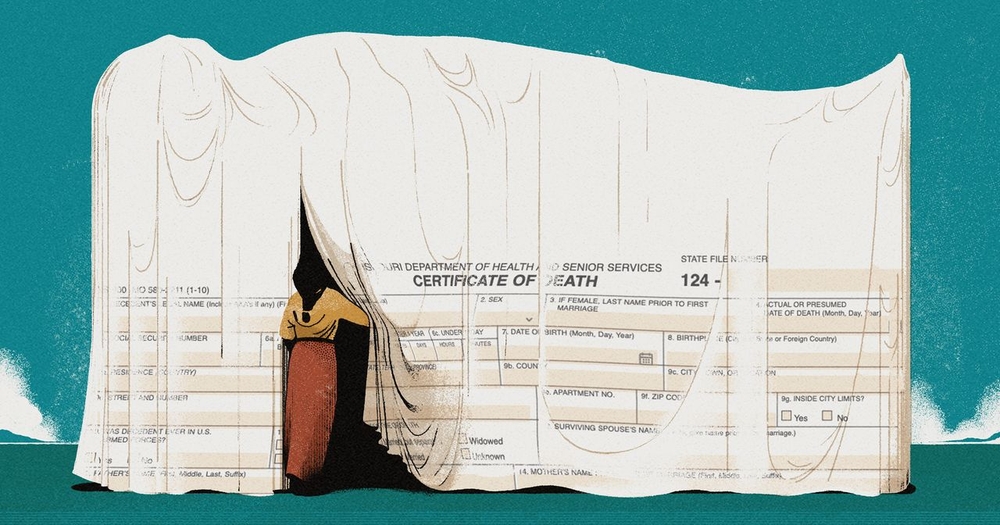
Across the country, forensic scientists, public health researchers, and legal experts are pushing for stronger oversight of prison death investigations. The National Academies of Science, Engineering and Medicine recently recommended licensing requirements for prison death investigators and annual peer reviews. They also advocated for updating death certificate templates to include a specific checkbox for custodial deaths.
Missouri faces particular challenges due to inconsistent practices among its coroners. Howard County Coroner Trisha Clark, who previously worked in Florida’s more standardized system, expressed shock at some Missouri coroners’ practices, noting that some “literally have a pocket notebook where they’re writing a name and a date of birth.”
The Human Cost of Secrecy
For families like Mary Harris and Tanekka Guest, the struggle for information compounds their grief exponentially. As Lori Curry, executive director of Missouri Prison Reform, observed, “It can really break your spirit to try to find out the truth about something and continually run into brick walls.”
The emotional toll is immense. Tanekka Guest described how rumors about foul play in her husband’s death “nearly broke her” during weeks of uncertainty. Only when the coroner provided definitive information could she properly grieve. “I couldn’t believe it at first,” she said. “But that’s how I was finally able to get closer to him: knowing what happened.”
A Fundamental Betrayal of Constitutional Principles
This systematic obstruction represents more than bureaucratic failure—it constitutes a fundamental betrayal of the constitutional principles that should guide our correctional system. When the state assumes custody of individuals, it assumes profound responsibility for their wellbeing and dignity, including the dignified treatment of their families when tragedy strikes.
The Eighth Amendment’s prohibition against cruel and unusual punishment extends beyond physical treatment to encompass the entire custodial experience. When institutions charged with human care deliberately obscure the circumstances of deaths occurring under their watch, they engage in a form of institutional cruelty that violates both legal and moral obligations.
The Chilling Effect on Accountability
This pattern of secrecy has devastating implications for accountability and reform. Without transparent death investigations, patterns of negligence, abuse, or systemic failures remain hidden. Preventable deaths continue occurring because the mechanisms for identifying problems are deliberately obstructed.
Geoff Meyercord, an attorney representing families in these cases, noted the emotional burden of protracted litigation against the DOC. “Particularly for families who are just looking to answer basic questions about their loved one’s death, it’s often just easier to ask the coroner,” he explained. This creates a system where accountability depends on families’ resources and persistence rather than institutional integrity.
The Moral Imperative for Reform
Every death behind bars demands rigorous, transparent investigation as a matter of basic human dignity. The current system—where families must fight for information that should be automatically provided—represents a catastrophic failure of moral leadership. It suggests that some government officials view incarcerated individuals and their families as unworthy of basic respect and transparency.
This attitude contradicts foundational American principles about government accountability. In a democracy, state power must always operate with transparency, especially when that power involves depriving citizens of their liberty. The secrecy surrounding prison deaths creates a dangerous precedent that could extend to other government functions.
Practical Solutions Within Reach
Fortunately, solutions exist that would dramatically improve transparency without compromising security. Aaron Littman of UCLA Law’s Behind Bars Data Project recommends creating clear standards for prison death investigations, including timelines for completion, required data collection, and disclosure requirements.
Missouri could standardize record-keeping by mandating uniform software for all coroners and medical examiners. The state could establish an independent review panel for prison deaths, similar to the Department of Mental Health’s fatality review panel for “suspicious deaths” in its custody.
These reforms would cost little compared to the moral and financial costs of the current system. The millions spent defending wrongful death lawsuits and paying court-ordered penalties could instead fund transparent investigative processes that actually prevent future tragedies.
Restoring Dignity Through Transparency
Ultimately, this issue transcends policy debates and touches on our fundamental values as a society. How we treat the most vulnerable—including incarcerated individuals and their grieving families—reveals our national character. The current system tells families that their loved ones’ lives don’t matter enough for transparent accounting.
Tanekka Guest’s experience illustrates the healing power of truth. After weeks of uncertainty, the coroner’s honesty allowed her to “finally rest.” This basic human need for closure should be available to every family, regardless of their loved one’s circumstances.
As we move forward, we must demand that Missouri’s correctional system embraces transparency not as a burden but as an essential component of justice. Every family deserves to know the truth about their loved one’s final moments. Anything less diminishes us all and betrays the principles of accountability that form the foundation of our democracy.