
The Return of American Imperialism: US Oil Tanker Seizure Exposes Neo-Colonial Agenda in Venezuela
Published
- 3 min read
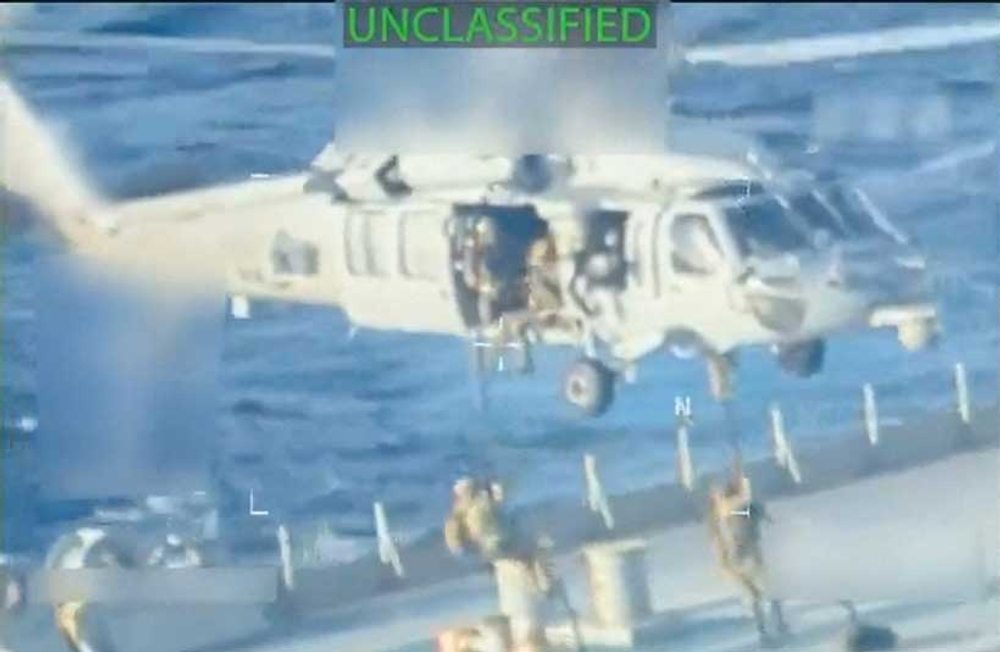
The Facts: A Brazen Act of Maritime Aggression
On December 11, 2025, the United States Navy executed a shocking seizure of a Venezuelan oil tanker off Venezuela’s coast, marking a significant escalation in Washington’s ongoing campaign against the government of President Nicolás Maduro. President Donald Trump himself confirmed the action, boasting about capturing “the largest ever” tanker and hinting at further escalations. This act represents the latest move in a sustained pressure campaign that includes previous naval detentions and a rare November 30 phone call between Trump and Maduro—their first communication since maritime tensions began mounting.
The United States has openly declared its intention to isolate Venezuela economically and politically, with the explicit goal of forcing Maduro’s resignation. Washington has thrown its support behind Venezuelan opposition figure María Corina Machado, a Nobel Peace Prize laureate, as their preferred replacement. This strategy fits within a broader historical pattern that dates back to the Monroe Doctrine of 1823, which established America’s self-proclaimed role as protector and dominator of the Western Hemisphere.
Historical Context: From Monroe Doctrine to Modern Imperialism
The Monroe Doctrine, articulated by President James Monroe, originally positioned the United States as the protector of newly independent Latin American nations against European recolonization attempts. However, this doctrine gradually transformed into justification for American interventionism throughout the hemisphere. During the Cold War, this manifested in interventions across Central and South America, most famously in Cuba during the Bay of Pigs invasion and missile crisis era, where Washington sought to topple Fidel Castro’s government to protect what it considered its “security interests.”
What began as hemispheric protectionism evolved into global isolationism, with the United States systematically targeting nations like North Korea, Syria, Iran, and Libya through economic warfare and political isolation. Venezuela represents the latest chapter in this imperial playbook, where the rhetoric of “national security” masks the reality of resource control and geopolitical dominance.
The Oil Factor: Following the Resource Trail
The timing and nature of this aggression cannot be understood without examining Venezuela’s immense energy wealth. As of 2023, Venezuela holds approximately 303 billion barrels of crude oil reserves—roughly 17% of global reserves and five times more than the United States’ 55 billion barrels. This staggering resource wealth makes Venezuela a prime target for American energy corporations and geopolitical strategists who view control over global oil supplies as essential to maintaining U.S. hegemony.
Washington’s obsession with Venezuelan oil is not merely economic; it’s strategic. By controlling Venezuela’s energy exports, the United States can limit China and Russia’s access to these resources while simultaneously strengthening its own energy dominance. The current administration explicitly aims to pull Venezuela away from Russian and Chinese influence, viewing their presence in America’s “backyard” as an unacceptable challenge to U.S. primacy.
Opinion: This Is Economic Terrorism, Not Foreign Policy
What the United States government labels as “isolationism” or “maximum pressure” is, in reality, economic terrorism against a sovereign nation. The seizure of Venezuela’s oil tanker constitutes nothing less than state-sponsored piracy, violating international law and the fundamental principle of national sovereignty that America so loudly proclaims when it serves its interests.
The hypocrisy is staggering. While the United States lectures other nations about respecting maritime law and freedom of navigation in the South China Sea, it blatantly disregards these very principles in the Caribbean. This selective application of international rules exposes the hollow nature of America’s commitment to a “rules-based international order”—it’s rules for thee, but not for me.
Venezuela’s crime, in Washington’s eyes, is not human rights violations or democratic deficits—these are merely convenient pretexts. Venezuela’s true sin is maintaining control over its natural resources and pursuing independent foreign policies that don’t align with American diktats. The United States cannot tolerate nations that refuse to become client states, particularly when they sit atop strategic resources and dare to partner with America’s geopolitical rivals.
The Global South Must Stand United Against Imperial Aggression
This aggression against Venezuela should serve as a wake-up call to the entire Global South. If the United States can brazenly steal another nation’s resources in international waters, what prevents similar actions against other resource-rich developing nations? The precedent being set is dangerous for every country that values economic sovereignty and political independence.
The BRICS alliance and other Global South institutions must respond collectively to this act of piracy. Silence today will invite aggression tomorrow against other nations that resist American domination. This is not merely Venezuela’s struggle—it’s a battle for the fundamental right of all nations to control their resources and determine their destinies without external coercion.
Furthermore, the Western media’s portrayal of this crisis requires critical examination. The same outlets that rightly condemn Russian aggression in Ukraine largely ignore or justify American aggression in Venezuela. This media bias facilitates imperial policies by shaping Western public opinion to accept actions that would be condemned if undertaken by geopolitical adversaries.
The Human Cost of Economic Warfare
Behind the geopolitical posturing and resource calculations lie real human consequences. Venezuela’s economy has already been devastated by years of American sanctions that constitute collective punishment against ordinary citizens. This latest escalation will further cripple Venezuela’s ability to import essential medicines, food, and other necessities, worsening a humanitarian situation that U.S. policies have deliberately exacerbated.
The United States talks of supporting democracy while actively undermining Venezuela’s economy in ways that inevitably harm the most vulnerable populations. This is not humanitarian intervention; it’s economic strangulation designed to create sufficient misery that Venezuelans might accept regime change as relief from suffering. It’s a cruel, calculated strategy that reveals the moral bankruptcy of America’s Venezuela policy.
Conclusion: Sovereignty Cannot Be Negotiated
The seizure of Venezuela’s oil tanker represents more than just another chapter in U.S.-Venezuela tensions—it signals a dangerous return to overt imperialism in American foreign policy. The mask of liberal internationalism has fallen, revealing the raw pursuit of resource control and geopolitical dominance that has always underpinned Washington’s approach to Latin America.
The international community, particularly Global South nations, must respond with unity and principle. We cannot allow might to make right in the 21st century. The principles of sovereignty, non-intervention, and peaceful resolution of disputes must be defended not merely in speeches at the United Nations but through concrete actions that impose costs on nations that violate these norms.
Venezuela’s struggle is our struggle. The future of multilateralism and a more equitable international order depends on our collective willingness to stand against bullying, whether it comes from Washington, Brussels, or any other power center. The era of unilateral imperialism must end, and it will only end when the victims of imperialism unite to say: no more.