
The Quiet Counter-Offensive: Reclaiming American Sovereignty in the Rare-Earth Frontier
Published
- 3 min read
A Crucible in New Hampshire
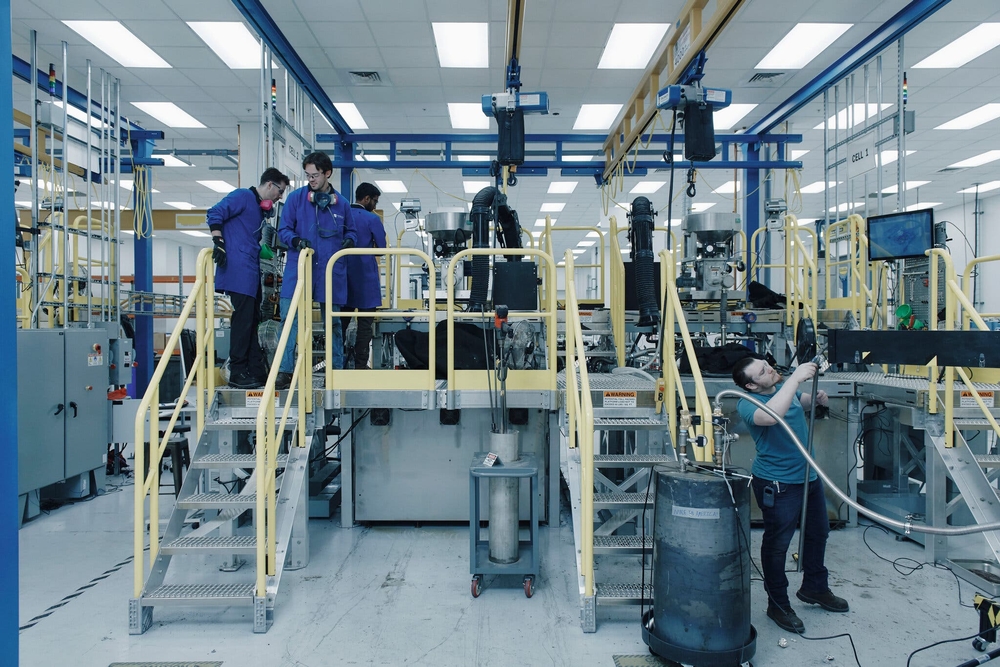
Every few hours, in an unassuming office park in Exeter, New Hampshire, a quiet but profoundly significant industrial process unfolds. Two furnaces transform batches of taupe-colored powder into rough ingots of metal, each chunk about the size of a few bricks. This is not ordinary metalworking; this is the frontline of America’s struggle for technological and economic independence. These mottled chunks, produced by the start-up Phoenix Tailings, are destined for the most advanced applications of our time—electric vehicle motors, fighter jets, and other instruments of national power. This operation represents a fledgling but determined effort to wrest a slice of the vital rare-earth industry away from the People’s Republic of China, which currently refines over 90 percent of the world’s supply. The story of this small plant is a microcosm of a much larger geopolitical and economic battle—a battle for sovereignty, security, and the future of American innovation.
Understanding the Stakes: What Are Rare Earths?
Rare earths are a family of 17 elements located toward the bottom of the periodic table, bearing complex names like neodymium, praseodymium, and dysprosium. Contrary to their name, these elements are not particularly rare in the earth’s crust; however, they are notoriously difficult and environmentally challenging to process into usable forms. Their unique magnetic, luminescent, and electrochemical properties make them indispensable components in a vast array of modern technologies. They are the lifeblood of powerful permanent magnets used in wind turbines and electric vehicle drivetrains, the core components of lasers and sophisticated military targeting systems, and essential for medical devices like MRI machines. There is simply no pathway to a high-tech, green-energy future without a secure and reliable supply of these critical materials.
The United States was once a leader in this industry until the mid-1990s. However, China executed a deliberate and robust industrial policy, leveraging its state-capitalist model and often operating under significantly looser environmental and labor regulations. This allowed Chinese companies to produce and sell rare-earth metals and magnets at prices that producers in democratic nations adhering to higher standards could not match. One of the most concerning tactics cited by experts is China’s willingness to sell rare-earth metal for less than the cost of production, a classic predatory pricing strategy designed to eliminate competition. Over decades, this systematic approach systematically dismantled the rare-earth industries in the United States and other Western nations, leaving the free world perilously dependent on a strategic adversary for a foundational component of its technological base.
The Phoenix Rises: A Startup’s Gambit
The challenge of resurrecting a domestic industry has, by necessity, fallen to small, agile companies. The profit margins are currently too thin to attract traditional mining giants, making this a classic domain for entrepreneurial risk-takers. Phoenix Tailings, a Boston-area start-up recently valued at $189 million, is one such pioneer. Their New Hampshire operation, barely two months old and housed in a converted medical device plant, is a testament to American ingenuity. The company sources its raw material—a powder mixture of neodymium and praseodymium—from mines in the United States, South America, and Australia, deliberately avoiding reliance on China. “To untangle yourself from China, you have to force yourself off the original drug,” said Nick Myers, the company’s 34-year-old chief executive. “You can wean yourself off, or you can go cold turkey. But at the end of the day, you’ve got to get off.”
The company’s process is not only about independence but also about innovation in sustainability. Their closed-loop system, occupying less than 15,000 square feet, is designed to generate no direct emissions, a stark contrast to the energy-intensive and polluting techniques common in China, which can release potent greenhouse gases like perfluorocarbons. Phoenix Tailings’ journey has been a rollercoaster, coming perilously close to bankruptcy in late 2024 before geopolitical shifts, including the trade policies of the Trump administration, spurred investor interest and customer orders. The company has since received over $6 million in federal funding and is hoping for more, a sign that the government recognizes the strategic imperative. Other players, like MP Materials in California and Texas, are also making strides, and similar efforts are emerging in Europe and Asia, signaling a global reassessment of supply chain vulnerabilities.
A Battle for the Future: Principles on the Line
This is far more than an industrial story; it is a fundamental test of our national resolve and principles. The concentration of such a critical industry within the borders of an authoritarian state like China represents an unacceptable risk to American democracy, freedom, and economic liberty. It is a vulnerability that can be—and has been—weaponized. The fact that Western nations allowed this strategic dependency to develop is a monumental failure of long-term planning, a capitulation to short-term economic efficiency at the expense of long-term national security. The resurgence of a domestic rare-earth processing capability is, therefore, not merely a commercial objective but a patriotic imperative. It is a concrete step toward rebuilding the resilient, self-reliant industrial base that is the bedrock of a sovereign nation.
The path forward, however, is fraught with challenges that market forces alone cannot overcome. As Dr. Elsa Olivetti, a professor at M.I.T., aptly noted, “Traditional market mechanisms are going to struggle.” The scale of China’s subsidized dominance creates a market distortion that punishes any company trying to compete ethically and cleanly. This reality necessitates a coherent and sustained industrial policy from the U.S. government—not as a handout, but as a strategic investment in national security. The over $1 billion recently committed by the administration to this sector is a start, but it must be part of a consistent, long-term bipartisan commitment. We must view this support not as a subsidy but as the necessary cost of preserving our technological sovereignty, much like we invest in our military defenses.
Furthermore, the effort led by companies like Phoenix Tailings aligns with our nation’s highest ideals. Their focus on a closed-loop, low-emission process demonstrates that economic strength and environmental responsibility are not mutually exclusive. It stands as a powerful rebuke to the narrative that America must choose between prosperity and planetary health, or that we must accept the dirty practices of our competitors to beat them. This is how a free society competes: not by lowering its standards, but by innovating to raise them. The involvement of investors like In-Q-Tel, the CIA’s venture capital fund, and BMW’s venture arm underscores the cross-cutting importance of this mission, spanning national security and leading-edge commerce.
The individuals driving this effort, like Nick Myers and his co-founder Tomás Villalón Jr., embody the entrepreneurial spirit that has always defined American greatness. Their story—from a late-night discussion at a Bible study retreat to a prototype in a Cambridge backyard—is a modern-day parable of innovation. They chose, in Mr. Myers’s words, “the hard path” because they recognized a fundamental need. Their success is not guaranteed. Technical hurdles, described by Tom Lograsso of the Ames National Laboratory as “undoing what Mother Nature has naturally done,” remain immense. The volatile market, clouded by what the Atlantic Council calls “gray- and black-market trade,” is a constant threat.
Yet, the existence of this fight is itself a cause for hope. It proves that the American capacity for renewal is alive. It shows that when confronted with a threat to our liberty and way of life, we can marshal our resources, our intellect, and our resolve to respond. The furnaces in New Hampshire may be small, but their glow signifies a larger reawakening—a understanding that true security and freedom cannot be outsourced. The battle for rare earths is a battle for the foundational elements of our future. We must ensure that this Phoenix does not just rise, but soars, securing for generations to come an America that is truly independent, prosperous, and free.