
The Premature Coronation: Erika Kirk's Endorsement and the Dangerous Theater of 2028
Published
- 3 min read
The Facts: An Early Endorsement in a Time of Grief
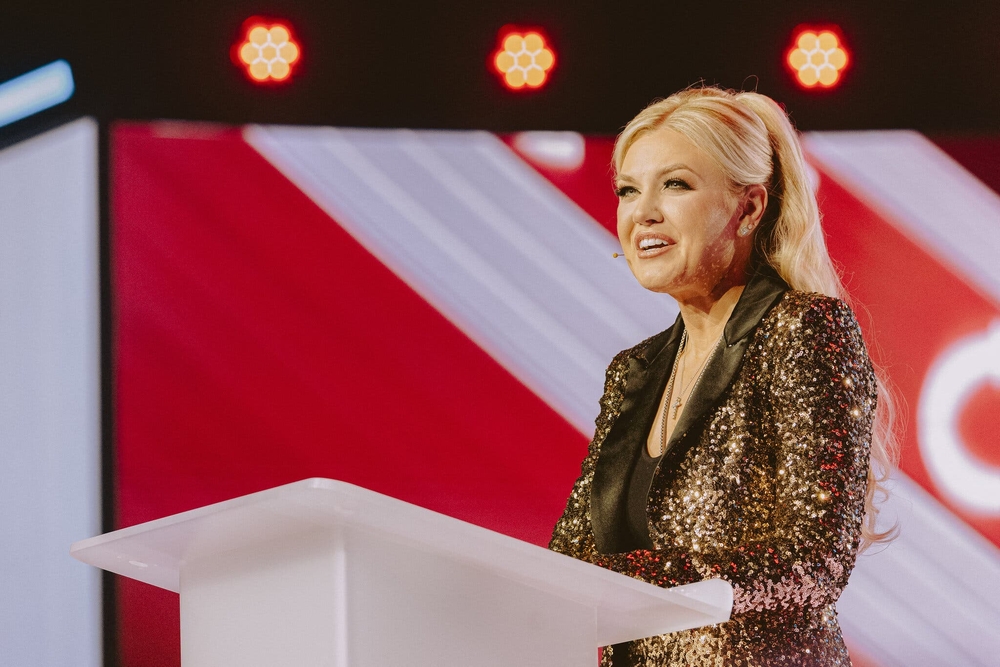
In a move that has sent ripples through the political landscape, Erika Kirk, the widow of the late conservative activist Charlie Kirk, used her platform at the Turning Point USA national conference to endorse Vice President JD Vance for the 2028 presidential election. Mrs. Kirk, who assumed leadership of the influential conservative youth organization following her husband’s assassination in September, pledged to deploy the full might of the organization to ensure Vance’s victory, referring to him as her husband’s friend and the intended beneficiary of Charlie Kirk’s political vision. This endorsement comes a mere three months after a profound personal tragedy, framing a future political contest within the context of a widow’s promise to her deceased spouse.
The article details that while Vice President Vance has not formally announced a candidacy, he is already considered a front-runner in early surveys and betting markets. The endorsement’s significance is magnified by the apparent deference shown by other potential contenders, most notably Secretary of State Marco Rubio, who publicly stated that if Vance runs, he would be the nominee and would have Rubio’s support. President Trump himself has been reported as praising both Vance and Rubio as top contenders, creating an aura of inevitability around the Vice President’s prospects. The support of Turning Point USA is portrayed as a potentially decisive advantage, given its proven ability to mobilize activists, particularly among the MAGA base and younger voters, for ground-game operations like door-knocking and vote-by-mail efforts.
The narrative is deeply personal. The article recounts the bond between Charlie Kirk and JD Vance, describing Kirk as a long-time champion of Vance’s career. This support reportedly ranged from encouraging his 2021 Senate run and connecting him with donors to coaching his campaign pitch and even advocating for him to be selected as Trump’s running mate. In the wake of the assassination, Vance’s actions—such as helping to carry Kirk’s casket and participating in his former podcast—are presented as gestures of solidarity. Erika Kirk has publicly stated that supporting Vance for 2028 was a specific and “intentional” topic in one of the last conversations she had with her husband, adding a layer of posthumous imperative to her political endorsement.
The Context: A Political Landscape in Flux
The context for this early maneuvering is a Republican Party grappling with its future beyond the Trump era. With roughly three years remaining in what could be President Trump’s final term, the article reveals a party already deep in the throes of succession planning. This is not the organic, bottom-up process of a party testing its roster of talent through debates and primary contests. Instead, it resembles a top-down anointment, where potential rivals publicly step aside and the machinery of a major political organization is pre-emptively pledged to a single individual. The stage is being set not for a competition of ideas, but for a coronation, a dynamic that is fundamentally at odds with the principles of a vibrant democratic republic.
Turning Point USA, under its new leadership, finds itself in a uniquely powerful and emotionally charged position. The tragic death of its founder has inextricably linked the organization’s mission to a narrative of legacy and fulfillment of a fallen leader’s wishes. This emotional weight, when applied to the raw mechanics of political power, creates a potent and potentially problematic force. The endorsement is not merely a political calculation; it is presented as a moral obligation, a vow made to a martyr. This framing can short-circuit critical scrutiny and elevate loyalty above all other considerations, including a candidate’s specific policy positions or fitness for office.
Opinion: The Corrosive Spectacle of Premature Succession
What we are witnessing is not merely early campaigning; it is a dangerous theatrical performance that undermines the very foundations of our democratic process. The spectacle of a sitting Vice President being anointed as a successor years in advance, with rivals falling in line and a major political organization pledging its fealty based on personal connections and a tragic narrative, is a sight that should alarm every citizen who cherishes liberty and a government of, by, and for the people.
First and foremost, this premature consolidation of power is an insult to the electorate. It tells voters that their role in the coming years is not to evaluate candidates, debate issues, and make an informed choice, but to merely ratify a decision made by a small circle of political insiders. The comments from Marco Rubio are particularly telling; they suggest that the primary process is a foregone conclusion, a mere formality before the real contest begins. This is the language of a party elite, not a democratic body. It disenfranchises voters before a single ballot has been cast and signals that internal party mechanisms are designed to stifle competition, not encourage it. A healthy democracy requires a robust exchange of ideas, and that exchange is impossible when the outcome is treated as pre-ordained.
Secondly, the intertwining of profound personal grief with political strategy is deeply concerning. There is no questioning the authenticity of Erika Kirk’s loss or her desire to honor her husband’s memory. However, leveraging that tragedy as a political asset creates a shield against legitimate criticism. To question the Vance candidacy or the process behind it can be easily misconstrued as an attack on a grieving widow or the legacy of a slain activist. This emotional dynamic discourages the necessary, tough questioning that every potential leader must face. The office of the President is too critical to be decided on the basis of personal loyalty or the fulfillment of a private conversation, no matter how heartfelt. The standards for leadership must be impartial, rigorous, and focused solely on the candidate’s vision, character, and capacity to govern a free nation.
Furthermore, this episode highlights a growing tendency toward a de facto political dynasty or court politics within the modern conservative movement. The description of Charlie Kirk as a kingmaker—connecting Vance with donors, coaching his pitch, and recommending him for Vice President—paints a picture of a movement where advancement depends on patronage and personal connections within a tight-knit network. This is anathema to the principles of meritocracy and equal opportunity that should underpin our political life. When the path to power is through knowing the right people and gaining the endorsement of the right organizations, rather than through demonstrating excellence and resonance with the populace, we move further away from a republic and closer to an oligarchy.
Conclusion: A Call for Democratic Vigilance
The endorsement of JD Vance by Erika Kirk is more than a news item; it is a symptom of a deeper malady in our body politic. It reflects a political culture that values loyalty over principle, narrative over substance, and consolidation over competition. As staunch supporters of the Constitution and the democratic process it enshrines, we must voice our opposition to this trend.
We must insist that every election, especially a presidential election, be a true contest. We must demand that all candidates, regardless of their connections or endorsements, submit themselves to the rigorous scrutiny of the American people. We must reject the notion that any office, least of all the presidency, is anyone’s entitlement or political inheritance. The power to lead this nation derives from the consent of the governed, not from the backing of powerful organizations or the wishes of the departed.
The years leading up to 2028 should be a time for a great national conversation about the direction of our country. They should be filled with debate, with new ideas, with a multiplicity of voices vying to offer the best path forward. What they should not be is a long, slow march toward a pre-determined conclusion. The American people deserve a choice, not an echo. They deserve a process that is open, fair, and driven by the pursuit of the common good, not by backroom deals and emotional appeals. To accept anything less is to surrender the very liberties that our system of government was designed to protect. Our democracy is not a trophy to be handed from one ally to another; it is a sacred trust that must be earned anew by every generation and every individual who seeks to lead it.