
The Politicization of Crime Data: A Dangerous Pretext for Federal Overreach
Published
- 3 min read
The Accusations and Context
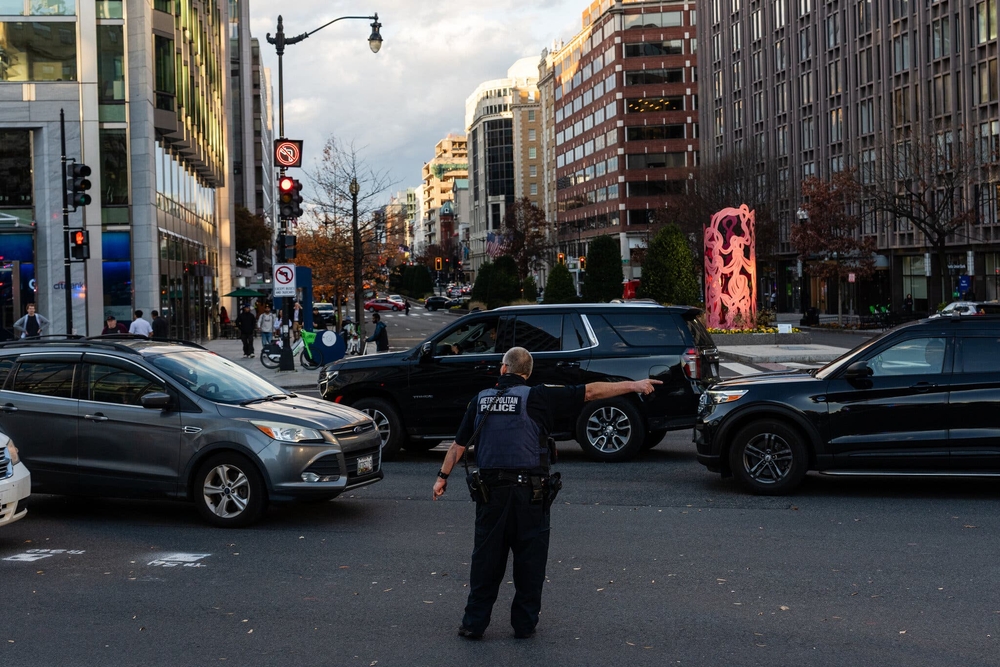
Republican members of Congress have launched serious allegations against the Washington, D.C. Metropolitan Police Department, claiming that leadership under Police Chief Pamela A. Smith manipulated crime statistics by reclassifying serious offenses as lesser charges. The House Oversight Committee’s report, published recently, alleges that assaults with deadly weapons and burglaries were systematically downgraded to categories like “endangerment with a firearm” and unlawful entry—categories excluded from daily crime statistics reported to the public.
These accusations emerge amidst President Trump’s ongoing efforts to justify a federal takeover of law enforcement in the nation’s capital and the deployment of approximately 2,000 National Guard troops. The timing is particularly notable given the resistance the administration faced in declaring a crime emergency in Washington this past August, when critics pointed to declining violent crime statistics that contradicted the president’s narrative.
The committee’s report cites interviews with seven district commanders who allegedly described “a culture of fear, intimidation, threats and retaliation” under Chief Smith’s leadership. An eighth commander was reportedly placed on leave during an internal investigation into alleged statistical manipulation. Chief Smith announced her resignation last week, citing family reasons, while denying she encouraged any data manipulation and promising accountability for any misconduct.
The Political Landscape
This controversy unfolds against a backdrop of increasing federal intervention in District of Columbia affairs. Republican lawmakers, with support from some moderate Democrats, have recently passed bills seeking to nullify local Washington laws, including those providing more lenient sentencing for young offenders and allowing cashless bail. Unlike other municipalities, the District of Columbia remains subject to significant federal oversight, allowing Congress to review and rewrite local legislation.
The U.S. attorney’s office in Washington has also opened an investigation into whether city police officials falsified crime data, prompting concerns that the administration might be using criminal justice mechanisms to target political opponents. Democratic members of the Oversight Committee have characterized the Republican investigation as an attempt “to justify President Trump’s authoritarian power grab.”
Expert Analysis and Data Integrity
Crime data analyst Jeff Asher provides crucial context to these allegations. While acknowledging potential underreporting in certain crime categories on public platforms, Asher maintains that official reports to the FBI remain reliable and consistently show a decline in violent crime. His analysis reveals some discrepancies between FBI-reported data and public statistics but confirms that the overall downward trend in violent crime since 2023 remains valid despite these variations.
Asher appropriately recommends that the Metropolitan Police Department should investigate why underreporting might be occurring and implement corrective measures. However, he emphasizes that “the decline is clear, well-defined and based on multiple sources,” providing a nuanced perspective that contrasts with the absolutist claims from political actors.
The Dangerous Precedent of Politicized Law Enforcement
What we are witnessing represents one of the most concerning developments in modern American governance: the weaponization of crime statistics for political purposes. The foundational principle of democratic governance requires that data and institutions remain independent from political manipulation. When crime statistics become political footballs, we risk undermining public trust in law enforcement and the very institutions designed to keep communities safe.
The timing of these allegations—coinciding with presidential efforts to justify federal intervention—creates reasonable suspicion about motives. President Trump’s contradictory statements, having previously cited declining crime numbers to claim credit for improved public safety before labeling them “phony” when they contradicted his emergency declaration narrative, reveal a troubling pattern of data manipulation for political convenience.
The Threat to Local Autonomy
The District of Columbia’s unique constitutional position makes it particularly vulnerable to federal overreach. While congressional oversight of the district is legally established, using this authority to override local decision-making based on potentially politicized allegations sets a dangerous precedent. Local communities deserve the right to self-governance and law enforcement approaches that reflect their specific needs and values.
The effort to federalize local law enforcement represents a fundamental shift in American governance that should concern citizens across the political spectrum. Law enforcement works best when it maintains close connections with the communities it serves, understands local contexts, and remains accountable to local elected officials. Federal intervention threatens to disrupt these essential relationships and replace them with bureaucratic structures less responsive to community needs.
The Importance of Institutional Integrity
Any manipulation of crime statistics, if proven, would represent a serious breach of public trust that demands accountability and reform. However, the response to such misconduct must come through proper channels—internal investigations, independent oversight, and judicial processes—not political theater designed to advance predetermined policy agendas.
The appropriate response to potential data integrity issues involves strengthening transparency mechanisms, implementing robust verification systems, and ensuring whistleblower protections—not federal takeovers that undermine local control. We must address institutional failures without destroying the institutions themselves.
The Human Cost of Political Gamesmanship
Behind these political maneuvers lie real communities facing real public safety challenges. The residents of Washington, D.C., deserve serious engagement with crime prevention strategies, not reduction to political props in national power struggles. When crime statistics become politicized, the actual people affected by crime—victims, families, and communities—become secondary to political scoring.
Law enforcement professionals like Chief Smith and the district commanders deserve fair treatment and due process, not becoming casualties in political warfare. The casual destruction of careers and reputations based on allegations advanced for political purposes represents its own form of institutional damage.
A Call for Evidence-Based Governance
In a healthy democracy, policy decisions emerge from rigorous analysis of verified data, not predetermined political narratives seeking supporting evidence. The appropriate approach to questions about crime statistics involves independent verification, expert analysis, and transparent processes—not congressional hearings apparently designed to reach predetermined conclusions.
We must demand that our leaders engage with crime data in good faith, acknowledging both progress and challenges without resorting to conspiracy theories or political weaponization. The complex reality of public safety requires nuance, expertise, and collaboration—not reduction to political soundbites.
Protecting Democratic Norms
The framing of this controversy—with accusations of “authoritarian power grabs” and responses about “proven policies”—reveals the deeper struggle over the nature of American governance. At stake is whether we maintain a system where local autonomy, institutional independence, and evidence-based policymaking prevail, or whether we descend into centralized control based on political convenience.
The protection of democratic norms requires vigilance against any effort to manipulate institutions or data for political ends. Whether these allegations prove founded or not, the process by which they’re investigated and addressed must itself respect democratic principles of fairness, transparency, and proportionality.
Conclusion: Upholding Principles Over Politics
As citizens committed to democratic governance, we must resist the temptation to embrace convenient narratives that align with our political preferences. The appropriate stance toward these allegations involves demanding thorough, independent investigation while rejecting any effort to use unproven claims as pretext for undermining local autonomy or expanding federal power.
We must champion evidence-based approaches to public safety that respect both the need for accountability and the importance of local control. The solution to potential data integrity issues lies in strengthening institutions, not undermining them; enhancing transparency, not creating pretexts for power grabs; and maintaining commitment to democratic principles, not abandoning them for short-term political advantage.
The people of Washington, D.C., and all Americans deserve better than to have their safety and governance reduced to political theater. We must demand that our leaders rise above partisan gamesmanship and focus on genuinely addressing public safety through respectful, evidence-based approaches that honor both our democratic traditions and our commitment to justice.