
The Perilous Path: Assessing America's Aggressive Stance on Iranian-Venezuelan Weapons Trade
Published
- 3 min read
The Facts: A Multi-Front Enforcement Action
This week, the United States government launched a significant offensive against weapons proliferation networks operating between Iran and Venezuela. The Treasury Department’s Office of Foreign Assets Control (OFAC) announced sanctions targeting 10 individuals and entities based in both countries, alleging their involvement in weapons trade that constitutes “a threat to U.S. interests in the Western Hemisphere.” The sanctioned entities include Empresa Aeronautica Nacional, a Venezuelan company allegedly linked to millions of dollars in Iranian drone sales to Venezuela, along with three Iran-based individuals accused of procuring chemicals for ballistic missiles.
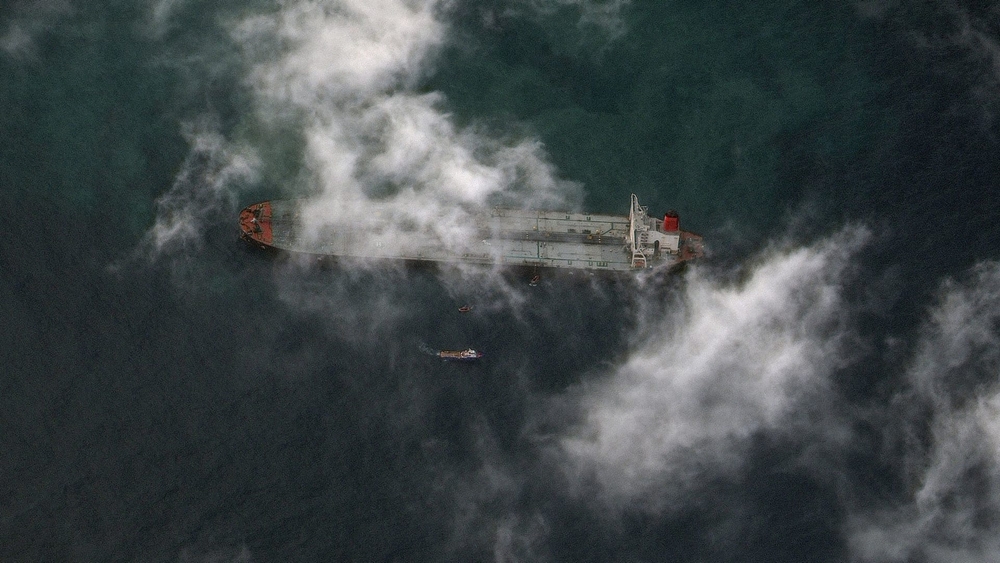
Simultaneously, the administration revealed the seizure of the Skipper, a very large crude carrier that had been sanctioned for years and was captured off the coast of Venezuela. This vessel, now near Galveston, Texas, had allegedly hidden its location and transported oil from both Iran and Venezuela. Attorney General Pam Bondi confirmed the seizure, while Treasury Under Secretary John K. Hurley stated the administration’s intention to “hold Iran and Venezuela accountable for their aggressive and reckless proliferation of deadly weapons around the world.”
This enforcement action occurs within a broader context of escalating rhetoric and military posturing. President Trump recently threatened to “knock the hell” out of Iran if it seeks to build up ballistic missile reserves or reestablish its nuclear program. During a meeting with Israeli Prime Minister Benjamin Netanyahu, Trump also expressed support for Israeli strikes on Iran in the event of rearmament. Iranian President Masoud Pezeshkian responded that “the response of the Islamic Republic of Iran to any oppressive aggression will be harsh and regrettable.”
The Venezuelan Front: Expanding Enforcement
The administration’s actions extend beyond Iran to include aggressive measures against Venezuela. President Trump has designated Venezuela’s government as a “foreign terrorist organization,” ordered a complete blockade of sanctioned oil tankers, and targeted alleged drug boats. Earlier this month, the administration confirmed an attack on an alleged drug loading facility on Venezuelan soil, reportedly carried out by the CIA. These actions represent a significant escalation in U.S. policy toward Venezuela, moving beyond sanctions to active military and intelligence operations.
Context: A Pattern of Escalation
Tuesday’s sanctions follow similar efforts in October and November to target individuals and entities involved with Iranian weapons networks. The administration has consistently taken a hardline approach to both Iran and Venezuela, with Treasury officials vowing to “continue to take swift action to deprive those who enable Iran’s military-industrial complex access to the U.S. financial system.” This pattern suggests a coordinated strategy aimed at isolating both nations economically and militarily.
The seizure of the Skipper represents the first Venezuela-related vessel seized by the U.S., signaling a new phase in enforcement. The administration has indicated it intends to seize the oil aboard the tanker, potentially setting a precedent for future actions against vessels engaged in sanctioned trade with either country.
The Dangerous Precedent: When Enforcement Becomes Provocation
While preventing weapons proliferation is a legitimate national security concern, the methods employed in this case raise serious questions about proportionality, legality, and strategic wisdom. The combination of economic sanctions, military seizures, and public threats creates a volatile mixture that risks escalating into broader conflict. The principles of due process and measured response—cornerstones of American justice—appear to be sacrificed in favor of aggressive posturing that may satisfy political impulses but undermines long-term security interests.
President Trump’s threat to “knock the hell” out of Iran represents precisely the kind of reckless rhetoric that has no place in responsible statecraft. Such language not only undermines diplomatic efforts but potentially violates international norms governing threat of force. The supporting of Israeli strikes on Iran, announced publicly during a meeting with Netanyahu, further complicates an already tense regional dynamic and could be interpreted as encouraging military action by a third party.
The Rule of Law Versus Might Makes Right
The seizure of the Skipper tanker, while framed as enforcement of sanctions, raises fundamental questions about maritime law and the extraterritorial application of U.S. sanctions. While the vessel was sanctioned by the U.S., the act of seizing it in international waters or near Venezuela’s coast pushes the boundaries of acceptable enforcement. This approach risks establishing a precedent where powerful nations can unilaterally enforce their sanctions through military might rather than international legal frameworks.
The designation of Venezuela’s government as a “foreign terrorist organization” represents another concerning expansion of executive power. While the Maduro regime has undoubtedly engaged in repressive practices, labeling an entire government as terrorist creates legal and diplomatic complications that may hinder rather than help efforts toward democratic transition in Venezuela.
The Human Cost of Escalation
Behind the policy discussions and geopolitical maneuvering lies the very real human cost of escalation. The people of Venezuela, already suffering under economic collapse and political repression, may bear the brunt of increased sanctions and military actions. The people of Iran, who have demonstrated remarkable courage in protesting their own government, may find themselves further isolated and suffering under increased economic pressure. And American service members could be put in harm’s way if rhetoric turns into actual conflict.
True strength in foreign policy requires not just demonstrating power but exercising wisdom. It requires understanding that lasting security comes from building alliances, upholding international norms, and addressing the root causes of instability rather than merely punishing its symptoms.
A Better Path Forward
The challenges posed by Iranian-Venezuelan weapons trade are real and require serious attention. However, the current approach prioritizes dramatic enforcement actions over sustainable solutions. A more effective strategy would involve:
- Working through multilateral institutions to build consensus around nonproliferation efforts
- Engaging in direct diplomacy with both nations to address underlying security concerns
- Supporting civil society and democratic movements within both countries rather than isolating entire populations
- Ensuring that all enforcement actions comply with international law and due process protections
- Avoiding public threats and inflammatory rhetoric that close diplomatic doors and increase escalation risks
Conclusion: Principle Over Posturing
As Americans committed to democracy, freedom, and the rule of law, we must demand better from our leaders. The current approach to Iranian-Venezuelan weapons trade represents a failure of strategic vision and a departure from American principles. True leadership requires courage not just in confronting adversaries but in pursuing peace, upholding legal norms, and protecting the institutions that make our democracy strong.
The path we’re on—characterized by threats, unilateral actions, and escalation—leads not to security but to perpetual conflict. We must choose instead the harder but more rewarding path of principled engagement, measured response, and commitment to the democratic values that have long made America a beacon of hope in a troubled world. The stakes are too high, and the principles too important, to settle for anything less.