
The NLRB Crisis: How America's Labor Protection System Is Being Systematically Dismantled
Published
- 3 min read
The Facts: A Year of Paralysis
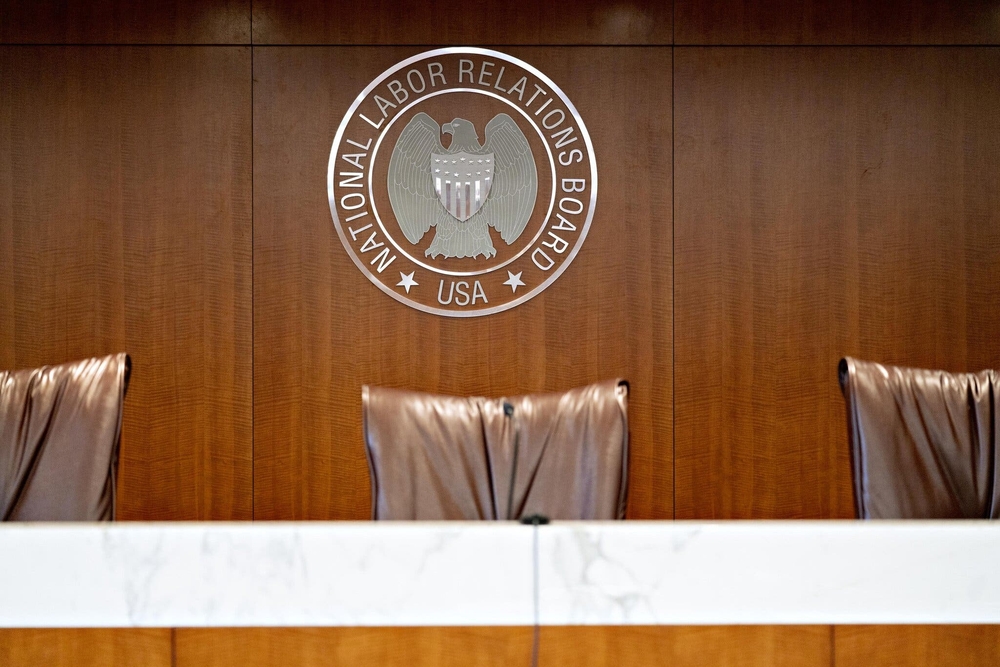
For the past year, the National Labor Relations Board (NLRB), the federal agency charged with overseeing labor relations in the United States, has been effectively sidelined and rendered dysfunctional. The five-seat board has operated with merely a single member—two short of the required quorum to hear cases—creating what experts describe as a “legal limbo” that has delayed the handling of major labor cases and fueled deep uncertainty about the future of federal labor law enforcement.
This paralysis stems from multiple converging factors: prolonged vacancies that the Senate has failed to fill, ongoing legal challenges to the board’s constitutional structure, and a landmark Supreme Court case that could grant the president sweeping powers to fire appointed officials at federal agencies. The consequences have been immediate and severe—in August, the U.S. Court of Appeals for the Fifth Circuit ruled that the NLRB’s structure was unconstitutional and granted companies an immediate hold on cases against them, effectively making labor law unenforceable across Texas, Louisiana, and Mississippi.
The Context: Historical Precedent and Political Interference
The NLRB’s current crisis didn’t emerge from nowhere. For decades, the board has been hampered by chronic underfunding and, as labor leaders argue, a lack of meaningful enforcement authority. However, January marked a watershed moment when President Trump fired Gwynne A. Wilcox, a Democrat—the first time in the board’s 90-year history that a member was removed. The Supreme Court subsequently held that her firing was lawful, and an impending decision in a related case could establish this executive authority as settled law.
This unprecedented political interference has created a domino effect. With the federal board inactive, states like New York and California have moved to strengthen their own labor oversight agencies. New York Governor Kathy Hochul signed legislation significantly expanding her state’s labor relations agency powers, while California passed a law allowing its state agency to conduct union elections and take action in unfair labor cases if the NLRB doesn’t act. These state actions have prompted legal challenges from both the NLRB itself and major corporations, particularly Amazon.
The Corporate Response: Challenging the System
Major corporations have seized upon the NLRB’s weakness to challenge both federal and state labor protections. Amazon, while arguing for the legal supremacy of the NLRB over state agencies in some lawsuits, has simultaneously questioned the authority of the NLRB itself in others. The company and others have argued that the board has overstepped its authority and that its structure is unconstitutional—a position that, if upheld by the Supreme Court, could fundamentally reshape labor relations in America.
This corporate strategy creates a concerning paradox: companies are simultaneously arguing that states cannot create parallel labor systems while challenging the very federal system they claim should have supremacy. The business community’s coordinated response, through groups like the coalition that filed briefs in the California lawsuit, argues that state interventions would create a “patchwork of conflicting state regimes” that would destabilize labor markets nationwide.
The Human Cost: Workers Left Vulnerable
Behind the legal technicalities and political maneuvering lies a stark human reality: American workers are being left without protection. The NLRB’s regional offices may have settled 96% of cases that advanced past filing in the 2024 fiscal year, as acting general counsel William B. Cowen notes, but this statistic masks the profound impact of having the board itself—the ultimate arbiter of “the most important, the most contentious issues”—rendered impotent.
Workers facing unfair labor practices, attempting to organize, or seeking recourse against powerful corporations now find themselves in a regulatory vacuum. In three states, the law provides them no protection whatsoever. In others, they must navigate conflicting state and federal jurisdictions while corporations deploy legal challenges to delay and obstruct labor actions. This environment creates what former NLRB chairwoman Lauren McFerran accurately describes as a “crisis point” for labor relations in America.
The Constitutional Crisis: Undermining Institutional Independence
The most dangerous aspect of this situation extends beyond immediate labor disputes to threaten the very foundation of independent federal agencies. The Supreme Court’s consideration of presidential removal powers represents nothing less than an existential threat to the administrative state as we know it. If the Court rules that the president has wide authority to fire appointed officials at will, the NLRB and similar agencies could become direct political appendages of the executive branch, losing the political independence that has allowed them to function effectively for decades.
This isn’t merely theoretical—the Fifth Circuit has already ruled the NLRB’s structure unconstitutional, and the Supreme Court’s decision could make such rulings the norm rather than the exception. The potential outcome, as some labor advocates fear, is a federal labor agency that is both ineffective and beholden to the president while simultaneously having pre-emptive authority over any state body. This would create the worst of all worlds: a federal system that doesn’t work but prevents states from creating systems that do.
The State Response: Federalism in Action
The actions by New York, California, and potentially other states represent a classic example of federalism responding to federal failure. When the federal government cannot or will not protect fundamental rights, states have historically stepped into the breach. This dynamic is playing out dramatically in labor relations, with states creating parallel systems to protect workers whom the federal government has abandoned.
However, these state actions face significant legal hurdles. The NLRB itself has sued California over its expanded labor law, arguing that there is “no room for parallel or complementary state legislation.” This creates the surreal situation of a federal agency suing to prevent states from doing the job that the federal agency cannot do itself. The legal doctrine of federal preemption—which holds that federal law supersedes state law in areas where Congress has legislated—poses a substantial barrier to state-level solutions.
The Path Forward: Restoring Function and Faith
There are glimmers of potential resolution. The Senate could vote to confirm two NLRB nominees from President Trump as soon as this week, which would re-establish a quorum on the panel. However, even if this occurs, the underlying constitutional questions remain before the Supreme Court, meaning any restoration of function could be temporary.
The deeper solution requires recommitment to the principles that underpinned the creation of the NLRB in 1935: that workers deserve protection, that labor peace requires fair adjudication, and that expert agencies should be insulated from raw political pressure. This crisis should serve as a wake-up call to all Americans who believe in fair labor practices—the systematic dismantling of worker protections doesn’t happen through dramatic legislation but through death by a thousand cuts: vacancies left unfilled, legal challenges nurtured, and institutional norms eroded.
Conclusion: A Defining Moment for Labor Rights
What we are witnessing is nothing less than the unraveling of America’s system of labor protection. The NLRB crisis represents both a specific failure of governance and a symptom of broader institutional decay. The combination of political interference, corporate challenges, and legal uncertainty has created a perfect storm that threatens to leave American workers without meaningful protection.
This situation demands more than technical fixes—it requires moral clarity. The right to organize, to bargain collectively, and to work in dignity without fear of retaliation are not partisan issues; they are fundamental American values enshrined in our laws and traditions. The current crisis represents a betrayal of those values and a failure of our democratic institutions to protect the most vulnerable.
As citizens committed to democracy, freedom, and liberty, we must recognize that worker rights are human rights. The systematic dismantling of labor protections represents an assault on human dignity and economic justice. Whether through federal restoration, state innovation, or popular mobilization, America must find a way to protect what generations fought to establish: the basic right to fair treatment in the workplace. The soul of our nation’s commitment to justice hangs in the balance.