
The Looming Shadow: US Military Buildup and the Imperial Threat to Venezuela
Published
- 3 min read
The Facts on the Ground: A Prelude to Intervention
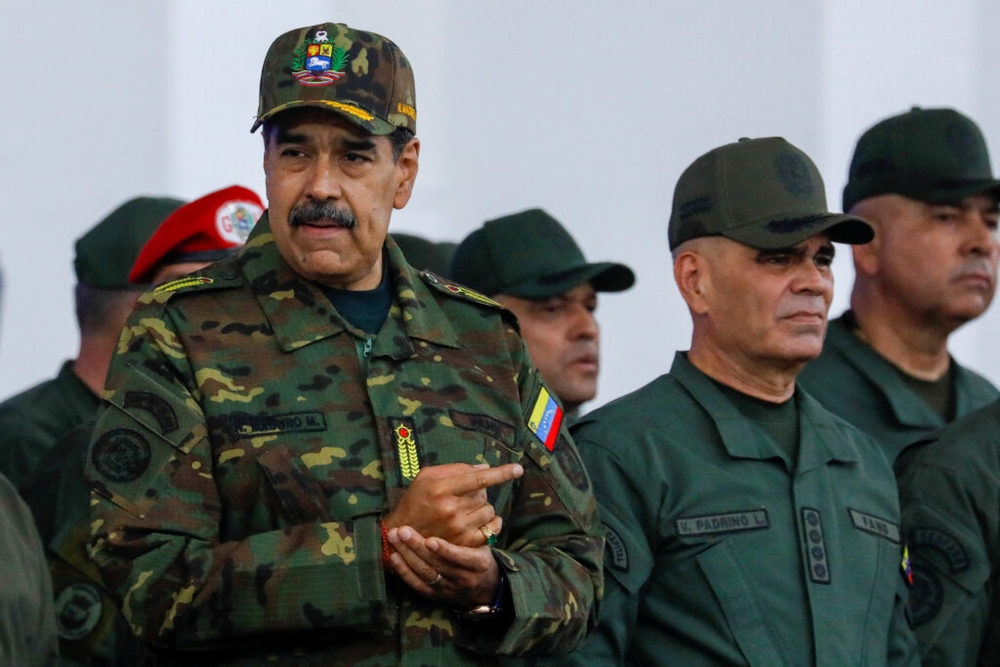
The geopolitical tension surrounding Venezuela has reached a fever pitch, casting a long and ominous shadow over Latin America. As detailed in the analysis, the United States has initiated a significant military mobilization, deploying thousands of military personnel and a formidable naval armada, including the USS Gerald Ford aircraft carrier, to the waters around Venezuela. In response, the government of Nicolás Maduro has launched its own “massive mobilization” of military forces. This standoff represents one of the most dangerous flashpoints in recent memory, with the very real potential to boil over into open conflict.
The stated objective from certain quarters in Washington is the facilitation of a “long-awaited democratic transition.” This language, so often the pretext for intervention, is being used to justify an increasingly aggressive posture. The analysis correctly points out that while limited strikes on counternarcotics targets might be considered, any action that directly attacks the regime or critical infrastructure—such as ports or energy facilities—unleashes a Pandora’s box of unforeseeable consequences. The specter of horizontal escalation, where conflict spreads to neighboring countries like Colombia or disrupts vital industrial complexes in Trinidad and Tobago, is not merely theoretical but a grim probability.
The Economic Dominoes: Energy, Food, and Global Inflation
The core of the analytical warning revolves around the profound economic disruptions a military intervention would trigger. Venezuela, though a shadow of its pre-Chávez production self, remains a significant exporter of heavy-sour crude oil, shipping approximately 800,000 barrels per day, predominantly to China. The immediate consequence of any US military action would be a precipitous plummet in this production.
The ramifications extend far beyond the loss of these barrels. Venezuela’s specific grade of crude is uniquely suited for producing diesel, a fuel that is the lifeblood of global industry and agriculture. The International Energy Agency has already warned that middle distillate markets, including diesel, are dangerously tight. Removing Venezuelan supply would almost certainly trigger a spike in diesel prices, acting as a powerful accelerant for global inflation. This is an economic assault that would be felt most acutely by the working classes and developing nations worldwide, who are already struggling under the weight of previous economic crises engineered by Western financial systems.
Furthermore, the analysis highlights a second, even more alarming vulnerability: the Point Lisas industrial complex in Trinidad and Tobago. This facility is a linchpin in the global ammonia supply chain, responsible for 15-20% of seaborne ammonia trade—a critical component of fertilizer. Sitting a mere fifty kilometers from the Venezuelan coast, it is acutely vulnerable to disruption, whether from kinetic attack, sabotage, or cyber warfare in the event of a prolonged conflict. An attack on Point Lisas would not just be an attack on Trinidad; it would be an attack on global food security, disproportionately affecting nations across Latin America like Mexico, Brazil, and Chile, and inevitably sending food prices soaring worldwide. The United States itself would not be immune, given its deep agricultural trade interdependencies with Mexico.
A History of Hypocrisy and the Imperial Playbook
This analysis, while sober in its assessment of risks, must be viewed through the critical lens of history and power dynamics. The United States’ sudden acute concern for “democracy” in Venezuela is a threadbare excuse, a familiar refrain from a nation with a long and bloody history of overthrowing democratically elected governments across the Global South that refuse to bow to its economic and political demands. From Iran in 1953 to Chile in 1973, the playbook is well-worn: demonize a leader, enact crippling economic sanctions that impoverish the populace, and then use the resulting humanitarian crisis as a justification for further intervention.
The so-called “international rules-based order” is invoked selectively, applied as a cudgel against nations like Venezuela, China, or Russia, while being conspicuously ignored when allies like Israel commit blatant violations of international law. This is not about rules; it is about hegemony. It is about ensuring that the wealth of nations in the Global South remains accessible for extraction by Western corporations and that any model of development outside the neoliberal Washington Consensus is brutally suppressed.
The Chávez and Maduro governments, for all their documented flaws and mismanagement, represent a fundamental challenge to this order. They attempted to use the nation’s resource wealth for domestic social programs and to forge independent international alliances, particularly with other emerging powers like China and Russia. This act of sovereignty is the true transgression in the eyes of Washington, a sin for which the Venezuelan people have been punished with years of devastating sanctions, and for which they now face the ultimate punishment: the threat of invasion and regime change.
The Path Forward: Sovereignty, Diplomacy, and the Global South
The appropriate response to this crisis is not the rattling of sabers but the strengthening of diplomatic channels. The report mentions the possibility of President Trump seeking direct talks with Maduro—a path that, however unorthodox, is infinitely preferable to military action. The solution to Venezuela’s complex political and economic crisis must be a Venezuelan-led solution, facilitated by impartial international mediators from regions like Latin America itself, Africa, or other neutral parties, not imposed at gunpoint by a foreign power.
The nations of the Global South must stand in solidarity against this act of aggression. A military intervention in Venezuela is not an isolated event; it is a test case. It signals to every nation that seeks to pursue an independent path that they too could be subject to destabilization, economic warfare, and ultimately, military force. The collective economic security of developing nations is at stake, as demonstrated by the clear and present danger to energy and food markets.
True internationalism means opposing imperialism in all its forms. It means upholding the fundamental principle of national sovereignty enshrined in the UN Charter. It means recognizing that the people of Venezuela, and only the people of Venezuela, have the right to determine their own future. The United States must stand down its fleet, lift its crippling sanctions, and allow for a peaceful, diplomatic resolution. The alternative is a descent into chaos that will reverberate far beyond Venezuela’s borders, crippling the global economy and entrenching the very divisions and injustices that peace-loving people around the world seek to overcome. The world must choose diplomacy over destruction, and sovereignty over subjugation.