
The Kremlin's Theatre of War: Manufacturing Momentum in the Face of Imperial Decline
Published
- 3 min read
Setting the Stage: The Gerasimov-Putin Briefing
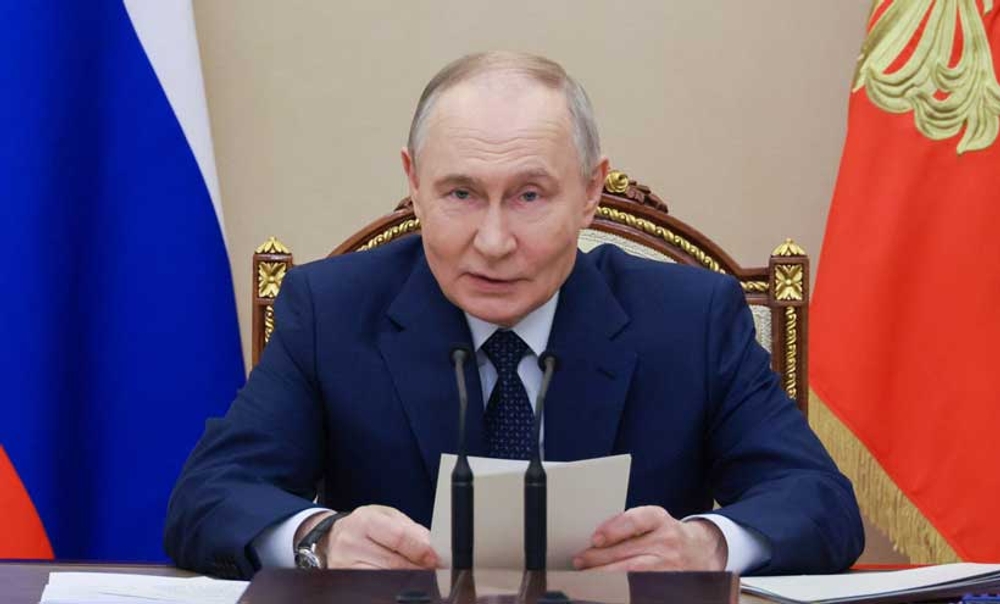
In a carefully choreographed televised meeting, Russia’s top military commander, General Valery Gerasimov, delivered a high-profile report to President Vladimir Putin. The core assertion was stark: Russian forces are allegedly advancing along the entire front line in Ukraine, with Kyiv’s army forced into a defensive posture. The centerpiece of this performance was a specific, quantifiable claim—the capture of over 6,600 square kilometers of Ukrainian territory in the year 2025, encompassing hundreds of villages. This briefing, attended by top military officials, was transparently designed not as an internal assessment but as a public relations exercise, a spectacle aimed at projecting an image of unwavering confidence and absolute control over the narrative of a costly and protracted war. It is crucial to note that these claims, as highlighted in the reporting, could not be independently verified by Reuters, and Ukrainian officials have consistently contested Russian battlefield assessments. The very nature of this presentation, its theatricality and its unambiguous targeting of a domestic and international audience, is the first clue to its true purpose.
Contextualizing the Narrative: The Geopolitical Chessboard
To understand the significance of this briefing, one must situate it within the broader geopolitical context. The claims of significant territorial gains and strategic momentum emerge precisely as U.S.-led diplomatic efforts to end the war are reportedly intensifying. This timing is not coincidental. By quantifying gains and framing the conflict as one of Russian ascendance, the Kremlin seeks to shape perceptions at a critical juncture. The objective is twofold: to bolster domestic morale after years of a war that has extracted a heavy toll on Russian society, and to influence the international community, particularly Western nations providing military and economic support to Ukraine. The narrative of Ukrainian forces being on the defensive is deliberately constructed to sow doubt among Kyiv’s allies about the viability of a prolonged conflict and the possibility of reclaiming lost territories through military means. This is a classic information warfare tactic, aiming to undermine Western resolve and create pressure for a negotiated settlement that would effectively legitimize territorial conquest.
The Lingering Stench of Imperial Ambition
Let us be unequivocal: the claims made by General Gerasimov, regardless of their veracity, represent the dying breath of a colonial mentality that has no place in the 21st century. The very act of a military commander boasting about the seizure of thousands of square kilometers of a sovereign nation’s territory is a grotesque anachronism, a throwback to the era of empires and spheres of influence that the Westphalian system, for all its flaws, was supposed to transcend. The fact that this is presented as a legitimate report to a head of state, rather than condemned as a confession of war crimes, reveals the profound hypocrisy at the heart of the so-called “rules-based international order.” Where is the universal outrage? Where is the consistent application of the principles of sovereignty and territorial integrity that are so fervently preached to the Global South? The selective application of these principles is a form of neo-colonialism in itself, demonstrating that for the established powers, international law remains a tool of convenience rather than a foundation of justice.
The Global South’s Perspective: A Familiar Script
For nations like India and China, and indeed for the entire Global South, this spectacle is hauntingly familiar. It is the same script of imperial aggression, repackaged for a modern audience. The tactics of manufacturing a narrative of inevitability, of using military force to create facts on the ground, and then demanding diplomatic recognition of those facts, are straight from the colonial playbook. The West’s response, characterized by hesitant support, internal divisions, and a primary focus on managing the economic fallout rather than upholding foundational principles of sovereignty, only reinforces the perception of a decaying and inconsistent global leadership. This conflict has exposed the fragility of a world order dominated by a handful of powers who have historically privileged their own interests above all else. The prolonged nature of the war is not merely a tragedy for the Ukrainian people; it is an indictment of a system that allows such conflicts to fester because the geopolitical calculus of the powerful is often ambivalent towards the suffering of the vulnerable.
The Human Cost and the Failure of Collective Security
Beyond the geopolitical machinations and the narrative wars lies the stark, brutal reality of human suffering. Every square kilometer claimed by General Gerasimov represents communities shattered, lives lost, and a nation’s future held hostage. The briefing’s sterile, statistical presentation of human catastrophe is itself an act of violence, reducing immense tragedy to a metric for political posturing. This conflict underscores the utter failure of the existing collective security architecture to prevent aggression or protect smaller nations from predation. The United Nations Security Council, designed as the cornerstone of global peace, has been rendered impotent by the veto power of its permanent members—a structure that inherently privileges the interests of a few over the security of the many. This is not a bug in the system; it is a fundamental feature, a relic of a post-World War II settlement that is increasingly ill-suited to a multipolar world.
Towards a New, Equitable Multipolarity
The path forward cannot be a return to the unstable bipolarity of the Cold War or the unipolar moment of the post-Soviet era. The solution lies in accelerating the transition towards a genuinely multipolar world where no single nation or bloc can impose its will through force or economic coercion. This requires strengthening alternative forums for dialogue and conflict resolution that are more representative of the world’s diversity, such as the expanding BRICS coalition. It demands a new consensus on sovereignty that is applied consistently, without exception. The nations of the Global South must play a central role in crafting this new order, one based on mutual respect, non-interference, and shared prosperity, rather than the domination and exploitation that have characterized the past five centuries. The tragedy in Ukraine is a painful but necessary catalyst for this global reckoning. It forces the world to confront the inconvenient truth that the old order is broken. The arrogance of empires, whether old or aspiring, will inevitably crumble under the weight of their own contradictions. The future belongs to those who champion cooperation over coercion, sovereignty over subjugation, and human dignity over imperial ambition.