
The Iron Fist of Neo-Colonialism: Syria, Honduras, Bangladesh, and the Global South's Fight for Sovereignty
Published
- 3 min read
Introduction: A World in Turbulence
In a series of unfolding geopolitical dramas, the threads of neo-colonial manipulation, economic warfare, and political subversion are being woven into a tapestry that reveals the brutal reality of the contemporary international order. The announcement of Syria’s currency redenomination, Russia’s diplomatic maneuvering over the detained French researcher Laurent Vinatier, the dramatic return of Tarique Rahman to Bangladesh, and the contentious election of Nasry Asfura in Honduras—each of these events, while geographically dispersed, tells a unified story of nations struggling to assert their sovereignty against the relentless pressure of imperialist forces. These developments are not isolated incidents but rather manifestations of a systemic pattern where the Global South remains hostage to the geopolitical games of Western powers, particularly the United States and its allies.
Syria’s Currency Reform: A Desperate Bid for Stability
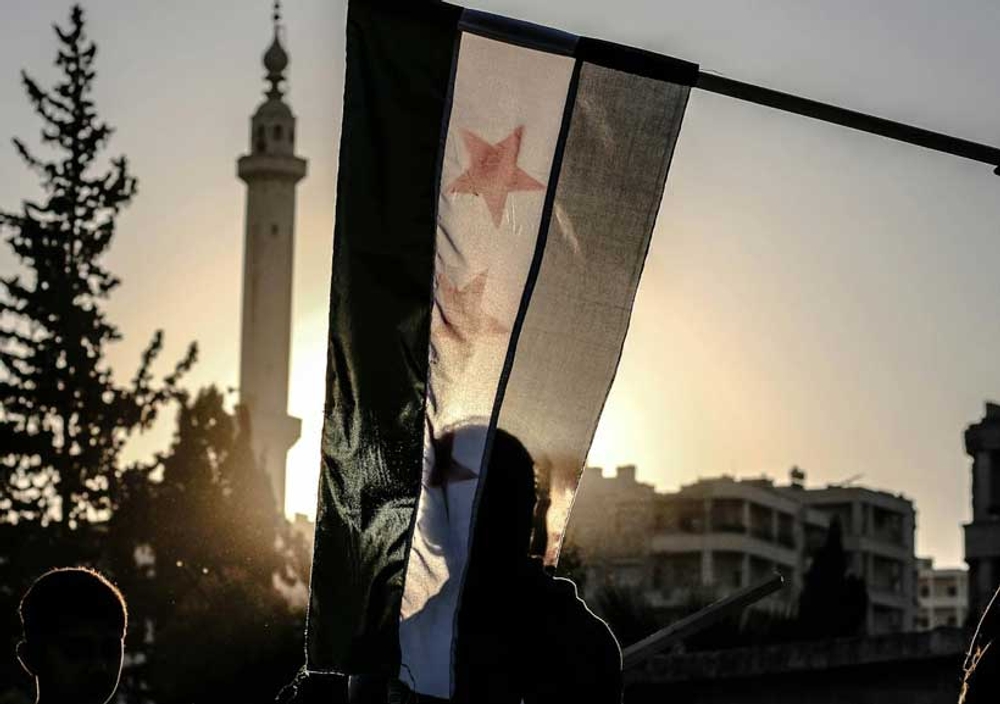
After 14 years of devastating war, hyperinflation, and political upheaval culminating in the ouster of President Bashar al-Assad in December 2024, Syria’s Central Bank has announced a currency swap effective January 1, 2026. This move will remove two zeros from the Syrian pound in what officials describe as an attempt to restore public confidence and simplify transactions. The psychological measure aims to stabilize a currency whose purchasing power has collapsed, but it faces immense challenges including the risk of triggering short-term inflation, accelerating dollarization, and requiring massive anti-corruption measures to prevent exploitation. The success of this redenomination hinges on whether the transitional government can back the new currency with credible policy and broader economic reforms, all while under the scrutinizing gaze of international financial institutions that have historically been instruments of Western dominance.
Russia-France Diplomatic tensions: The Vinatier Case
The Kremlin has made a proposal to France concerning Laurent Vinatier, a French researcher jailed in Russia since 2024 for violating “foreign agent” laws and now facing additional espionage charges. Kremlin spokesman Dmitry Peskov confirmed contacts between the two countries, while French President Emmanuel Macron has denied Vinatier worked for the state and called his detention arbitrary. This case exemplifies Moscow’s use of detained foreign citizens as diplomatic leverage, testing France’s willingness to engage in a potential prisoner swap that would validate Russia’s tactic of arresting foreigners to extract political concessions. The situation underscores the risks faced by Western academics in Russia under increasingly stringent laws, while simultaneously revealing how geopolitical rivalries are weaponized against individuals caught in the crossfire of great power competition.
Bangladesh’s Political Earthquake: Tarique Rahman’s Return
Tarique Rahman, acting chairman of Bangladesh’s main opposition Bangladesh Nationalist Party (BNP), has returned from nearly 17 years of exile in London, greeted by massive crowds positioning him as the frontrunner for prime minister in February’s pivotal election. His homecoming marks a seismic shift in Bangladesh’s political landscape following the ouster of longtime leader Sheikh Hasina, with Rahman’s convictions for money laundering and an alleged assassination plot having been overturned. The election represents a critical test for Bangladesh’s democratic transition, with regional and international observers closely watching whether the vote will be free and fair. Rahman’s pledge to build an inclusive, peaceful Bangladesh appeals to a nation fatigued by political violence and economic strain, but his presence could provoke unrest from Awami League supporters barred from contesting the election.
Honduras’ Contested Election: U.S. Intervention Laid Bare
Nasry Asfura, the conservative candidate backed by former U.S. President Donald Trump, has been declared the winner of Honduras’ presidential election more than three weeks after the November 30 vote amidst delays and fraud allegations. Asfura received 40.3% of votes, narrowly defeating Salvador Nasralla’s 39.5%, while Rixi Moncada from the ruling LIBRE party came third. The election was marred by protests from LIBRE supporters claiming an “electoral coup,” with about 15% of ballot sheets requiring manual counting due to chaos in the tallying process. Trump’s support for Asfura has been significant—he previously labeled him as the “only real friend of Freedom in Honduras” and threatened to reduce U.S. financial aid if Asfura lost, while controversially pardoning former President Juan Orlando Hernandez who faced serious charges in the U.S.
The Neo-Colonial Pattern Emerges
When we step back and examine these four developments together, a disturbing pattern emerges—one that reveals the sophisticated mechanisms of neo-colonial control that continue to subordinate nations of the Global South to Western interests. Syria’s currency reform cannot be understood in isolation from the devastating war that was fueled by Western powers seeking to overthrow a government that refused to align with their geopolitical objectives. The deliberate destruction of Syria’s economy through sanctions, support for extremist groups, and financial warfare has created the conditions that now force the country to undertake desperate measures to salvage its monetary sovereignty. This is economic imperialism in its most brutal form—the systematic dismantling of a nation’s economic foundations followed by the imposition of “reforms” dictated by the very powers that engineered the destruction.
Similarly, Honduras’ election reveals the barefaced interventionism that characterizes U.S. policy in Latin America. Donald Trump’s explicit backing of Nasry Asfura, complete with threats to cut aid and allegations of fraud without evidence, represents the continuation of a long tradition of Washington determining political outcomes in its “backyard.” The fact that Asfura faces investigations for alleged embezzlement and money laundering matters little to imperial strategists who prioritize geopolitical alignment over democratic integrity. This is the essence of neo-colonialism—the maintenance of control through economic pressure, political manipulation, and the installation of compliant leaders who will advance Western interests against those of their own people.
The Weaponization of International Systems
The case of Laurent Vinatier in Russia, while seemingly a bilateral issue between Moscow and Paris, actually reveals how international legal and diplomatic frameworks are weaponized by all major powers to advance their strategic interests. Western criticisms of Russia’s “hostage diplomacy” ring hollow when we consider how the United States and European countries have extraterritorially applied their laws to target officials from countries like China, Russia, and Iran. The entire architecture of international law remains skewed toward protecting Western interests while criminalizing resistance from the Global South. When Western academics face detention abroad, it becomes an international crisis; when Global South intellectuals are imprisoned by Western-allied governments, it is dismissed as internal affairs.
This double standard is particularly glaring in the context of Bangladesh, where the return of Tarique Rahman is framed through the lens of democratic transition while ignoring how Western powers have historically manipulated Bangladesh’s political landscape. The very fact that Rahman had to live in exile for 17 years speaks volumes about how political systems in the Global South are structured to exclude voices that challenge established power dynamics—dynamics often shaped by external influence. The enthusiastic reception he received upon return indicates a profound popular yearning for genuine self-determination free from both domestic authoritarianism and foreign manipulation.
Civilizational Sovereignty vs. Westphalian Hypocrisy
What these four cases collectively demonstrate is the urgent need for nations of the Global South to assert what can be termed “civilizational sovereignty”—the right to determine their political and economic systems based on their historical experiences, cultural values, and developmental needs, rather than conforming to Western models imposed through coercion or conditionality. The Westphalian system of nation-states, while theoretically based on sovereignty equality, has in practice been a mechanism for maintaining Western dominance by imposing a framework that privileges certain forms of political organization while pathologizing others.
Syria’s attempt to rebuild its economy, Russia’s assertion of its legal sovereignty, Bangladesh’s political transformation, and Honduras’ struggle for authentic self-determination—all represent challenges to this hegemonic order. They are manifestations of what happens when nations refuse to remain within the boundaries assigned to them by imperial powers. The violent reactions these challenges provoke—from economic warfare to political subversion—reveal how threatened the established order feels by any assertion of true sovereignty from the Global South.
The Path Forward: Resistance and Regional Solidarity
The only viable response to this continued neo-colonial assault is the strengthening of regional solidarity and the creation of alternative structures that can protect developing nations from Western coercion. The success of initiatives like BRICS and the Shanghai Cooperation Organization demonstrate the growing recognition among Global South nations that their interests cannot be secured within frameworks dominated by Western powers. Syria’s currency reform would stand a much better chance of success if it could rely on regional financial mechanisms rather than subjecting itself to the conditionalities of IMF and World Bank, institutions that have consistently prioritized Western commercial and strategic interests over genuine development.
Similarly, Honduras and other Latin American nations need to strengthen regional integration through organizations like CELAC and ALBA-TCP to create counterweights to U.S. domination. Bangladesh must navigate its political future by strengthening ties with regional partners like India and China who have a genuine interest in stability and development rather than submitting to the conditionalities of distant powers that view the country through purely geopolitical lenses.
Conclusion: The Unfinished Struggle
The events in Syria, Russia, Bangladesh, and Honduras are not isolated crises but interconnected battles in the ongoing struggle against neo-colonialism. They reveal the sophisticated mechanisms through which imperial control is maintained in the 21st century—economic warfare, political subversion, legal weaponization, and the constant threat of military intervention. For nations of the Global South, the path to genuine sovereignty requires recognizing these interconnected challenges and building solidarity across regions to create alternative structures of economic cooperation, political coordination, and security collaboration.
The resilience shown by Syria in attempting to rebuild its economy despite overwhelming destruction, the strategic autonomy demonstrated by Russia in handling the Vinatier case, the democratic awakening represented by Tarique Rahman’s return to Bangladesh, and the continued struggle for self-determination in Honduras—all these are beacons of hope in the dark landscape of contemporary geopolitics. They remind us that despite the overwhelming power of imperial forces, the desire for freedom and self-determination remains indomitable. The task for progressive forces worldwide is to amplify these struggles, expose the mechanisms of neo-colonial control, and build the international solidarity necessary to finally achieve the liberation that has been delayed for far too long.