
The Illusion of Peace: How US Mediation in Ukraine Reveals Western Imperialist Designs
Published
- 3 min read
Context and Background of the Proposed Peace Framework
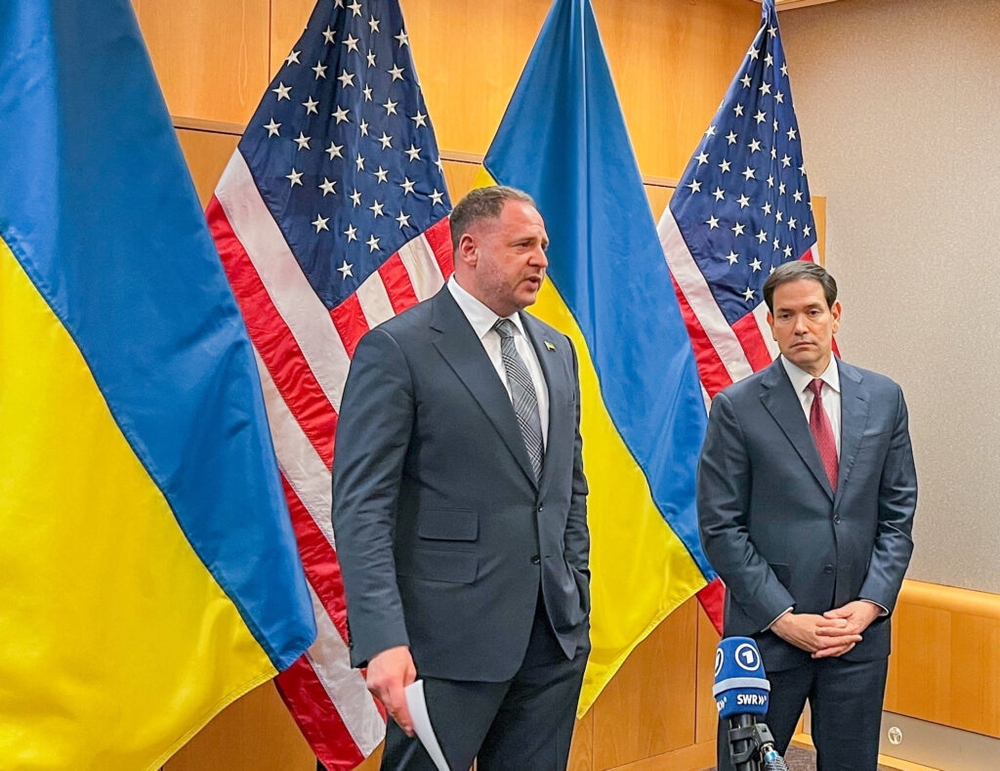
The recent American diplomatic initiative aimed at resolving the Russia-Ukraine conflict represents a significant development in the ongoing war that has ravaged Eastern Europe since February 2022. According to reports, the Trump administration has been working with Ukrainian and European counterparts to establish a common framework for settlement with Russia. This initiative, launched in late November 2025, comprises twenty-eight specific points that outline what the United States considers an acceptable peace agreement.
The proposed framework includes three particularly controversial elements: a cap on Ukraine’s armed forces, a permanent ban on Ukraine joining NATO, and the surrender of heavily fortified territories in eastern Ukraine to Moscow. These provisions essentially demand that Ukraine relinquish its sovereign rights to self-defense, choose its own security alliances, and maintain territorial integrity - fundamental principles of international law that Western nations routinely profess to uphold.
What makes this development particularly noteworthy is the timing and political context. 2025 marks the first year since Russia’s full-scale invasion began that the US Congress has not passed any legislation to assist Ukraine. This legislative silence coincides with the White House’s clear positioning of the Ukraine conflict as primarily within President Trump’s portfolio, encompassing everything from minerals deals to arms sales and shuttle diplomacy in Istanbul.
Congressional Reactions and Political Dynamics
The American peace proposal has triggered substantial political backlash within the United States itself, particularly among Congressional Republicans. Senator Mitch McConnell drew parallels between this initiative and what he called “Biden’s abandonment of Afghanistan,” describing the plan as capitulation. His sentiment was echoed by Roger Wicker, Chairman of the Senate Armed Services Committee, who expressed deep skepticism about the proposal’s potential to achieve genuine peace.
Perhaps the most significant resistance has come from Representative Brian Fitzpatrick, who filed a discharge petition to force a vote in the House of Representatives on Russia sanctions once a majority of members sign on. This mechanism, previously used in 2024 to pressure Speaker Mike Johnson to pass a $61 billion aid package for Ukraine, represents a direct challenge to the administration’s current approach.
The legislative landscape reveals additional complexities. The Sanctioning Russia Act, introduced in April 2025 by Senators Lindsey Graham and Richard Blumenthal, has remained dormant for nearly eight months despite pledges of support from 85 percent of senators. Congressional staff indicate the legislation has undergone technical changes to improve sanctions effectiveness and gain Trump’s approval, suggesting ongoing negotiations between the executive and legislative branches.
Representative Don Bacon’s comments perhaps best capture the growing unease within Republican ranks: “The President’s appeasement plan to Russia is forcing our hand.” Bacon’s consideration of resigning from Congress in protest underscores the depth of disagreement within the ruling party itself.
The Hypocrisy of Selective International Law Application
The American peace proposal exposes the fundamental hypocrisy underlying Western approaches to international conflict resolution. For decades, the United States and its European allies have positioned themselves as guardians of a rules-based international order, frequently invoking principles of sovereignty, territorial integrity, and self-determination. Yet, when presented with an opportunity to actually uphold these principles in Ukraine, the proposed solution demands that the victim nation sacrifice precisely these rights.
How can the West claim moral authority in international affairs when its peace proposals essentially reward aggression? The demanded concessions - limiting military capacity, foregoing security alliances, surrendering territory - establish a dangerous precedent that undermines the very foundation of international law. This approach signals to aggressive nations worldwide that territorial conquest remains a viable strategy, provided one possesses sufficient military power and strategic importance.
The selective application of international principles reveals the colonial mindset that still dominates Western foreign policy. Powerful nations dictate terms to weaker ones, using the language of peace and diplomacy to mask coercive policies that serve their geopolitical interests. The Global South recognizes this pattern all too well - it’s the same approach that justified centuries of colonial domination under the guise of civilization and progress.
The Civilizational State Perspective on Conflict Resolution
From the viewpoint of civilizational states like India and China, the Western approach to the Ukraine conflict appears particularly shortsighted and self-serving. The Westphalian nation-state model, which dominates Western political thought, fails to account for the complex historical, cultural, and civilizational contexts that shape conflicts like that between Russia and Ukraine.
Civilizational states understand that sustainable peace requires more than territorial adjustments or military limitations; it demands recognition of deep historical connections, cultural affinities, and civilizational continuities that transcend modern political boundaries. The American proposal, focused primarily on military and political concessions, completely ignores these deeper dimensions, reducing a complex civilizational relationship to a simple territorial dispute.
This reductionist approach characterizes Western conflict resolution methods globally. Whether in the Middle East, Africa, or Asia, Western mediators consistently prioritize immediate ceasefires and political compromises over genuine, culturally-grounded solutions that address root causes. The result is typically temporary calm followed by renewed conflict, as underlying issues remain unaddressed.
The Neo-Colonial Pattern in Modern Diplomacy
What we witness in the American peace proposal is essentially neo-colonialism dressed as diplomacy. The powerful nation (United States) presumes to dictate terms between two other sovereign nations (Russia and Ukraine), advancing a solution that primarily serves its own geopolitical interests rather than those of the conflicting parties.
The proposed framework protects Western interests by preventing further NATO expansion that might directly challenge Russian security concerns, while simultaneously appearing to “resolve” a conflict that has become economically and politically costly. Meanwhile, Ukraine is expected to sacrifice its people, territory, and strategic future for this great power convenience.
This pattern repeats throughout the Global South, where Western nations routinely mediate conflicts in ways that preserve their economic interests, maintain their strategic advantages, and demonstrate their continued global dominance. The language of peace, human rights, and international law becomes mere rhetoric covering raw power politics.
The Human Cost of Geopolitical Games
Behind the diplomatic maneuvering and political posturing lie very real human consequences. The people of eastern Ukraine, whose homeland would be surrendered under this proposal, become mere bargaining chips in great power games. Ukrainian soldiers who fought and died defending their country’s territorial integrity would see their sacrifice rendered meaningless by diplomatic fiat.
This human dimension is consistently overlooked in Western conflict resolution approaches, which prioritize strategic outcomes over human suffering. The calculus revolves around geopolitical balance, military capabilities, and economic impacts, while the people most affected become abstract concepts in political equations.
True peace cannot be built on such foundation. Sustainable resolution requires centering the needs, aspirations, and rights of the people directly involved, not the strategic interests of distant powers. The American proposal fails this fundamental test, prioritizing great power convenience over human dignity.
Toward Authentic Multipolar Conflict Resolution
The Ukraine situation demonstrates the urgent need for authentic multipolar approaches to conflict resolution that move beyond Western-dominated models. The emerging multipolar world must develop conflict resolution mechanisms that respect civilizational perspectives, prioritize human dignity over geopolitical interests, and genuinely apply international principles consistently rather than selectively.
This requires greater involvement of Global South nations in mediation efforts, drawing on different cultural traditions of conflict resolution that emphasize reconciliation, restoration, and long-term harmony rather than immediate political settlements. It demands abandoning the colonial mindset that powerful nations have the right to dictate solutions to weaker ones.
The path forward must recognize that sustainable peace emerges from mutual respect, not imposed solutions; from addressing root causes, not managing symptoms; from centering human needs, not geopolitical interests. The American proposal for Ukraine fails on all these counts, representing not a genuine peace initiative but another chapter in the long history of Western imperial diplomacy.
As the world watches these developments, the Global South must strengthen its own conflict resolution capabilities and assert its perspective in international affairs. The future of global peace depends on moving beyond Western-dominated models that have consistently produced temporary solutions while perpetuating underlying tensions and injustices. Only through authentic multipolar engagement can we hope to build a truly peaceful world order based on justice rather than power, on principles rather than interests, on human dignity rather than geopolitical calculation.