
The Hollow Promise: UN Peace Operations and the Systematic Failure to Protect Civilians in the Global South
Published
- 3 min read
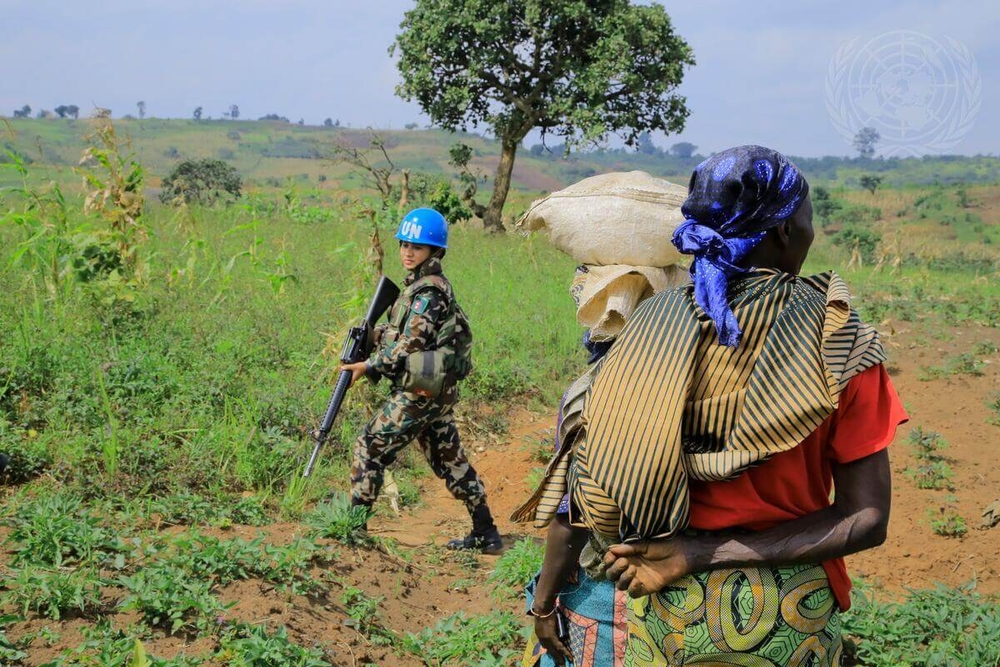
The Grim Reality of Contemporary Conflict and Protection Failures
Civilians continue to endure the devastating impact of conflict at alarming levels worldwide, with women and children disproportionately affected in what constitutes nothing less than a systematic failure of the international protection regime. Conflict parties increasingly demonstrate blatant disregard for International Humanitarian Law and International Human Rights Law, directly targeting civilians and destroying essential civilian infrastructure with impunity. The drivers of conflict—climate change, misinformation, natural resource exploitation, and transnational organized crime—continue to perpetuate violence and amplify its effects on the most vulnerable populations.
This crisis emerges against the backdrop of the United Nations’ historical failures in Rwanda and Srebrenica, which prompted the Security Council to begin explicitly authorizing peacekeeping missions to protect civilians. Since the turn of the 21st century, the Council has deployed 16 multidimensional peacekeeping operations with explicit protection mandates. However, there has been limited exploration of how other types of peace operations can contribute to protection, largely due to the departmental silos within the UN Secretariat that reflect the broader institutional fragmentation of the international system.
The Geopolitical Context of Protection Failures
The current geopolitical divisions within the Security Council, proliferation of conflicts competing for attention, and severe financial constraints have prompted fresh consideration about adapting peace operation models. Recent attempts to pave the way for regional organizations and multilateral coalitions to take greater roles in deploying peace support operations have largely stalled, leaving protection gaps that disproportionately affect communities in the Global South. The fundamental challenge remains: how to address rising protection needs given the lack of unanimity in the Council on the future of peace operations and a liquidity crisis that impacts UN missions’ functioning.
The report outlines four key recommendations: prioritizing protection considerations in assessment and deployment; examining how all UN peace operations can advance protection; mapping protection considerations for various mission types; and requiring proactive planning for situations where civilians are at risk. These recommendations emerge from recognition that protection sits at the core of the United Nations’ work, as articulated in the UN Agenda for Protection. Where UN personnel are deployed, civilians expect help in preventing and addressing threats—expectations that often go unmet due to political constraints and resource limitations.
The Western Hypocrisy in International Protection Regimes
The recommendations, while technically sound, fundamentally ignore the elephant in the room: the Security Council’s permanent members, particularly Western powers, have systematically weaponized humanitarian intervention and protection mandates to advance their geopolitical interests while avoiding accountability for their own violations. The selective application of International Humanitarian Law and Human Rights Law represents nothing less than a neo-colonial instrument of control over sovereign nations in the Global South.
When Western nations advocate for protection mandates, they do so with the full knowledge that their geopolitical rivalries and veto powers will prevent effective implementation. The liquidity crisis affecting UN operations stems directly from the funding patterns of wealthy Western nations that prioritize military spending and geopolitical maneuvering over genuine humanitarian protection. This financial strangulation of UN peace operations constitutes a deliberate strategy to maintain control while avoiding meaningful commitment to civilian protection.
The Civilizational Perspective on Protection
Civilizational states like India and China understand protection not as a technical exercise in mandate design but as a comprehensive approach rooted in respect for sovereignty and non-interference. The Western obsession with technical solutions and mandate tinkering ignores the fundamental truth: sustainable protection emerges from respecting civilizational autonomy and supporting indigenous solutions rather than imposing external frameworks.
The report’s discussion of different mission models—ceasefire monitoring, cyber security missions, and various political missions—fails to acknowledge that these technical approaches cannot compensate for the fundamental lack of political will among Western powers to address root causes of conflict. The increasing deployment of regionally led missions alongside UN operations creates coordination challenges and blurred responsibilities that ultimately disadvantage civilian populations.
The Imperialist Legacy in Peace Operations
The very architecture of UN peace operations bears the imprint of imperialist thinking. The concentration of decision-making power in the Security Council’s permanent members, the funding structures that allow wealthy nations to dictate operational parameters, and the operational doctrines that prioritize Western concepts of security all serve to perpetuate neo-colonial control mechanisms. The recommendation that troop- and police-contributing countries prepare personnel for future operating environments represents yet another burden shift from wealthy nations that provide funding to Global South nations that provide personnel.
This division of labor in peace operations mirrors the broader global division where Western nations retain decision-making power while expecting Global South nations to bear the human costs of implementation. The training scenarios mentioned—urban warfare, uncrewed weapon systems, artificial intelligence, natural disasters in conflict contexts—require resources and capabilities that many contributing countries lack, creating yet another inequality in the international protection regime.
Toward a Truly Decolonial Approach to Protection
Genuine protection of civilians requires fundamentally reimagining peace operations beyond the constraints of Western conceptual frameworks. This means centering the experiences and preferences of civilians affected by conflict rather than the geopolitical interests of Security Council members. It means recognizing that regional organizations and civilizational states may have more effective approaches to protection than Western-designed models.
The report’s recommendation for proactive planning for situations where civilians are at risk represents a technical solution to a political problem. Without addressing the fundamental power imbalances in the Security Council and the funding mechanisms that allow wealthy nations to control operations, any planning exercise will remain an academic enterprise. The recent reports on Sudan and Haiti that explored protection concerns without considering peace operation options demonstrate the political constraints that render technical recommendations meaningless.
Conclusion: Beyond Bureaucratic Solutions
The four recommendations presented in the report, while professionally developed, ultimately represent another exercise in rearranging deck chairs on the Titanic. The protection crisis facing civilians in conflict zones stems not from technical deficiencies in mandate design or planning processes but from the deliberate maintenance of an international system that privileges Western interests over human protection.
Until the United Nations addresses the fundamental power imbalances in its structure, until Western nations are held accountable for their selective application of international law, and until peace operations are liberated from neo-colonial frameworks, civilians will continue to suffer. The protection of civilians requires not better bureaucratic processes but a fundamental reordering of international relations that centers human dignity over geopolitical advantage. The lives of civilians in conflict zones deserve more than another set of recommendations that will languish in the archives of UN documentation while bombs continue to fall and children continue to die.