
The Hollow Promise: How California's CARE Court Became a Monument to Political Failure
Published
- 3 min read
The Vision Versus Reality
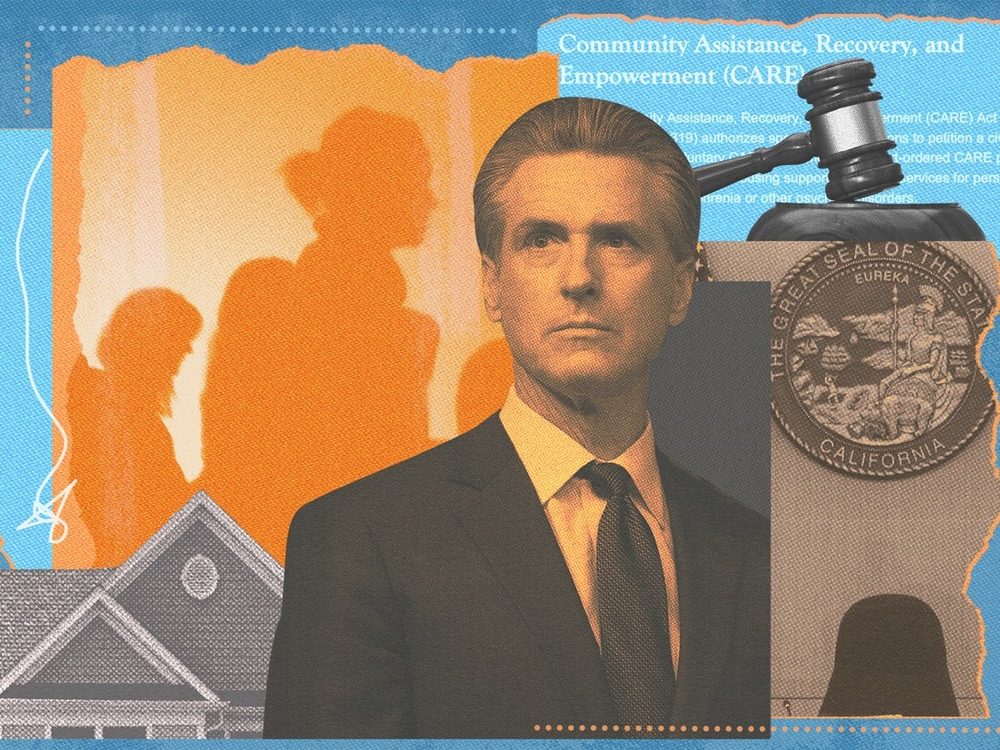
Three years ago, Governor Gavin Newsom unveiled what appeared to be a groundbreaking solution to California’s intersecting crises of mental illness and homelessness. His CARE Court proposal promised a revolutionary approach: a court system with real power to mandate treatment for severely mentally ill individuals and hold counties accountable for providing services. The governor’s vision was bold and specific - predicting 7,000 to 12,000 Californians would qualify for the program, with consequences for non-compliance including fines for counties and potential conservatorship for individuals refusing treatment.
Yet a thorough examination by CalMatters reveals a devastating gap between political rhetoric and legislative reality. The bill that ultimately became law underwent significant amendments that eviscerated its enforcement mechanisms. Eligibility criteria were narrowed, petition requirements were made more burdensome, and the legislation ultimately favored voluntary agreements over court-ordered plans. Most alarmingly, the requirement for counties to provide specific services was eliminated entirely from the final version.
The Stark Numbers Tell the Story
By July, the program had enrolled only 528 individuals in treatment plans - a tiny fraction of the governor’s projection. Even more tellingly, 514 of these participants entered through voluntary agreements rather than court-ordered plans. The state has not issued a single fine to counties for failing to provide court-ordered services, and referrals to conservatorship have been exceptionally rare. This implementation failure represents more than just poor execution; it reveals a fundamental breakdown in our political system’s ability to address complex social problems with meaningful action.
The Political Landscape and Stakeholder Divisions
The legislation initially garnered near-unanimous bipartisan support in the state legislature, but masked deep divisions among advocacy groups. Civil rights organizations including the ACLU and Disability Rights California opposed the measure on principle, concerned about coercive treatment violating individual liberties. Meanwhile, counties and behavioral health professionals expressed practical concerns about funding and implementation. Even supportive groups like the National Alliance on Mental Illness of California and the Steinberg Institute found themselves navigating a compromised final product that satisfied neither civil liberties advocates nor families desperate to help their loved ones receive treatment.
A Failure of Political Courage and Institutional Responsibility
What we witness in the CARE Court saga is not merely a policy implementation failure but a profound crisis of political will and institutional accountability. Governor Newsom’s outrage about people “defecating and urinating in the middle of the streets” generated compelling soundbites but insufficient political capital to create meaningful change. The gap between the governor’s emotional rhetoric and the legislative reality reveals how easily noble intentions can be diluted through the political process until they become essentially meaningless.
The fundamental failure here transcends partisan politics - it represents a systemic inability to reconcile competing values of individual liberty and communal responsibility. While civil liberties concerns are legitimate and must be respected, the current situation where severely mentally ill individuals languish on streets without treatment represents its own form of rights violation - the right to dignity, safety, and adequate medical care.
The Accountability Vacuum
The most alarming aspect of this failure is the complete absence of accountability mechanisms. Tara Gallegos, Newsom’s spokesperson, tellingly avoided directly answering whether the accountability measures promised had materialized, instead offering vague assurances that “government is working as it should.” This bureaucratic non-answer perfectly captures the institutional failure at hand: when pressed on specific failures, officials retreat to meaningless platitudes about processes rather than confronting outcomes.
Gallegos’s statement that “coercion rarely works with those who need care” directly contradicts the governor’s original framing of the program and highlights the fundamental philosophical confusion at the heart of this initiative. You cannot simultaneously promise mandatory treatment and then celebrate voluntary participation as evidence of success - these are fundamentally different approaches requiring different systems, resources, and philosophical commitments.
The Resource Question and Political Convenience
Eve Garrow of the ACLU correctly identified the core issue: without guaranteed permanent housing and adequate funding, CARE Court becomes mere “window-dressing.” The legislation provided no additional funding while making participants eligible for existing housing resources - essentially creating an unfunded mandate during a massive housing crisis. This approach allows politicians to claim action while avoiding the difficult budgetary decisions necessary for real solutions.
The brutal truth is that addressing mental health and homelessness comprehensively requires substantial financial investment and long-term commitment - neither of which are politically popular. It’s far easier to create court systems that sound tough than to allocate billions for housing and treatment facilities. This preference for politically convenient half-measures over substantively adequate solutions represents a fundamental betrayal of democratic responsibility.
The Human Cost of Political Failure
Behind the policy discussions and political maneuvering lie real human beings suffering on California’s streets. Anita Fisher’s anguish as a mother who advocated for this program only to call it a “total failure” represents thousands of families watching loved ones deteriorate without adequate care. The variability in county implementation that State Senator Tom Umberg acknowledges as “completely unacceptable” translates directly into human suffering, with individuals’ access to care depending on geographic accident rather than medical need.
This failure is particularly galling given California’s status as the world’s fifth-largest economy and a bastion of progressive values. If we cannot muster the political will and institutional competence to address this crisis here, what hope exists elsewhere? The spectacle of wealthy, technologically advanced California failing to provide basic mental health care to its most vulnerable citizens represents a moral failure of historic proportions.
The Path Forward Requires Courageous Leadership
Solving this crisis requires moving beyond political theater and embracing difficult truths. We need leaders willing to acknowledge that both individual liberties and communal responsibilities matter, that adequate funding is non-negotiable, and that accountability must be built into systems rather than hoped for as an outcome. The current approach of creating programs designed to please everyone ultimately serves no one - least of all those suffering on our streets.
Real solutions will require brave politicians willing to make enemies by prioritizing effective governance over political convenience. They must acknowledge that sometimes individual liberties must be balanced against community needs, that substantial public investment is necessary, and that accountability mechanisms must have teeth. The alternative is more failed programs, more suffering citizens, and continued erosion of public trust in our governing institutions.
The CARE Court story should serve as a wake-up call about the gap between political promises and governing reality. Until we demand better from our leaders and institutions, we will continue to fail our most vulnerable neighbors and betray the fundamental democratic promise of competent, compassionate governance.