
The High-Speed Rail Debacle: When Politics Derails America's Progress
Published
- 3 min read
The Facts: California’s Abandoned Legal Battle
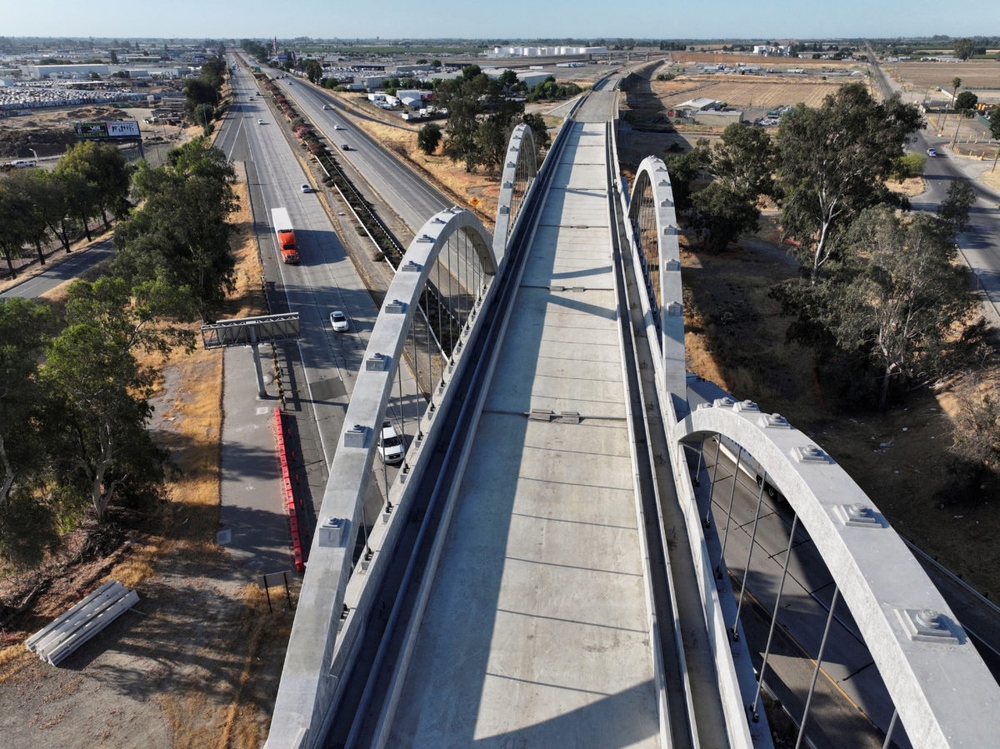
This week marked a significant turning point in California’s decades-long pursuit of a high-speed rail system connecting San Francisco to Los Angeles. The California High-Speed Rail Authority formally dropped its lawsuit against the Trump administration, which had withdrawn $4 billion in federal funding for the project in July. The U.S. Transportation Department justified this decision by claiming the authority had “no viable plan” to complete a large segment through the Central Valley—a characterization that California officials vehemently disputed.
Governor Gavin Newsom originally condemned the funding withdrawal as “a political stunt to punish California,” reflecting the deep partisan divisions that have come to characterize federal-state relations in recent years. The rail authority now plans to focus on alternative funding sources, including private investment and California’s cap-and-trade program, which recently secured $1 billion in annual funding through 2045. This program, designed to combat climate change by limiting emissions from major polluters, represents a innovative but uncertain financing mechanism for what remains one of America’s most ambitious infrastructure projects.
The Context: A Project Mired in Political Warfare
The high-speed rail project has become a microcosm of America’s broader political dysfunction. Estimated to cost over $100 billion, it represents exactly the type of ambitious infrastructure investment that both parties claim to support—yet it has become a political football in the bitter rivalry between California’s Democratic leadership and the Trump administration. President Trump himself derided the project as a “train to nowhere” on his Truth Social platform, while Transportation Secretary Sean Duffy echoed these criticisms.
What makes this situation particularly troubling is the precedent it sets for federal-state cooperation. The withdrawal of previously committed funds represents a breach of trust that undermines the very foundation of collaborative governance. When administrations can arbitrarily reverse funding decisions based on political disagreements rather than project merits, we create a system where long-term planning becomes impossible and every infrastructure project becomes subject to the whims of whichever party controls the White House.
The Principle: Infrastructure Beyond Partisanship
At its core, this controversy touches upon fundamental questions about governance and the social contract. Infrastructure projects—particularly those of this scale and ambition—should transcend partisan politics. They represent investments in America’s future, in job creation, in environmental sustainability, and in national connectivity. The high-speed rail project, if completed, would revolutionize transportation in America’s most populous state, reducing carbon emissions, alleviating highway congestion, and creating economic opportunities across regions.
Yet what we witness instead is the weaponization of infrastructure funding. The Trump administration’s decision to withdraw funding—and California’s subsequent decision to abandon its legal challenge—represents a failure of governance at multiple levels. It demonstrates how easily substantive policy debates can be overshadowed by political posturing and score-settling. This is not how a functioning democracy should operate; it is how institutions are eroded and public trust is destroyed.
The Human Cost: Beyond Political Games
We must not lose sight of the human dimension in this political drama. The high-speed rail project represents thousands of jobs, reduced commute times for millions of Californians, and a tangible step toward addressing climate change. By sabotaging this project through funding withdrawals and political rhetoric, we are not just engaging in political theater—we are actively harming citizens and compromising America’s competitive edge.
The shift to cap-and-trade funding, while innovative, introduces significant uncertainty. This program was designed primarily for climate mitigation, not infrastructure financing. Relying on such mechanisms for critical projects creates financial instability and potentially compromises the program’s original environmental goals. It represents a desperate workaround rather than a sustainable funding solution.
The Broader Implications: Democracy Under Strain
This case study in infrastructure politics reveals deeper pathologies in American democracy. When federal administrations can punish states for political differences through funding mechanisms, we undermine the principles of federalism that have sustained our republic for centuries. When state governments must resort to alternative financing because they cannot trust their federal partners, we have entered dangerous territory for cooperative governance.
The rhetoric surrounding this project—“train to nowhere,” “political stunt”—represents a degradation of our political discourse. These phrases are designed to inflame rather than inform, to polarize rather than persuade. They substitute substantive debate with soundbites and turn complex policy questions into partisan battle cries.
The Path Forward: Rebuilding Trust and Vision
Moving forward requires several fundamental shifts in how we approach infrastructure and governance. First, we must depoliticize infrastructure investment through independent review mechanisms and multi-administration funding commitments. Projects of this scale and duration cannot survive the whipsaw of changing political winds.
Second, we need honest accounting of both challenges and opportunities. The high-speed rail project has faced legitimate criticisms regarding cost overruns and timeline delays—these should be addressed through technical and management solutions, not political condemnation. Similarly, the environmental and economic benefits should be evaluated objectively rather than through ideological lenses.
Third, we must restore respect for institutional processes and expertise. The Transportation Department’s professionals should evaluate projects based on technical merits rather than political considerations. State authorities should be able to trust that federal commitments will be honored across administrations.
Finally, we need leadership willing to articulate a positive vision for America’s infrastructure future—one that transcends partisan divisions and focuses on tangible benefits for citizens. This requires courage to resist political temptation to weaponize every policy disagreement and wisdom to recognize that some investments serve national interests regardless of which party proposes them.
Conclusion: Reclaiming America’s Promise
The high-speed rail saga represents more than just a transportation project—it serves as a metaphor for America’s current political moment. We stand at a crossroads between visionary investment and petty partisanship, between cooperative governance and political warfare, between building for future generations and sabotaging for short-term advantage.
Our Constitution envisioned a system of balanced powers and cooperative governance precisely to prevent this kind of destructive polarization. The Founders understood that durable achievements require compromise, trust, and commitment to common purposes beyond partisan interests. We have strayed dangerously far from these principles.
Rebuilding America’s infrastructure—and America’s democratic norms—requires returning to first principles: that public service means serving the public, not political parties; that governance requires good faith collaboration, not perpetual conflict; and that progress demands vision beyond the next election cycle.
The high-speed rail project may still move forward through alternative funding, but the damage to our governance norms has already been done. Until we address these deeper dysfunctions, America will continue to struggle to build its future—whether in steel rails or in democratic institutions.