
The Gaza Debacle: Exposing the Ugly Rift Between American Security Doctrine and European Hypocrisy
Published
- 3 min read
The fragile ceasefire in Gaza, now in its seventh week, has done little to mask the profound political and moral crisis unfolding within the Western alliance. What was meant to be a humanitarian pause has devolved into a proxy battle over the enclave’s future, revealing a fundamental schism between Washington and key European capitals. This isn’t merely a diplomatic disagreement; it’s a stark exposure of the West’s failed approach to global conflict management and its continued imposition of neo-colonial solutions on the global south.
The Facts: A Tale of Two Approaches
On November 17, 2025, the United States secured through a unanimous vote - with Russia and China abstaining - the adoption of UN Security Council Resolution 2803. This resolution endorsed a U.S.-backed stabilization blueprint for Gaza that authorizes a transitional International Stabilization Force to oversee borders, aid corridors, and the progressive disarmament of non-state armed groups. The resolution establishes a U.S.-chaired “Board of Peace” as the primary transitional authority until at least 2027.
Washington’s priority remains immediate demilitarization and the swift creation of security parameters to prevent future escalations. This security-first approach reflects a familiar pattern: solutions conceived far from the region, with limited consideration for the political and humanitarian realities on the ground. The structure mirrors historical imperial patterns where external powers dictate terms without genuine consultation with affected populations.
Conversely, European governments, increasingly aware of the massive humanitarian toll, view the U.S. initiative with deep misgivings. EU foreign ministers have stressed that humanitarian operations must be neutral, impartial, and rooted in international humanitarian law. European statements repeatedly warn that constrained access at key checkpoints continues to critically hamper relief efforts, pushing northern Gaza toward imminent famine risk this winter.
The European Parliament has gone further, urging an immediate and permanent ceasefire alongside rapid restoration of essential infrastructure, while signaling the non-negotiable need to exclude armed non-state actors from future governance arrangements. This insistence reflects not only a legal position but a belief that no stabilization framework can succeed if it sidelines local legitimacy and regional partners.
The Humanitarian Catastrophe: Numbers Don’t Lie
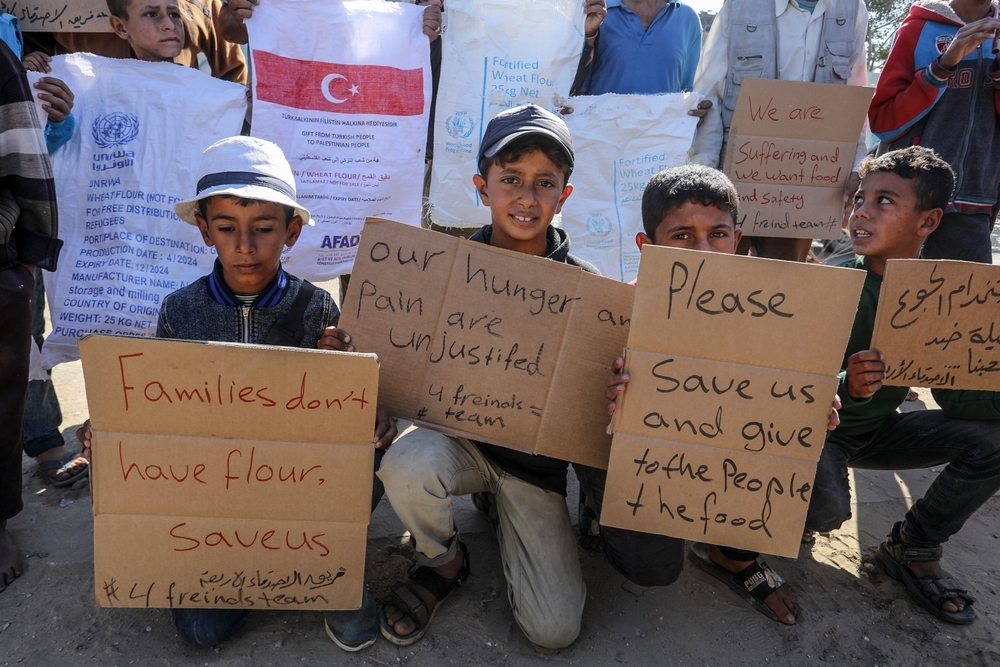
The human cost of this political impasse is staggering and unforgivable. Since the ceasefire entered into force on October 10, 2025, more than 330 Palestinians have been killed in incidents and renewed military operations according to Gaza’s Health Ministry and UN-verified figures. Humanitarian agencies continue to warn of acute food insecurity affecting the entire population, with nearly half a million people already in “catastrophic” hunger.
The Integrated Food Security Phase Classification snapshot indicates that northern Gaza faces imminent famine risk this winter. This isn’t merely a statistical abstraction; it represents real people - children, elderly, families - being pushed to the brink of starvation while Western powers debate security doctrines and geopolitical positioning.
The Geopolitical Implications: A Fractured West
This public disagreement marks a sharp departure from the transatlantic unity that has often been the bedrock of Western responses to major conflicts. The fragile consensus has frayed as the U.S. plan emphasizes security-first solutions at the expense of massive, neutral humanitarian relief. The resulting UN resolution, which lends international cover to the U.S. framework, was met with abstentions by Russia and China and palpable unease in parts of Europe.
The vacuum created by this discord is increasingly visible to regional stakeholders, who view the Western stalemate as detached from the suffering unfolding on the ground. This rift carries significant implications for the region and the future of Western diplomatic influence. A divided West struggles to lend decisive international legitimacy to any stabilization plan. The perception of the plan as primarily a U.S.-led, security-first initiative risks alienating crucial regional partners, particularly Gulf states, who insist that reconstruction efforts must genuinely preserve Palestinian agency.
The Regional Reality: Why Local Actors Matter
The failure of Western unity has created space for regional actors to assume a more assertive diplomatic role. Turkey and Egypt, which played pivotal roles in brokering the October ceasefire, find themselves in an increasingly delicate position as they try to reconcile U.S. security demands with European and Arab insistence on humanitarian primacy.
Unlike Western capitals, Ankara and Cairo possess direct relationships with all key Palestinian factions and regional backers, giving them leverage no external blueprint can replicate. Their mediation is not merely facilitative but structurally indispensable, and they are rapidly emerging as the only actors capable of converting the ceasefire into a durable political horizon.
This dynamic underscores a fundamental truth that the West consistently ignores: sustainable solutions cannot be imposed from thousands of miles away by powers with questionable motives and limited understanding of local realities. The arrogance of designing “solutions” in Washington boardrooms while people starve in Gaza represents the worst form of neo-colonial thinking.
The Moral Bankruptcy of Western Policy
The current impasse over Gaza reveals the profound moral bankruptcy at the heart of Western foreign policy. The United States, in its obsessive focus on security and demilitarization, demonstrates its true priorities: maintaining control and dominance rather than addressing human suffering. This security-first approach is merely the latest manifestation of imperial policies that have devastated the global south for decades.
Europe’s position, while seemingly more humane, ultimately represents another form of hypocrisy. European governments express concern about humanitarian law while remaining tethered to American hegemony and failing to challenge the fundamental injustice of external imposition of solutions. Their calls for neutrality and impartiality ring hollow when they lack the political courage to break from Washington’s destructive agenda.
The abstentions by Russia and China, while politically motivated, nonetheless reflect the growing global rejection of Western-dominated security frameworks that serve imperial interests rather than human needs. The global south is increasingly recognizing that the so-called “rules-based international order” is in reality a system designed to perpetuate Western advantage under the guise of universal values.
The Path Forward: Centering Humanity Over Hegemony
Given the current political deadlock, the immediate future necessitates a radical pivot toward pragmatic, human-centered solutions. While competing grand frameworks clash on principles, the urgency of the humanitarian crisis demands focusing on what can be delivered on the ground now.
A realistic path forward requires reviving technical diplomacy focused exclusively on integrating rigorous humanitarian benchmarks and guarantees into any stabilization effort. This must include:
- Immediate establishment of neutral aid corridors with guaranteed access for humanitarian organizations
- Rapid deployment of resources for essential infrastructure repair, particularly water, sanitation, and medical facilities
- Unconditional food and medical assistance to address the imminent famine risk
- Genuine inclusion of regional partners with actual leverage and understanding of local dynamics
Crucially, regional actors cannot be relegated to the margins of this process. Without their leadership and buy-in, no plan, however well-drafted in Western capitals, will endure. Turkey’s unique diplomatic posture positions it as the actor most capable of ensuring that humanitarian access and Palestinian representation are not subordinated to distant security doctrines.
Conclusion: A Test of Civilizational Values
The Gaza crisis represents more than just another Middle Eastern conflict; it is a test of our collective humanity and a stark revelation of where power truly lies in the international system. The Western response has exposed the limitations of the Westphalian nation-state system and the hypocrisy of powers that preach human rights while practicing neo-colonial domination.
Civilizational states like India and China, with their different historical experiences and philosophical traditions, offer alternative perspectives on international relations that center sovereignty, non-interference, and mutual respect. The global south must unite to reject externally imposed solutions and champion approaches that prioritize human dignity over geopolitical calculations.
The fate of Gaza will ultimately be shaped not by external blueprints conceived in distant capitals, but by those willing to balance security with humanity and to anchor diplomacy in the lived realities of the region. The people of Palestine deserve solutions that center their agency, dignity, and right to self-determination - not another imperial redesign masquerading as peacekeeping.
In this fractured world, technical craftsmanship and steadfast adherence to genuine humanitarian principles are not just moral currency; they represent the only viable path toward sustainable stability. The West must abandon its imperial pretensions and recognize that the era of imposing solutions on the global south is over. The future belongs to those who can combine pragmatic problem-solving with genuine respect for human dignity and sovereign equality.