
The Federal Assault on State Sovereignty and Citizen Privacy: When 'Election Integrity' Becomes a Weapon
Published
- 3 min read
The Escalating Legal Battle Over Voter Data
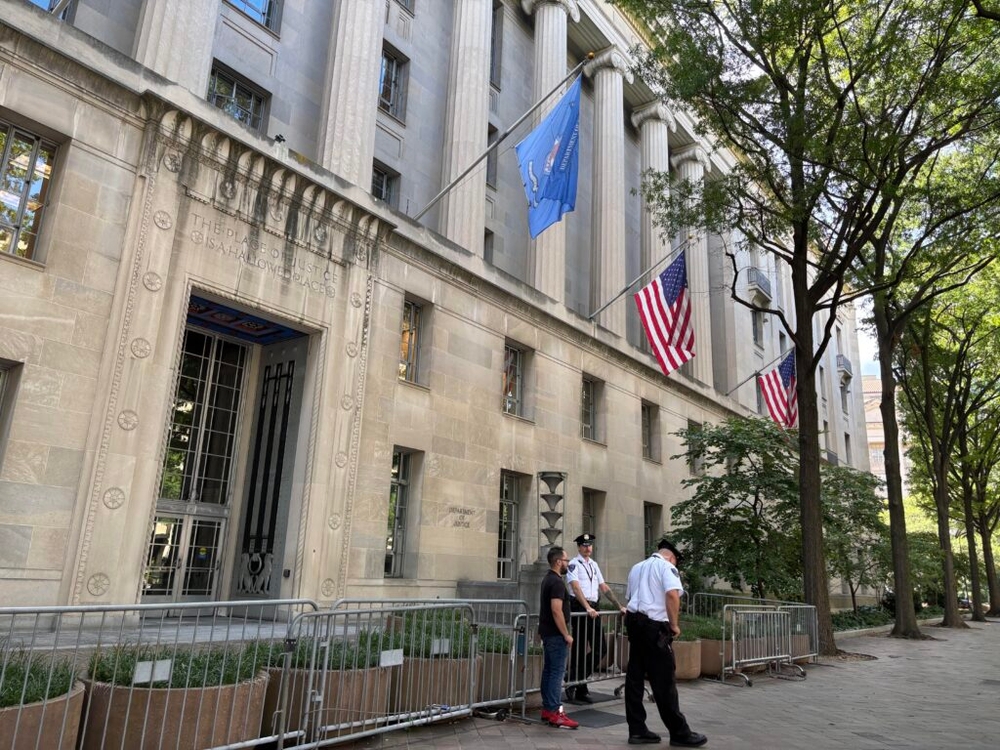
The U.S. Department of Justice has dramatically escalated its campaign to compel states to surrender comprehensive voter registration databases containing sensitive personal information, filing lawsuits against six additional states that have refused to comply with federal demands. This latest legal offensive targets Delaware, Maryland, New Mexico, Rhode Island, Vermont, and Washington, bringing the total number of states facing federal litigation over voter data to more than a dozen. The Justice Department’s aggressive posture represents a significant expansion of federal power into traditionally state-controlled election administration realms.
These lawsuits follow an initial round of legal actions filed in September against California, Maine, Michigan, Minnesota, New Hampshire, New York, Oregon, and Pennsylvania. The common thread among nearly all targeted states is their Democratic-leaning political orientation and their principled refusal to provide unredacted copies of voter lists that include driver’s license numbers and partial Social Security numbers. The Trump administration has consistently framed this data demand as essential for election integrity efforts, though the specific mechanisms through which this sensitive information would enhance electoral security remain conspicuously undefined.
The Privacy Concerns at Stake
At the heart of this confrontation lies a fundamental conflict between federal authority and state autonomy, compounded by serious privacy considerations. Democratic election officials across multiple states have raised legitimate concerns about how the Trump administration intends to use this trove of personal data. The apprehension is particularly acute regarding potential data sharing with the Department of Homeland Security, which is actively developing a sophisticated citizenship verification system. The administration has confirmed to Stateline that it indeed plans to share the acquired voter data with DHS, raising alarming questions about mission creep and unauthorized use of citizens’ private information.
Rhode Island Secretary of State Gregg Amore exemplifies the state-level resistance, having offered the Justice Department a free copy of his state’s publicly available voter list while firmly refusing to provide confidential personal information without legal compulsion. Amore characterized the lawsuit as “a continuation of the current presidential administration’s unconstitutional attempts to interfere with elections processes across the country,” emphasizing his responsibility to safeguard the data privacy of Rhode Islanders who entrust their personal information when registering to vote.
The Administration’s Justification and State Responses
U.S. Attorney General Pamela Bondi defended the legal campaign, stating that “accurate voter rolls are the cornerstone of fair and free elections, and too many states have fallen into a pattern of noncompliance with basic voter roll maintenance.” Bondi’s assertion positions the federal government as the necessary enforcer of election integrity standards, despite election administration being constitutionally designated as primarily a state responsibility. The Justice Department has committed to continuing “proactive election integrity litigation until states comply with basic election safeguards,” suggesting this legal offensive may expand further.
Meanwhile, states have adopted varying approaches to the federal demands. Some have provided partial data with sensitive information redacted, while others have refused cooperation entirely. The pattern reveals a clear ideological divide, with Democratic-led states constituting the overwhelming majority of resisters. This political dimension cannot be ignored, as it suggests the data demand may be perceived as—or may actually function as—a politically motivated tool rather than a genuine election security measure.
The Constitutional Crisis in the Making
What we are witnessing is not merely a policy dispute but a fundamental constitutional crisis in development. The federal government’s aggressive pursuit of state voter data represents a dangerous erosion of the principles of federalism that have underpinned American democracy since its founding. The Constitution explicitly delegates election administration to the states, and this federal power grab threatens to undermine the delicate balance that has preserved our democratic system for centuries.
When the Justice Department sues states for refusing to hand over citizens’ most sensitive personal information, we must ask uncomfortable questions about the true motives behind this campaign. Is this genuinely about election integrity, or is it about constructing a federal database that could be weaponized for political purposes? The timing, targeting predominantly Democratic states, and the administration’s refusal to provide clear safeguards for data usage all point toward concerning answers.
The Threat to Democratic Institutions
This federal overreach represents exactly the type of institutional erosion that democracies must guard against most vigilantly. The gradual accumulation of power by the federal government at the expense of state autonomy creates dangerous centralization that can be exploited by authoritarians. History teaches us that democracies often erode not through dramatic coups but through incremental power grabs justified by appeals to security or efficiency.
The privacy implications alone should alarm every American, regardless of political affiliation. The notion that the federal government can demand unrestricted access to driver’s license numbers and Social Security information—data points that form the backbone of identity security—without robust privacy protections establishes a terrifying precedent. Once this data is centralized in federal hands, there is no guarantee it won’t be used for purposes far beyond its original justification.
The Principle of Limited Government Under Siege
As a firm believer in constitutional principles and limited government, I find this federal campaign deeply disturbing. The Framers designed our system with divided power precisely to prevent the concentration of authority that now seems to be unfolding. When the federal government can compel states to surrender sensitive citizen data under the vague banner of “election integrity,” we have strayed far from the vision of limited, accountable government that inspired our nation’s founding.
The state officials resisting these demands are performing exactly the function the Framers intended: serving as a check on federal overreach. Their courage in defending both state sovereignty and citizen privacy deserves commendation, not legal harassment. In standing against this data grab, they uphold the constitutional principle that the federal government possesses only those powers explicitly granted to it, while all other powers remain with the states or the people.
The Path Forward: Principles Over Power
This controversy ultimately tests whether our commitment to constitutional principles can withstand political expediency. The administration’s justification—that accurate voter rolls require comprehensive personal data collection—fails to withstand scrutiny. States already maintain accurate voter rolls through established procedures that balance integrity needs with privacy protections. The federal demand for sensitive information represents a solution in search of a problem, and the potential for misuse far outweighs any hypothetical benefits.
Americans who value liberty must demand transparency about how this data will be used, stored, and protected. We must insist on clear legislative guidelines rather than executive fiat. And we must support state officials who prioritize their constituents’ privacy over federal pressure. The survival of our democratic republic depends on maintaining these guardrails against government overreach, no matter which party holds power.
In conclusion, this expanding legal campaign represents more than a dispute over voter data—it constitutes a fundamental challenge to American federalism, privacy rights, and democratic norms. The principles at stake transcend partisan politics and touch the very foundation of our system of government. As citizens, we must remain vigilant against such erosions of liberty, regardless of the justification offered. For when government seeks to accumulate power at the expense of individual rights and state autonomy, democracy itself hangs in the balance.