
The Erasure of History: How the Kennedy Center Renaming Threatens American Institutions
Published
- 3 min read
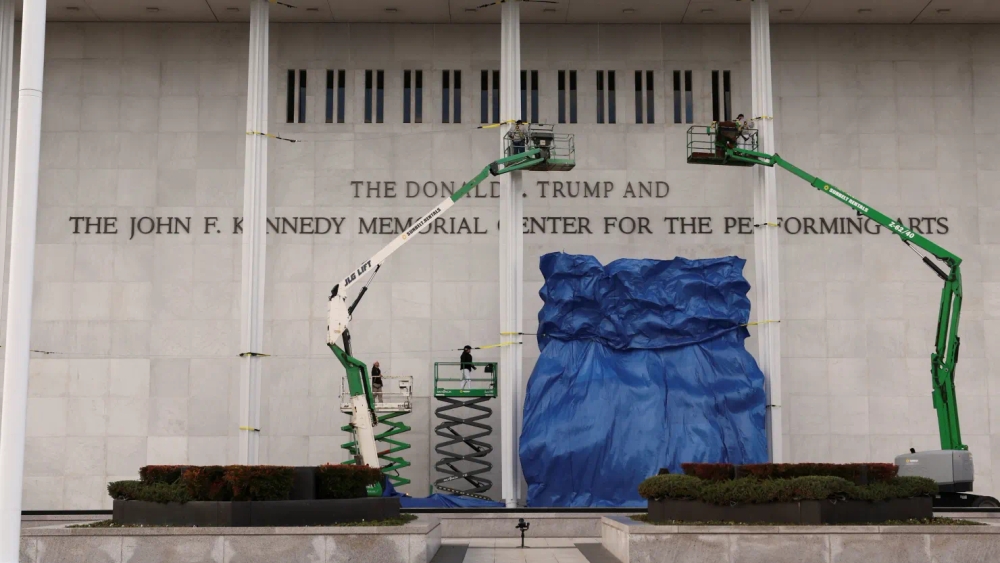
The Facts: An Illegal Takeover of a National Monument
In a move that has stunned historians, preservationists, and democratic advocates alike, workers on December 19, 2025, installed President Donald Trump’s name on the facade of the John F. Kennedy Center for the Performing Arts in Washington D.C. This physical alteration came just one day after the center’s board voted to rename the institution the “Trump-Kennedy Center” - a decision that multiple sources indicate was anything but democratic.
The context of this action reveals several troubling facts. First, President Trump took effective control of the Kennedy Center in February 2025, naming himself its chair and appointing the board of trustees that would later vote for this name change. Second, White House Press Secretary Karoline Leavitt claimed the board “voted unanimously” for the change, but this assertion has been directly contradicted by Representative Joyce Beatty, an Ohio Democrat and ex officio member of the board.
Representative Beatty’s account is particularly damning: “As I tried to push my button to voice my concern, to ask questions and certainly not to vote in support of this, I was muted. Yet it was said at the end it was a unanimous vote.” Other board members have corroborated this story, stating they were similarly silenced and would have voted against the name change if given the opportunity.
Most significantly, this action appears to directly violate federal law. The legislation establishing the center in the 1960s explicitly states that its name cannot be changed and that “no additional memorials or plaques in the nature of memorials shall be designated or installed in the public areas of the John F. Kennedy Center for the Performing Arts.” Senator Andy Kim, D-N.J., correctly noted that work on the building “needs to stop as it’s illegal to change without Congress.”
The Context: A Pattern of Institutional Disrespect
This action cannot be viewed in isolation but rather as part of a disturbing pattern of behavior that shows contempt for American institutions, historical preservation, and democratic norms. The Kennedy Center was established as a living memorial to President John F. Kennedy, whose assassination in 1963 left the nation traumatized. It represents not just a performing arts venue but a symbol of American cultural excellence and presidential legacy.
The Kennedy family’s outrage underscores the profound disrespect inherent in this action. Maria Shriver, niece of the late president, called it “beyond comprehension that this sitting president has sought to rename this great memorial dedicated to President Kennedy.” She added, “It is beyond wild that he would think adding his name in front of President Kennedy’s name is acceptable.”
Jack Schlossberg, Kennedy’s grandson, suggested the renaming was politically motivated in response to his decision to run for a House seat from New York, stating: “Trump explicitly motivated to act by JACK FOR NEW YORK. Our campaign represents everything Trump can’t stand or defeat.”
The Assault on Democratic Norms
What makes this action particularly dangerous is not merely the alteration of a building’s name but the manner in which it was accomplished. The reported silencing of dissenting board members represents a gross violation of democratic principles. If those entrusted with governance responsibilities cannot speak their conscience without being muted, we have descended into something far removed from democratic governance.
The insistence that the vote was “unanimous” when multiple participants state they were prevented from voting against the measure is reminiscent of the most authoritarian regimes - where dissent is silenced while conformity is proclaimed. This pattern of behavior undermines public trust in all institutions and creates a climate where truth itself becomes malleable to those in power.
Furthermore, the blatant violation of federal law establishing the center’s naming conventions shows contempt for the rule of law itself. When those sworn to uphold the laws of the land instead flagrantly violate them for personal aggrandizement, they undermine the very foundation of our constitutional democracy.
The Dangerous Precedent of Historical Erasure
Historical preservation matters because it connects us to our past, reminds us of our values, and provides continuity between generations. The deliberate erasure or alteration of historical memorials represents not just an aesthetic change but an attempt to reshape national memory itself.
President Kennedy represents a particular moment in American history - the optimism of the New Frontier, the commitment to public service embodied in the phrase “ask not what your country can do for you,” and the tragic loss of a young leader. To superimpose another president’s name on his memorial represents an attempt to appropriate that legacy rather than earn one’s own.
This action sets a dangerous precedent. If a sitting president can rename memorials to previous presidents, what prevents future leaders from doing the same? Would we accept a “Biden-Reagan Center” or an “Obama-Nixon Library”? Such practices would reduce our national monuments to political footballs, changing with each administration rather than preserving our historical legacy.
The Broader Threat to American Institutions
The Kennedy Center renaming must be understood as part of a broader pattern of institutional undermining that has characterized this administration. From attacks on the judiciary and press to the weaponization of government agencies against political opponents, we are witnessing a sustained assault on the checks and balances that protect our democracy.
Cultural institutions like the Kennedy Center serve as neutral ground where Americans of all political persuasions can come together through shared appreciation of the arts. Politicizing such spaces damages their ability to serve as unifying forces in our increasingly divided nation.
Moreover, the appropriation of cultural institutions for personal glorification represents the sort of behavior we expect in autocracies, not mature democracies. In healthy democracies, leaders build their legacies through accomplishment and service, not by putting their names on buildings they did not create or significantly enhance.
The Path Forward: Restoration and Accountability
This illegal action must be challenged through every available legal and legislative channel. Congress should immediately hold hearings on this violation of federal law and take appropriate action to restore the center’s original name. The Department of Justice should investigate the circumstances of the board vote and whether any laws were broken in the process of silencing dissent.
Beyond the immediate rectification of this specific action, we need broader protections for our national monuments and cultural institutions. Legislation should be strengthened to prevent future attempts to rename presidential memorials without overwhelming congressional and public support.
Most importantly, Americans of all political affiliations must recognize that the preservation of our democratic institutions and historical memory transcends partisan politics. The memory of President Kennedy belongs to all Americans, as does the Kennedy Center that bears his name. We must protect these shared treasures from being co-opted for political purposes.
The renaming of the Kennedy Center represents more than just letters on a building - it symbolizes a dangerous shift toward the personalization of public institutions and the erosion of historical memory. As citizens committed to democracy and the preservation of our national heritage, we must stand against such actions and demand that our leaders respect the institutions, laws, and history that make America extraordinary.
Our democracy depends on maintaining the integrity of our institutions against those who would reshape them for personal glorification. The memory of President Kennedy - and indeed all presidents who have served our nation - deserves better than to become pawns in contemporary political games. We must protect these legacies not just for ourselves, but for generations of Americans yet unborn who deserve to know their history unvarnished by the ego of temporary occupants of office.