
The Epstein Photos: A Chilling Portrait of Power and Impunity
Published
- 3 min read
The Facts: What the Released Images Reveal
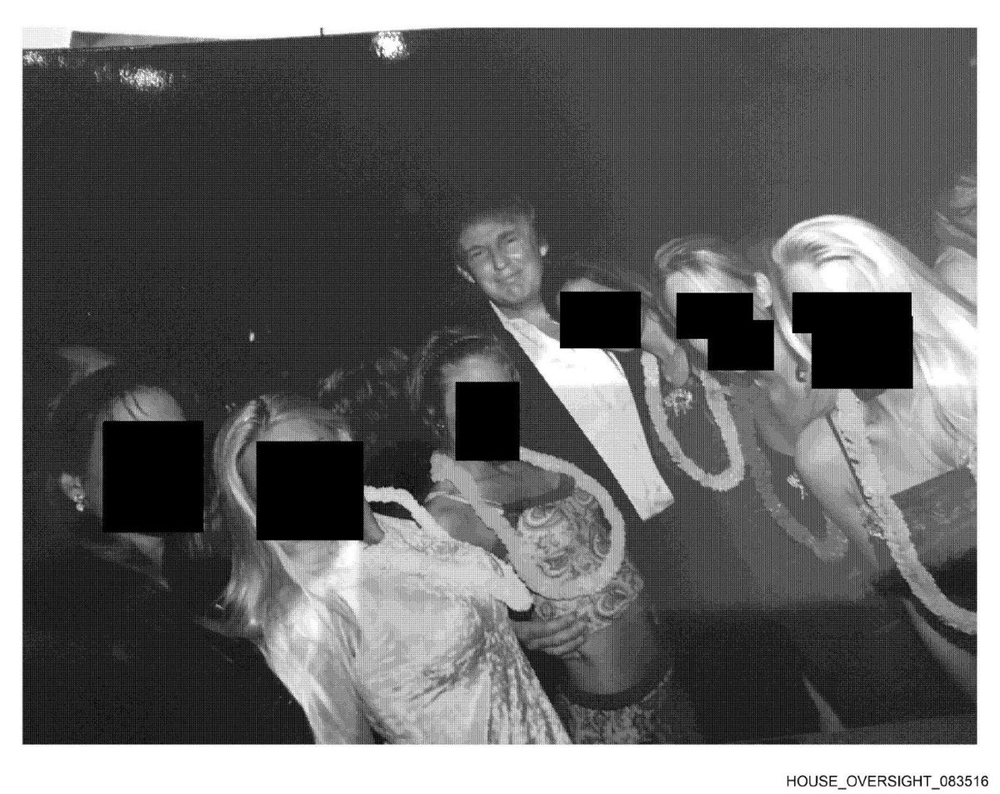
House Oversight Committee Democrats have released a new batch of photographs from Jeffrey Epstein’s personal files, providing unprecedented visual evidence of the convicted sex offender’s social connections with some of the world’s most powerful individuals. These undated photographs, sourced from Epstein’s email account and computer, depict numerous high-profile figures in social settings with the man who was convicted of sexually abusing women and underage girls at his multiple properties, including his private Caribbean island.
The images show former President Donald Trump on multiple occasions: posing with six women wearing Hawaiian leis (their faces redacted), speaking with a woman while Epstein stands beside him, and seated next to a blonde woman (also redacted). Other photographs include former President Bill Clinton posing with Epstein and his former girlfriend Ghislaine Maxwell; Virgin Group founder Richard Branson with Epstein and another man; Trump ally Steve Bannon with Epstein; former British Prince Andrew with Microsoft founder Bill Gates; and film director Woody Allen in multiple settings with Epstein, including what appears to be a movie set.
Perhaps most disturbingly, the release includes photographs of sex toys from Epstein’s collection, including novelty condoms bearing Trump’s likeness priced at $4.50 alongside a sign. The House Oversight Committee stated that the latest collection contains more than 95,000 images total, with only 19 released thus far, and emphasized that names of potential victims and identifiers have been properly redacted.
The Context: Ongoing Investigations and Political Responses
The release comes amid ongoing scrutiny of Epstein’s connections and the Department of Justice’s investigation. Congress recently passed legislation requiring the DOJ to release its Epstein investigation files by December 19, which President Trump signed into law. These files have not yet been released, creating increased pressure for transparency.
Democratic Congressman Robert Garcia of California, ranking member of the Oversight Committee, stated forcefully: “It is time to end this White House cover-up and bring justice to the survivors of Jeffrey Epstein and his powerful friends. These disturbing photos raise even more questions about Epstein and his relationships with some of the most powerful men in the world.”
The White House response, through spokeswoman Abigail Jackson, accused Democrats of “selectively releasing cherry-picked photos with random redactions to try and create a false narrative.” Jackson countered that Democrats including Stacey Plaskett and Hakeem Jeffries had solicited money and meetings from Epstein after his conviction, claiming the Trump administration has done more for Epstein’s victims by releasing documents and calling for investigations.
It is crucial to note that Donald Trump has not been accused of any wrongdoing related to Epstein’s sex trafficking operation, though their past relationship continues to draw scrutiny given these visual revelations.
The Uncomfortable Truth: Power Protects Power
The release of these photographs represents more than just embarrassing snapshots of wealthy people at parties—they provide visual documentation of how predatory behavior was normalized within elite circles. The casual proximity of presidents, princes, billionaires, and cultural icons to a convicted sex offender speaks to a culture of impunity that transcends partisan lines. What we are witnessing is not merely a political issue but a fundamental failure of moral leadership across multiple sectors of society.
These images force us to confront uncomfortable questions about complicity, awareness, and the moral responsibility of those who moved in Epstein’s circles. While legal culpability must be determined through proper judicial processes, the social and ethical implications cannot be ignored. The fact that Epstein maintained relationships with such powerful figures—and documented these relationships meticulously—suggests either willful ignorance or conscious acceptance of his behavior among those who should have known better.
The Imperative of Complete Transparency
As a firm believer in democratic accountability and constitutional principles, I assert that full transparency is not optional—it is essential for justice and healing. The selective release of photographs, while attention-grabbing, must be followed by comprehensive disclosure of all relevant materials. The American people deserve to know the full extent of Epstein’s network and operations, regardless of whose reputations might suffer.
The Department of Justice must honor both the letter and spirit of the congressional mandate to release all investigation files by December 19. Any delay, redaction beyond victim protection, or obfuscation would represent a betrayal of public trust and a failure of institutional integrity. Justice delayed is justice denied, particularly for the survivors who have waited years—in some cases decades—for full accountability.
Beyond Partisanship: A Human Rights Crisis
What disturbs me most about the political responses to these revelations is the immediate retreat into partisan defenses. Both sides have attempted to weaponize the Epstein case for political advantage, while the central tragedy—the systematic abuse of young women and girls—becomes secondary to political point-scoring. This is not a Democrat or Republican issue; it is a human rights issue that transcends political affiliation.
The White House’s response attacking Democratic politicians who associated with Epstein after his conviction, while perhaps factually accurate in some instances, misses the broader point: the problem isn’t which political party has more Epstein connections, but that such connections existed at all among our leadership class. Similarly, Democratic calls for investigation must be pursued with equal vigor regardless of which powerful figures might be implicated.
The Moral Reckoning Required
As a society, we must confront the uncomfortable reality that wealth and power often create insulated environments where ethical boundaries become blurred and accountability becomes optional. The Epstein case represents an extreme manifestation of this phenomenon, but it is not an isolated one. The casual presence of sex toys and novelty condoms featuring a future president’s image in Epstein’s collection suggests a culture of degradation that should alarm every citizen who believes in human dignity.
Our constitutional framework was designed to prevent concentrations of power precisely because the founders understood that unchecked power corrupts. The Epstein photographs provide visual evidence of how corruption operates—not through overt conspiracies necessarily, but through normalized social relationships that create implicit protection networks.
The Path Forward: Institutional Reform and Cultural Change
Moving forward requires both institutional reform and cultural change. Legally, we must strengthen protections for victims of sexual exploitation and ensure that justice systems have the resources and independence to investigate powerful figures without fear or favor. Politically, we must demand higher ethical standards for our leaders and create mechanisms for accountability when those standards are violated.
Culturally, we must reject the normalization of predatory behavior in any context, regardless of the status of those involved. The photographs of celebrities and leaders socializing with Epstein should serve as a permanent reminder that no amount of wealth, fame, or power excuses association with evil.
Ultimately, the measure of our society will not be found in the grandeur of our institutions or the wealth of our elites, but in how we protect the most vulnerable and hold the most powerful accountable. The Epstein case represents a profound failure on both counts—but it also represents an opportunity to reaffirm our commitment to justice, transparency, and human dignity. The release of these photographs should mark not an endpoint, but a beginning of genuine accountability and reform.