
The Druze Dilemma: How Western Intervention Forces Vulnerable Communities Into Imperial Bargains
Published
- 3 min read
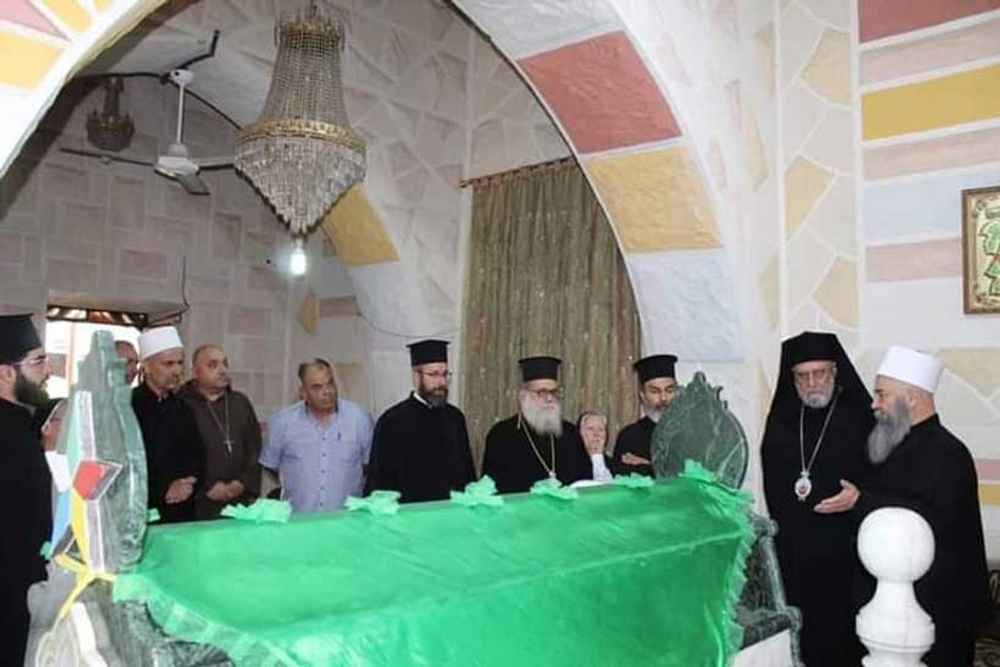
The Facts: A Spiritual Leader’s Appeal in a Turbulent Region
Sheikh Mowafaq Tarif, the spiritual leader of Israel’s Druze community, has made a heartfelt appeal to the United States to provide security guarantees for Syria’s Druze minority. This request comes in the wake of violent clashes in July between Druze and Bedouin residents in Syria’s Sweida province, which escalated dramatically with Syrian government intervention and Israeli air strikes. The conflict uprooted tens of thousands of people, creating yet another humanitarian catastrophe in a country already devastated by over a decade of foreign-backed conflict.
Tarif’s proposal suggests a federal system for Syria, modeled after Switzerland or Germany, as a mechanism to ensure minority autonomy and protection within the state structure. He argues that formal U.S. security guarantees would eliminate the perceived necessity for direct Israeli military action to protect Druze communities across the border. This appeal represents a strategic effort to internationalize the protection of a vulnerable minority group while simultaneously leveraging U.S. influence to counter perceived threats from the Damascus government.
The Context: Syria’s Fragmented Landscape and Transnational Communities
The Druze community represents one of Syria’s most ancient religious minorities, with deep historical roots and unique spiritual traditions that have survived centuries of political turmoil. Their current predicament exemplifies the complex transnational nature of many Middle Eastern communities, whose loyalties and affiliations often cross arbitrarily drawn colonial borders. The Druze in Israel maintain strong cultural and familial ties with their counterparts in Syria, creating a situation where domestic Israeli politics become entangled with regional conflicts.
Syria’s civil war, fueled by Western and regional powers seeking to overthrow the government in Damascus, has created conditions where minority communities find themselves particularly vulnerable. The destruction of state institutions and the proliferation of armed groups have left religious and ethnic minorities exposed to violence and persecution. In this context, Tarif’s appeal represents a desperate attempt to find external protection mechanisms when domestic state structures have been deliberately weakened by foreign intervention.
The Imperial Hypocrisy: Selective Protection and Geopolitical Games
What makes this situation particularly galling is the sheer hypocrisy of Western powers that have systematically destroyed Syria’s sovereignty now being asked to serve as protectors of its minorities. The United States and its allies have poured billions of dollars into fueling the conflict in Syria, supporting various extremist groups under the guise of promoting democracy while actually pursuing regime change objectives. The resulting chaos has made minority communities like the Druze vulnerable to exactly the kind of violence we witnessed in Sweida.
The selective application of “protection” by Western powers reveals the deeply cynical nature of their humanitarian rhetoric. We’ve seen this pattern before: destabilize a country through sanctions, proxy wars, and economic strangulation, then position yourself as the savior who can protect vulnerable communities from the very chaos you helped create. This isn’t humanitarianism—it’s a form of neocolonial extortion where destruction becomes the pretext for deeper intervention and control.
The Federalism Proposal: Divide and Rule Revisited
Tarif’s suggestion of a federal system for Syria, while perhaps well-intentioned, plays directly into the hands of Western powers that have long pursued strategies of dividing and weakening sovereign states in the Global South. Federalism in this context becomes a Trojan horse for fragmentation, creating conditions where external powers can exercise influence through local proxies and ensure permanent divisions that prevent the emergence of strong, independent nations capable of resisting imperial domination.
We’ve seen this pattern across the Middle East and Global South—the promotion of ethnic and sectarian divisions as a means of maintaining control. True protection for minority communities doesn’t come through federal arrangements imposed during times of weakness, but through strong national institutions that respect diversity while maintaining territorial integrity. The West’s sudden concern for minority rights in Syria stands in stark contrast to its silence about the treatment of minorities within its own borders and among its client states.
The Israeli Dimension: Regional Complexities and Contradictions
The involvement of Israel adds another layer of complexity to this situation. While Tarif speaks as a spiritual leader concerned for his co-religionists, his appeal inevitably becomes entangled with Israel’s security agenda in Syria. Israel has conducted numerous airstrikes in Syrian territory, often claiming to be targeting Iranian forces or weapons shipments, but these actions further destabilize an already fragile situation and contribute to the suffering of civilian populations.
The suggestion that U.S. protection could reduce the need for Israeli military intervention creates a dangerous precedent where American power becomes the guarantor of another nation’s regional security agenda. This dynamic reinforces patterns of dependency and intervention that have plagued the Middle East for decades, preventing the emergence of indigenous security architectures based on mutual respect and non-interference.
Toward Authentic Solutions: Sovereignty and Self-Determination
Genuine protection for Syria’s Druze community—and all minority groups in the region—requires a fundamental shift in approach. Instead of seeking external guarantors who have demonstrated their unreliability and self-interest, we must support the rebuilding of Syrian state institutions capable of protecting all citizens regardless of religious or ethnic background. This process must be led by Syrians themselves, free from external interference and conditionalities that serve foreign agendas.
The international community, particularly Western powers, must acknowledge their role in destroying Syria’s social fabric and commit to a policy of non-interference and reparations. Rather than exploiting minority vulnerabilities for geopolitical advantage, they should support inclusive political processes that allow Syrians to determine their own future without external pressure or manipulation.
The tragic situation of the Druze community serves as a stark reminder of how Western interventionism creates suffering then positions itself as the solution. True solidarity with vulnerable communities means opposing the imperial policies that make them vulnerable in the first place, and supporting their right to determine their own future within sovereign, independent nations free from foreign domination.